analytics = 18779991956, 7137309500, 9199147004, 9164315240, 8448520347, 2567447500, 8597950610, 8666136857, 8163354148, 8339770543, 9372033717, 8326849631, 8442891118, 8339060641, 5864987122, 8447297641, 8595594907, 18663524737, 8659469900, 5174402172, 8552199473, 18448302149, 5202263623, 7072899821, 6266570594, 8447100373, 3392036535, 4107533411, 8554290124, 8446012486, 6178788190, 8662168911, 6147636366, 7066234463, 8669145806, 9035937800, 8664203448, 3038277106, 6616337440, 4844522185, 8333859445, 6178265171, 8009556500, 5106170105, 8668347925, 3606338450, 8047733835, 5166448345, 9592998000, 8885090457, 4086104820, 6142127507, 8322395437, 9045699302, 9104275043, 5104709740, 5165660134, 5129740999, 8883772134, 18772051650, 8445417310, 18002319631, 5135384553, 9208318998, 9529790948, 8339842440, 8339310230, 5622422106, 7168738800, 3093200054, 5595330138, 8002760901, 8666808628, 18887291404, 6163177933, 4073786145, 2107829213, 8557844461, 2085144125, 9513895348, 6512876137, 4082563305, 5127174110, 8887077597, 2813433435, 6104652002, 8779140059, 2067022783, 8558348495, 3054428770, 2014293269, 2533722173, 2487855500, 9723750568, 7133316364, 6613686626, 5412621272, 18007312834, 5104269731, 8332128510, 9525630843, 5133970850, 3464268887, 18007457354, 8777284206, 2092152027, 3392120655, 2096763900, 8557390856, 9084708025, 9133120992, 6304757000, 7276978680, 6363626977, 8777640833, 7637606200, 7605208100, 8667500873, 4092424176, 4694479458, 7027650554, 5703752113, 5416448102, 2029756900, 3044134535, 3522492899, 6622553743, 9097063676, 18778708046, 18447093682, 5642322034, 9738697101, 8447300799, 8008280146, 8083399481, 18884534330, 7815568000, 8552780432, 3323222559, 7133540191, 8007620276, 8337413450, 8004367961, 2194653391, 5138030600, 5312019943, 18008994047, 8084899138, 7148425431, 8332076202, 6787307464, 8009188520, 5092558502, 2602796153, 5138600470, 6175170000, 2816679193, 6304497394, 18667331800, 4243459294, 6034228300, 6088295254, 8132108253, 3474915137, 8127045332, 8338394140, 8776137414, 8668289640, 4027133034, 9185121419, 4403686908, 8668215100, 2484556960, 6176447300, 8662900505, 8005113030, 3309133963, 4122148544, 8665212613, 5127649161, 5034367197, 4028364541, 8442449538, 6149229865, 6147818610, 2816916103, 3146280822, 9545058434, 2064532329, 8662962852, 2014658491, 8008116200, 4125334920, 4698987617, 8448348551, 8009200482, 8594902586, 8642081690, 8006439241, 4252163314, 8444211229, 2815353110, 7606403194, 5106464099, 9512277184, 2175226435, 6303879597, 2692313137, 8102759257, 7864325077, 2813973060, 9415319469, 7576437201, 4085397900, 4149558701, 18776137414, 18002273863, 2075485013, 7702843612, 2675259887, 4073030519, 5128465056, 8008994047, 2082327328, 6318255526, 5126311481, 8089485000, 8332280525, 8008757159, 2565103546, 3122601126, 3854291396, 5096316028, 8008298310, 8778196271, 7063077725, 8668219635, 8774108829, 8014075254, 3145130125, 8002629071, 5164226400, 7204563710, 7047058890, 9375304801, 8777458562, 3373456363, 3362760758, 7245487912, 8667620558, 8042898201, 8329751010, 8555422416, 6282025544, 9566309441, 7796967344, 3853788859, 2058514558, 8663107549, 6097982556, 6144058912, 5406787192, 8442568097, 8043128356, 7174070775, 8888227422, 8772595779, 18002799032, 2069267485, 7172515048, 4055886046, 8178548532, 8886375121, 8165964047, 8777665220, 8336852203, 6266390332, 7072472715, 8776140484, 8126413070, 4024719276, 8666148679, 5187042241, 18007793351, 7177896033, 8009249033, 5102572527, 8447089406, 2722027318, 8552296544, 8773646193, 4055786066, 3614153005, 3148962604, 8774220763, 6145035196, 5184003034, 3106677534, 8662847625, 6087759139

Outdoor residential lighting uses approximately 8 billion kilowatt-hours of electricity every year in the United States alone. Yet, a vast majority of home illumination sits dark for ten months out of the year, powered up only during winter holidays.

Transitioning from seasonal displays to permanent year round decorative backyard lighting turns underutilized exterior spaces into functional, night-time living areas. Beyond extending your square footage into the backyard after dark, strategic exterior lighting enhances safety, boosts property market value, and deters intrusion.

Here is everything you need to know about designing a durable, versatile exterior lighting system that lasts through every season.

The Shift Toward Permanent Exterior Illumination

Traditional holiday setups require annual installation, risky ladder climbs, and constant maintenance. Modern exterior design has moved away from temporary clip-on bulbs toward integrated, durable architectural lighting that serves every season.

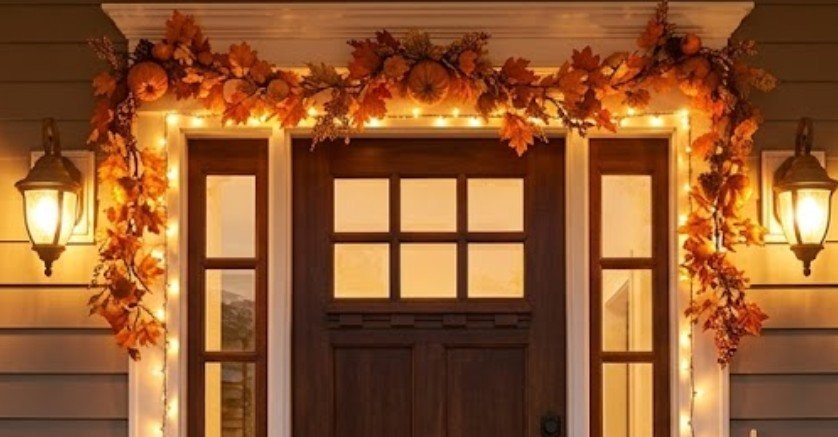
Smart technology drives this evolution. Modern light-emitting diode (LED) systems allow homeowners to alter color temperatures, set automated schedules, and isolate specific zones directly from a smartphone application. You can run warm 2700K white light for an August dinner party, switch to rich autumn hues for October, and trigger festive color palettes that are not red or green in December without ever stepping on a ladder.

Additionally, permanent fixtures built with heavy-duty aluminum or high-grade polycarbonate housings hold up against rain, snow, and UV radiation, eliminating the annual cycle of purchasing and throwing away cheap temporary strands.

3 Core Lighting Layers for Backyard Spaces

Creating a visually inviting landscape requires blending three separate functional layers of light rather than relying on a single bright fixture.

1. Ambient Lighting (The Foundational Layer)

Ambient light provides general illumination across large areas, ensuring guests can navigate the space without harsh glare and allows to hide Christmas light cords.

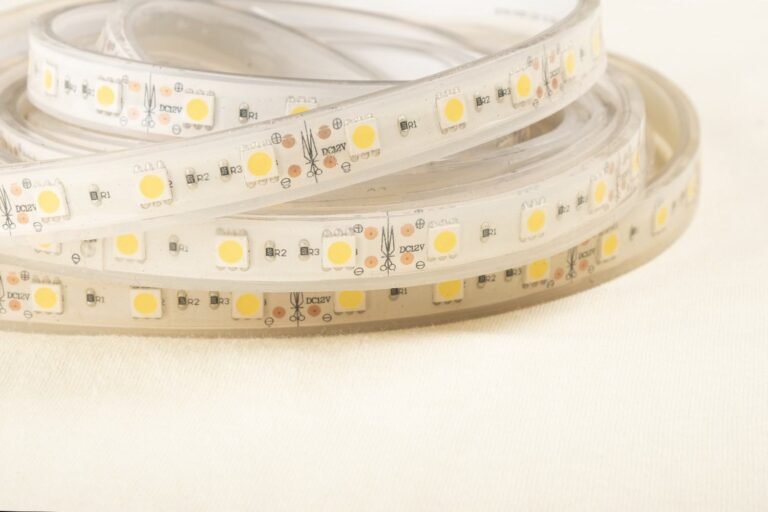
  • Permanent Smart Eave Lights: Mounted flush beneath rooflines or along fence tops. Brands like Govee or Enbrighten offer low-profile tracks that blend seamlessly into your home’s trim during the day while delivering vibrant overhead light at night.
  • Bistro & Globe String Lights: Suspended overhead across open patios or pergolas. Look for heavy-gauge, commercial-grade wiring (16-gauge or lower) and shatterproof vintage-style bulbs.

2. Task Lighting (Functional Zones)

Task Lighting (Functional Zones)

Task lighting focuses illumination directly on high-use activity areas where clarity and visibility are critical.

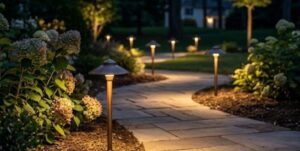
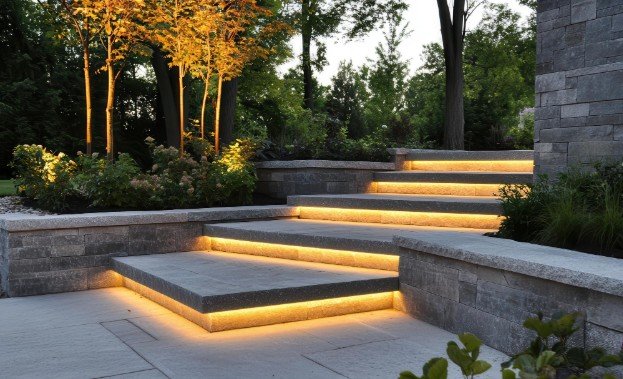
  • Pathway and Step Lights: Low-voltage stakes or recessed surface lights prevent trips along walkways, stairs, and changes in elevation.
  • Grilling and Dining Fixtures: Focused downlighting positioned over outdoor kitchens, bars, or dining tables to ensure clear visibility while preparing food.

3. Accent Lighting (Visual Depth & Focus)

Accent lighting adds drama and dimension by drawing attention to specific architectural or botanical features.

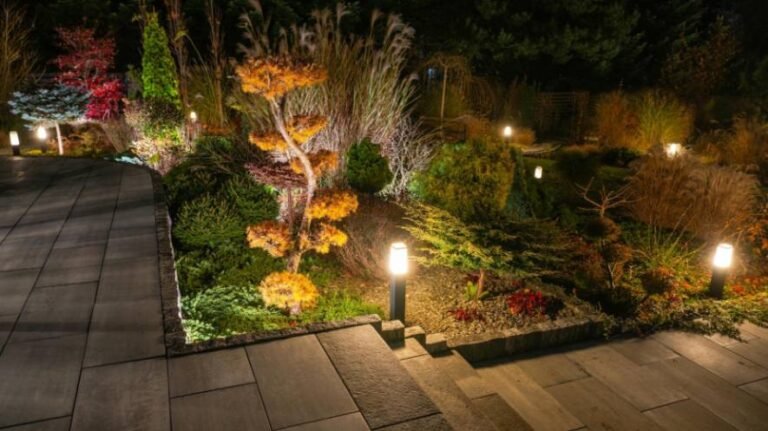
  • Uplighting: Fixtures placed at ground level aimed upward to showcase mature tree canopies, stone columns, or water features.
  • Fairy Lights & Hanging Lanterns: Low-intensity solar lanterns suspended from tree limbs or fine wire micro-lights wrapped around planters create cozy, intimate pockets of glow.

System Power Comparison: Solar, Low-Voltage, and Line-Voltage

Choosing and upgrading traditional lights to smart lighting with correct power source determines your system’s reliability, installation cost, and overall longevity.

System Type Operating Voltage Installation Complexity Best For Weather Resilience
Solar Powered Self-contained (1.2V–3.7V) Very Easy (DIY) Remote garden beds, trees, low-priority accent zones Variable (Dependent on direct sun exposure)
Low-Voltage Hardwired 12V–15V (via Step-down Transformer) Moderate (DIY or Pro) Main landscape beds, path lighting, architectural uplighting High (Sealed systems operate reliably year-round)
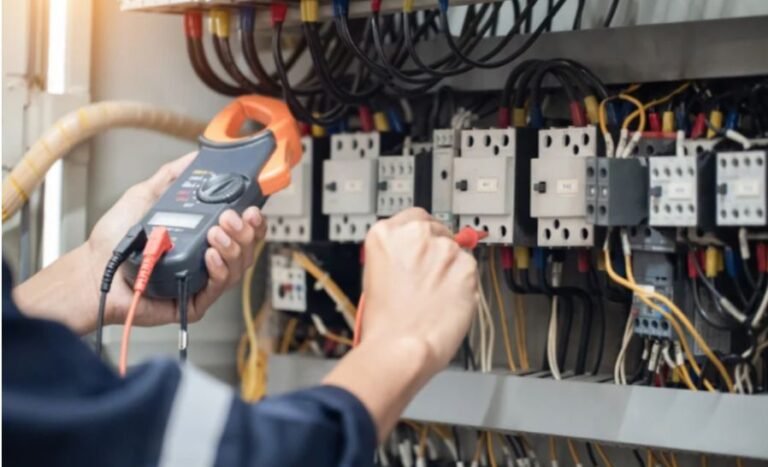
Line-Voltage Hardwired 120V (Standard Household Current) High (Requires Licensed Electrician) Heavy-duty security lights, built-in kitchen zones, large structures Extreme (Uses armored conduit and junction boxes)

For most backyards, a hybrid approach works best: install low-voltage hardwired landscape lighting or permanent smart eave systems handle primary architectural and landscape paths, while standalone solar lanterns cover outlying garden areas.

4-Step Backyard Lighting Audit Checklist

Before purchasing fixtures, perform this quick walkthrough after sunset to map your layout effectively.

  •  Identify Dark Hazards: Walk your yard in total darkness to spot unlit steps, dark corners near entryways, or uneven flagstone paths.
  •  Determine Focal Points: Pick 3 to 5 visual anchors in the landscape, such as a large oak tree, a pergolas, a decorative water fountain, or a stone wall.
  •  Check Viewpoints from Inside: Stand inside your main living areas and look out into the yard. Ensure lighting placement builds a pleasant view from indoor windows without blinding glare.
  •  Test for Light Intrusion: Check that your proposed fixture locations throw light inward toward your property rather than spilling directly into your neighbors’ windows or eyes.

Environmental and Night-Sky Best Practices

Environmental and Night-Sky Best Practices

Illuminating your property should not come at the expense of local wildlife or night-sky clarity. Misdirected exterior lighting contributes to light pollution, disrupts migratory bird patterns, and disturbs nocturnal ecosystems.

The International Dark-Sky Association recommends these core principles for responsible outdoor lighting:

  1. Fully Shield Fixtures: Select downward-directed fixtures that prevent light from escaping upward into the atmosphere.
  2. Use Warm Color Temperatures: Keep ambient and accent LEDs at or below 3000 Kelvins. Warm yellow and amber light minimizes blue-wavelength emissions, which disrupt natural circadian rhythms.
  3. Implement Controls: Connect lights to timers, motion sensors, or dimmers so spaces remain dark when not actively in use.

To review local ordinances on dark-sky compliance, consult resources maintained by the National Park Service Night Skies Program or check environmental guidelines hosted by the U.S. Department of Energy. Further ecological impacts of artificial light at night are documented by research organizations like the U.S. Geological Survey.

Misconceptions and System Limits

While year-round setups are durable, common misunderstandings often lead to premature failure:

Misconceptions and System Limits

  • “Waterproof” vs. “Weatherproof”: Standard IP65-rated outdoor lights withstand rain, snow, and low-pressure water jets, but they cannot be submerged. Underwater pool or pond lighting requires an IP68 rating.
  • Solar Panel Misconceptions: Solar fixtures rarely perform at full capacity during northern winters due to shorter days and lower sun angles. Expect reduced runtimes during cold weather months.
  • Voltage Drop Limitations: On 12V hardwired systems, running cable runs over 100 feet without proper wire gauge sizing causes fixtures at the end of the line to dim significantly.

Frequently Asked Questions

1. Can permanent smart LED lights withstand harsh winter freezing?

Yes. Quality permanent eave lights feature IP67-rated weatherproofing and operate in extreme temperatures ranging from -4°F to 140°F (-20°C to 60°C).

2. What color temperature works best for year-round backyard lighting?

A warm white setting between 2700K and 3000K works best for everyday landscape lighting. It highlights natural foliage, wood textures, and masonry without looking clinical.

3. How much electricity do permanent outdoor LED lights consume?

Modern LED systems use very little power. Running 100 feet of permanent LED lights for 5 hours a night typically costs less than $1.50 to $3.00 per month on standard US utility rates.

Investing in durable, high-quality year round decorative backyard lighting turns dark, unused yards into welcoming exterior rooms. By layering ambient eave tracks, commercial-grade string lights, and low-voltage accent fixtures, you create an adaptable space that shifts effortlessly from quiet weeknight dinners to vibrant holiday gatherings. Plan your layout around safety and focal points, stick to warm color temperatures, and shield your fixtures to build a sustainable nighttime retreat that serves your home through every season.