A holiday wreath can transform an ordinary entryway into the focal point of your seasonal décor, but the wrong lighting approach can leave it looking flat, tangled, or even unsafe. Learning how to light a holiday wreath outdoors is less about adding more bulbs and more about placing the right type of illumination where it enhances the wreath’s shape, texture, and surroundings.
The most successful outdoor wreath displays use small, weather-resistant LED lights, thoughtful placement, and a hidden power solution. Whether your wreath hangs on a front door, porch wall, fence, or garage, the goal is to create a warm glow that looks intentional from the street while surviving winter weather.
Start With the Right Outdoor Wreath Lights
Not every decorative light strand is designed for exterior use. Outdoor wreaths face moisture, temperature changes, wind, and repeated exposure to the elements, so the lighting system needs to match those conditions.
LED lights are usually the best choice because they produce less heat, consume less electricity, and are available in compact strands that fit naturally into evergreen branches, artificial foliage, and decorative accents.
Before buying lights, check three important factors:
Choose weather-rated lighting
Look for lights labeled for outdoor use. Indoor-only strands may not have the insulation or weather protection required for a wreath exposed to rain, snow, or humidity.
Battery-powered micro LED strands are popular because they eliminate visible cords. Many include timers that automatically turn the lights on for several hours each evening and shut them off afterward.
Plug-in outdoor string lights are another option if the wreath is near a protected outlet. They often provide longer operating times and consistent brightness throughout the season.
Match the light length to the wreath size
A common mistake is buying a strand that is too long and forcing excess wire into the greenery. This creates uneven brightness and makes the wreath appear cluttered.
A simple estimate works well:
| Wreath Size | Recommended Light Length |
| 18–24 inches | About 6–10 feet of mini LED lights |
| 24–30 inches | About 9–17 feet of mini LED lights |
| 36 inches or larger | About 15–25 feet depending on density |
The amount also depends on whether you want a subtle accent or a brighter statement piece.
Prepare the Wreath Before Adding Lights

Many homeowners begin wrapping lights immediately, but preparation creates a much cleaner result.
Start by shaping the wreath. Separate compressed branches, fluff artificial greenery, and position ornaments, ribbons, or pinecones before installing the lights.
A well-shaped wreath gives the bulbs more surfaces to reflect against. It also prevents the strand from sitting only on the outer edge, where the wiring becomes more visible.
Inspect the wreath frame as well. Loose decorations can snag light wires, and sharp metal edges may damage insulation over time.
The Best Technique for Placing Lights on a Wreath
The goal is not to wrap the wreath like a circular rope. Instead, distribute the light by choosing outdoor wall lights so the entire design appears naturally illuminated.
Begin by locating the top, bottom, and side points of the wreath. These areas act as visual anchors and help maintain even spacing.
Feed the light strand through the greenery using a weaving pattern. Move between the front and middle sections of the wreath rather than keeping every bulb on the surface.
This creates depth because some lights sit closer to the viewer while others create a soft glow behind the branches.
For evergreen wreaths, weave the lights slightly inward so the bulbs illuminate the needles. For grapevine or twig wreaths, attach lights along the natural curves of the structure to highlight the shape.
Avoid pulling the wire tightly around branches. A loose placement allows room for movement and reduces stress on the strand.
Hide Battery Packs, Plugs, and Extra Wire
A beautifully lit wreath can lose its charm if the technical parts are visible.
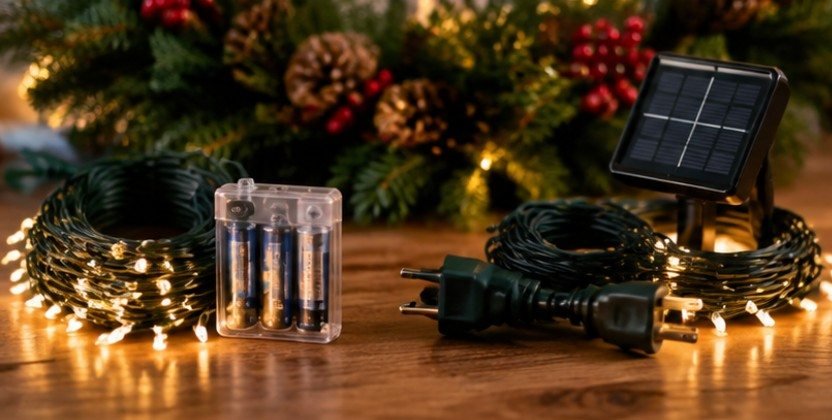
For battery-operated wreath lights, place the battery box behind the wreath frame where it cannot be seen from the front. Secure it with floral wire, small clips, or weather-resistant fasteners.
If you use plug-in lights, position the connection point behind the wreath whenever possible. Route the cord downward along the door edge or mounting area instead of letting it hang across the center of the display.
For homeowners creating larger displays, planning the cord path before hanging the wreath can prevent unnecessary adjustments later. You can also find additional ideas for coordinating exterior displays with broader outdoor decorating strategies through resources about outdoor lighting ideas.
Battery Lights vs Plug-In Lights: Which Works Better?
The best option depends on your location, access to power, and how long you want the wreath illuminated each night.
| Lighting Type | Best For | Advantages | Limitations |
| Battery LED lights | Doors without nearby outlets | Easy installation, hidden wiring, timer options | Requires battery replacement |
| Plug-in outdoor LEDs | Permanent displays near power sources | Reliable brightness and longer runtime | Requires safe cord management |
| Solar-powered lights | Sunny locations | No wiring needed | Performance depends on sunlight exposure |
A north-facing door, shaded porch, or heavily covered entryway may not receive enough sunlight for solar lighting to perform consistently. Battery or plug-in options are usually more dependable in those locations.
Outdoor Holiday Wreath Lighting Safety Checklist
Holiday decorations should look beautiful by staying safe from any electrical risks. Organizations such as the National Fire Protection Association recommend inspecting decorative lights, using appropriate products for the location, and replacing damaged strands rather than continuing to use them.
Before turning on your wreath lights, check:
- The light strand is rated for outdoor use.
- Cords have no cracks, exposed wires, or damaged sections.
- Connections are protected from direct water exposure.
- The wreath does not block doors, walkways, or emergency exits.
- Extension cords are approved for outdoor conditions.
- Lights are switched off when you leave home or go to sleep.
Outdoor electrical safety guidance from groups such as the U.S. Fire Administration and National Institute of Standards and Technology emphasizes checking holiday lighting equipment before installation and avoiding damaged electrical decorations.
Common Problems and How to Fix Them
A few simple adjustments solve most outdoor wreath lighting issues.

If the wreath looks too bright, remove some bulbs from the front surface and move them deeper into the greenery. This creates a softer appearance.
If the wreath looks uneven, avoid adding more lights immediately. First, redistribute the existing strand around darker areas.
If lights stop working after rain or freezing temperatures, check the battery compartment, connections, and any damaged insulation. Moisture is often the cause of failure in outdoor decorations.
If the wreath swings in strong wind, secure the mounting point, hide Christmas light cords and make sure the wire is not carrying the weight of the decoration.
Create a Holiday Wreath That Looks Professional
The most attractive outdoor wreath lighting designs follow the same principle used in professional holiday displays: balance brightness with atmosphere.
Warm white LEDs usually create a traditional holiday appearance and complement evergreen wreaths, red ribbons, and natural decorations. Cool white lights can create a sharper winter effect, while multicolor options work well for playful or family-focused displays.
The final touch is timing. A wreath that turns on automatically around sunset and switches off later in the evening feels polished without requiring daily attention.
Frequently Asked Questions
1. Can I use indoor string lights on an outdoor wreath?
No. Outdoor wreaths should use lights specifically rated for exterior conditions because indoor strands may not withstand moisture or temperature changes.
2. How many lights do I need for a holiday wreath?
Most standard 24–30 inch wreaths need around 9–17 feet of mini LED lights, depending on how dense and bright you want the design.
3. Should I use battery or plug-in lights for an outdoor wreath?
Battery lights work best for simple installations without outlets. Plug-in lights are better for longer displays requiring consistent power.
4. How do I keep outdoor wreath lights from showing wires?
Weave the strand through the greenery instead of wrapping the outside edge. Hide battery packs and extra wire behind the wreath.
A holiday wreath does not need dozens of bulbs to make an impact. The most memorable displays come from careful placement, reliable outdoor-rated lights, and a design that allows the greenery itself to shine. Once you understand how to light a holiday wreath outdoors, creating a welcoming front-door display becomes a simple seasonal project rather than a frustrating decorating challenge like replacing fuse in Christmas light plug. A few minutes of planning can turn a basic wreath into the warm glow that welcomes guests throughout the entire holiday season.