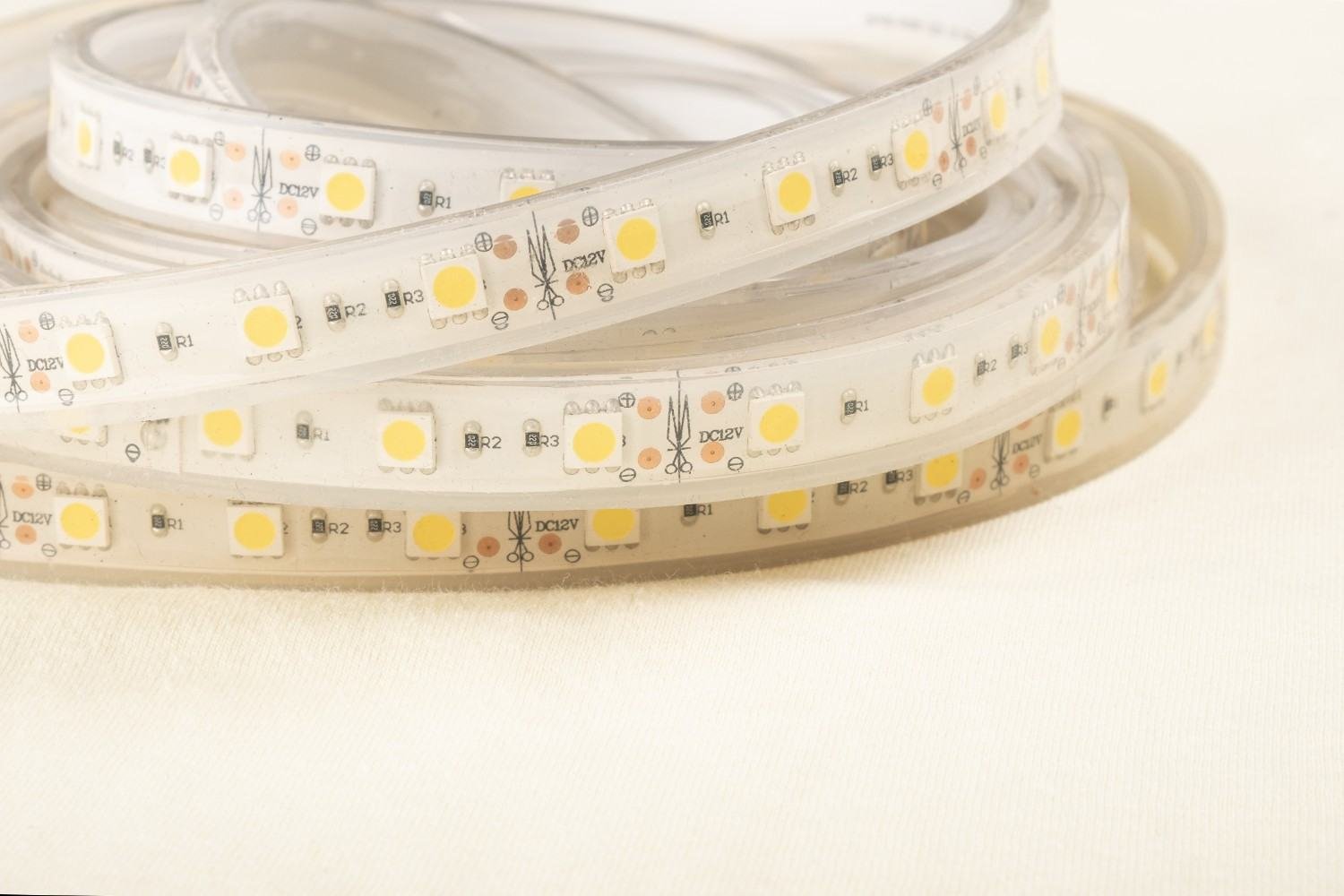
A beautiful LED strip setup can fail for one surprisingly simple reason: the power supply was sized incorrectly. Flickering, dim sections, overheating, and sudden shutdowns often trace back to a driver that cannot handle the strip’s actual electrical demand.
That is where an LED strip power supply size calculator becomes useful. Instead of guessing based on strip length, I calculate the total wattage, confirm the operating voltage, determine the required amperage, and add a safe power reserve.
This gives me a much more reliable way to choose the right driver for under-cabinet lighting, ceiling accents, gaming rooms, outdoor installations, and other LED projects.
The process is straightforward once you know the numbers to look for, and a few simple calculations can prevent most common LED power problems before installation begins.
How Do You Calculate the Power Supply Size for LED Strip Lights?
The calculation process is straightforward. First, find the power consumption rating of your LED strip. Most manufacturers list this as watts per meter (W/m) or watts per foot (W/ft).
The basic formula is:
Total LED Strip Wattage = Strip Length × Wattage per Unit
For example, if you are installing a 5-meter LED strip rated at 9.6 watts per meter:
5 meters × 9.6 watts = 48 watts
This gives you the minimum power requirement. However, I never recommend running a power supply at full capacity. Most LED professionals suggest adding a 20% safety margin, often called the 80% rule, so the power supply operates comfortably below its maximum rating.
The adjusted formula becomes:
Required Power Supply Wattage = Total Strip Wattage × 1.20
Using the previous example:
48 watts × 1.20 = 57.6 watts
The correct choice would be a 60-watt power supply.
What Information Do You Need Before Calculating LED Strip Power?
Before selecting an LED driver, I check four important specifications:
The first is the LED strip length. A longer strip naturally requires more power.
The second is the wattage rating. A low-brightness decorative strip may use only a few watts per meter, while high-density RGB or COB strips can require significantly more power.
The third is voltage. Most residential LED strips in the United States operate at either 12V or 24V DC.
The fourth is the strip type. Single-color white strips, RGB strips, RGBW strips, and RGBIC strips have different power requirements.
Many online calculators follow this same process by asking for strip length, voltage, and power consumption before recommending a suitable driver size.
How Many Watts Do Different LED Strip Lights Use?
If you do not know the exact wattage of your LED strip, these common estimates can help you understand typical power requirements.
A standard SMD 3528 LED strip with 60 LEDs per meter often uses around 4.8 watts per meter. These are commonly used for decorative lighting.
An SMD 2835 high-density strip may use around 9.6 watts per meter and provides brighter general-purpose illumination.
An SMD 5050 strip with 60 LEDs per meter commonly uses approximately 14.4 watts per meter and is popular for brighter accent lighting.
High-density COB LED strips may require around 15 watts per meter or more depending on the design.
For permanent installations, I always recommend checking the manufacturer’s specifications instead of relying only on estimates.
How Do You Calculate Amps for an LED Power Supply?
Some LED power supplies are labeled in amps instead of watts. In that case, you need to convert wattage into current.
The formula is:
Amps = Watts ÷ Voltage
For example, a 60-watt power supply running a 12V LED strip:
60 ÷ 12 = 5 amps
That means you need a 12V, 5-amp power supply.
For a 24V LED strip:
60 ÷ 24 = 2.5 amps
This is one reason many larger installations use 24V LED strips. They require less current for the same wattage and can reduce energy loss over longer distances.
Should You Choose a 12V or 24V LED Strip Power Supply?
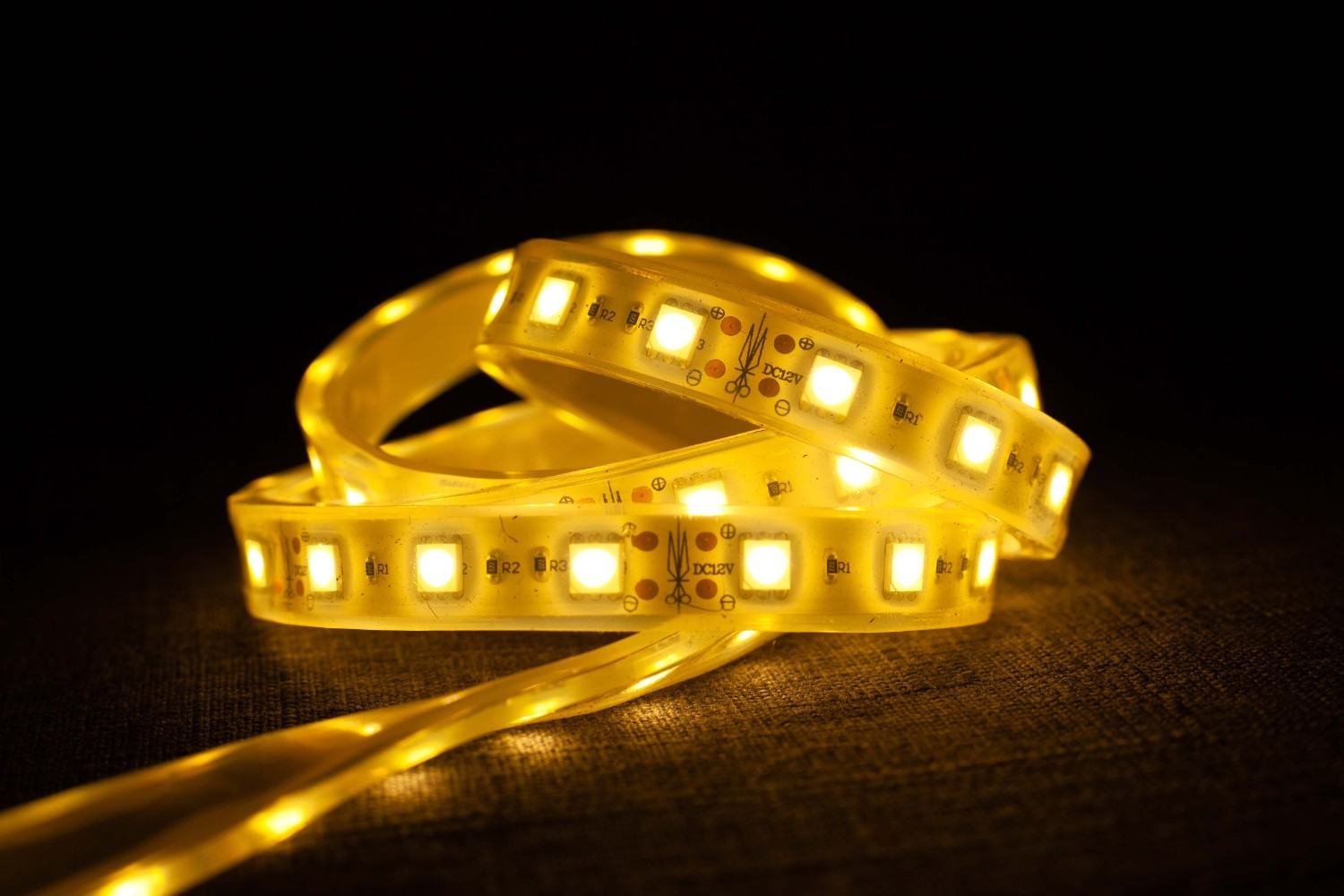
When I compare 12V and 24V LED systems, the best option depends on the size of the project.
A 12V LED strip works well for smaller applications such as:
- Kitchen cabinet lighting
- Closet lighting
- Shelving
- Short decorative projects
A 24V LED strip is usually better for longer installations, including:
- Living room ceiling lighting
- Home theater lighting
- Large accent walls
- Longer architectural lighting projects
The biggest advantage of 24V systems is reduced voltage drop. Because current requirements are lower, brightness remains more consistent across longer strip lengths. LED strips commonly operate on 12V or 24V DC power, and selecting the correct matching voltage is essential for proper operation.
How Does Voltage Drop Affect LED Strip Performance?
Voltage drop is one of the most common problems with LED strip installations.
When electricity travels through the copper traces inside a long LED strip, resistance can reduce the voltage reaching the LEDs at the far end. This can create:
- Dim sections near the end of the strip
- Uneven brightness
- Incorrect RGB colors
- Flickering problems
For longer US home installations, I usually recommend using a 24V LED strip, shortening individual runs, or adding additional power injection points.
A correctly sized power supply cannot completely fix voltage drop if the strip layout itself is too long.
What Power Supply Does RGB or RGBIC LED Strip Lighting Need?
RGB and RGBIC LED strips require additional planning because they operate multiple LED channels. A standard white LED strip mainly powers one color channel, while RGB strips combine red, green, and blue channels to create different colors. RGBIC LED strips are even more advanced because integrated circuits allow different sections of the strip to display different colors and animations.
When calculating RGB or RGBIC LED strip power consumption, I always use the maximum rated wattage. Although many effects do not use full power continuously, sizing for peak demand prevents unexpected shutdowns.
For a cleaner installation, I also consider hiding LED strip light dots because visible LED hotspots can affect the final appearance. Using diffusers, aluminum channels, or indirect placement can create a smoother glow while maintaining the brightness and color effects these advanced LED strips provide.
Common Mistakes When Choosing an LED Power Supply

One mistake I often see is selecting a power supply with the same wattage as the LED strip. While this may work temporarily, the driver is forced to operate at maximum capacity.
Another common mistake is matching wattage but ignoring voltage. A 24V power supply cannot safely replace a 12V power supply.
Some homeowners also forget about outdoor conditions. Outdoor LED installations require weather-appropriate power supplies with proper protection ratings.
Finally, choosing a low-quality adapter can create reliability problems. A good constant voltage power supply should include protection against overload, overheating, and short circuits.
Frequently Asked Questions (FAQs)
1. How do I use an LED strip power supply size calculator?
An LED strip power supply size calculator uses your strip length, voltage, and wattage rating to determine the recommended power supply size. Adding a safety margin helps ensure reliable operation.
2. What size power supply do I need for a 5-meter LED strip?
It depends on the strip’s wattage. A 5-meter strip using 9.6 watts per meter requires 48 watts, so a 60-watt power supply would provide a safer operating range.
3. Can I use a higher wattage power supply for LED strips?
Yes. A higher wattage power supply is generally safe as long as the voltage matches your LED strip. The strip only draws the power it needs.
4. Is a 24V LED strip better than a 12V LED strip?
For longer installations, a 24V LED strip is often the better choice because it reduces voltage drop and improves brightness consistency.
Final Thoughts on Selecting the Right LED Power Supply
I have found that properly sizing an LED driver before installation saves time, money, and frustration. A few simple calculations can prevent flickering lights, overheating power supplies, and uneven illumination.
The easiest approach is to check your strip’s wattage, multiply it by the total length, add a 20% safety margin, and select a power supply with matching voltage.
Whether you are upgrading a kitchen, building a gaming room, or installing outdoor lighting, using an LED strip power supply size calculator helps ensure your LED system performs safely and efficiently.







One thought on “LED Strip Power Supply Size Calculator: Stop Guessing Your Wattage”