
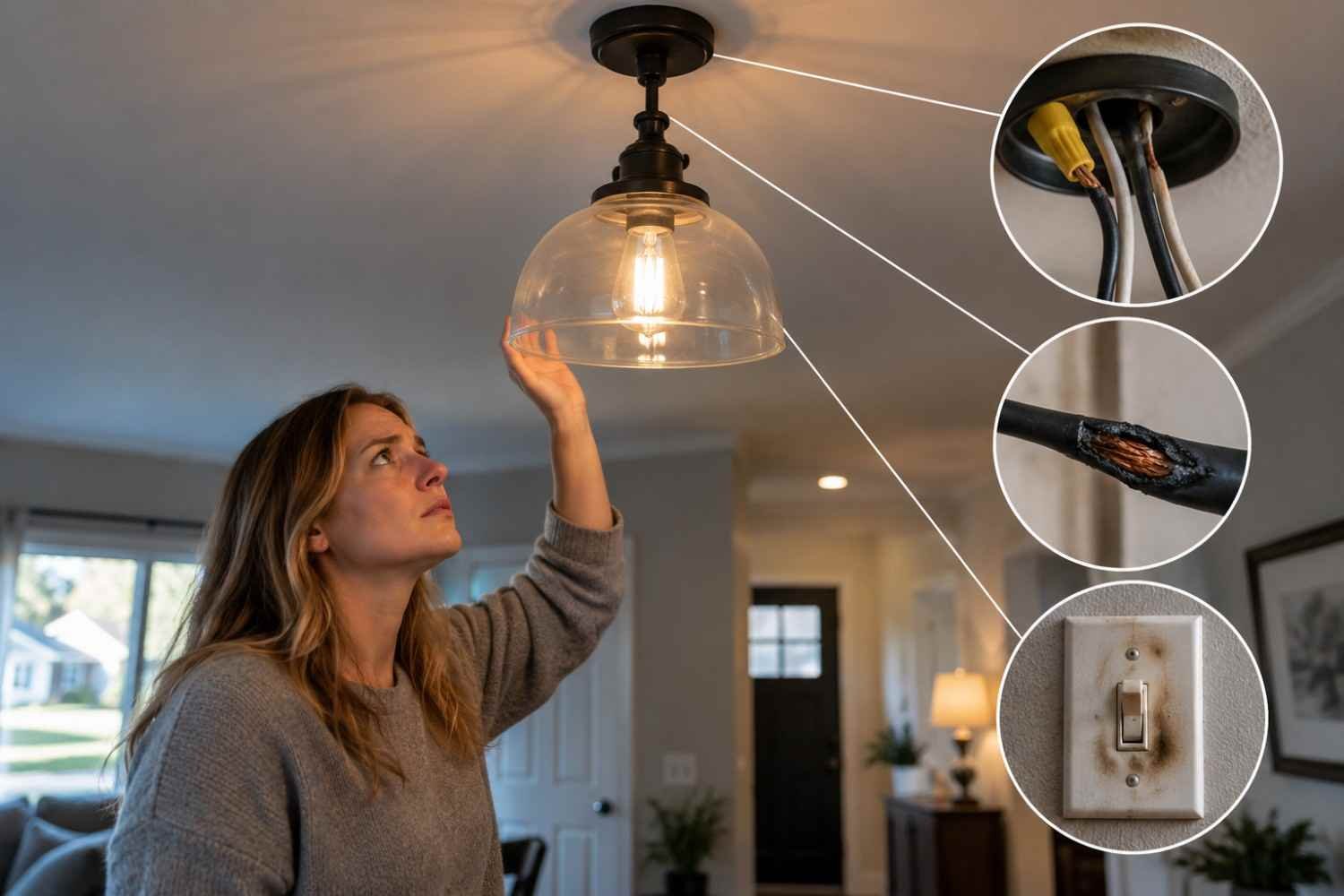
I started paying closer attention to small lighting quirks after noticing a ceiling light flicker whenever another appliance kicked on. At first, I assumed the LED bulb was simply nearing the end of its life. Then I noticed the same light behaving strangely on different days, which made me realize that lighting problems can sometimes point beyond the bulb itself.
I have also learned that the most useful clue is often the pattern. A single fixture acting up can have a very different cause from several lights dimming together. Once I began looking at those differences, symptoms such as buzzing, heat, discoloration, and repeated bulb failures seemed less random. They became warning signs worth taking seriously.
Start With the Symptom, Not the Repair
A light can turn on every time and still have a loose connection, an aging switch, or another wiring problem developing behind the wall. The first step is recognizing what changed and whether the symptom is isolated or widespread.
A flicker in one fixture may come from a loose bulb or a poor connection at that fixture. If several lights flicker or dim at once, the issue can involve a shared circuit or another electrical connection. That distinction matters because a widespread symptom deserves more caution than a single temperamental lamp.
Common Lighting Wiring Problems to Watch For

Loose connections are among the most common causes of unreliable lighting. A loose terminal, splice, or fixture connection can create electrical resistance and heat. Over time, that heat can damage insulation and surrounding components. Connections that were disturbed during an earlier renovation or fixture replacement deserve particular attention.
Flickering or dimming lights are another useful warning. Sometimes the cause is harmless, such as a loose bulb. Other times, flickering can signal a failing switch, poor connection, circuit overload, or another electrical fault. If the behavior keeps returning after a bulb has been replaced, treating it as “just an LED issue” is a mistake.
Buzzing or humming deserves attention too. Some fixtures and dimmers naturally make a faint sound, but a new, persistent, or increasingly loud buzz can indicate a failing component, loose connection, or compatibility problem. Electrical noise combined with warmth, a burning smell, or visible discoloration is especially concerning.
Hot switch plates and fixtures are not normal simply because a light has been running for a while. Excessive heat can develop when current encounters resistance at a poor connection or when a circuit is carrying more load than its wiring or components can safely handle. A switch that feels noticeably hot should not be ignored.
Another clue is timing. If a light flickers only when a motor, heater, or other high-demand appliance starts, the pattern may point toward a circuit or supply issue rather than the lamp itself. If it flickers when the switch is touched or moved, the switch or its connection becomes more suspicious. Keeping track of when symptoms appear can save time during a professional inspection because intermittent electrical faults are often difficult to reproduce on demand. That simple record can also reveal whether the problem is becoming more frequent or severe instead of relying on memory during an appointment.
When Older Wiring Enters the Picture
Older homes can make lighting issues harder to interpret because wiring, switches, fixtures, and previous modifications may come from different generations. A newer LED fixture may be connected to an older dimmer, or a replacement switch may not match the existing setup.
Previous DIY modifications, damaged insulation, loose junctions, or outdated components can complicate diagnosis. Anyone working around electrical wiring should understand that turning off a wall switch does not necessarily make every conductor in a box safe to touch.
For homeowners researching how to troubleshoot lighting wiring, observation is the safest starting point. Note which fixtures are affected, when the problem occurs, whether other appliances are running, and whether there is heat, noise, odor, or discoloration. Those details can help an electrician narrow down the fault without turning the homeowner into an electrical technician.
Smart Lighting Can Expose Existing Problems
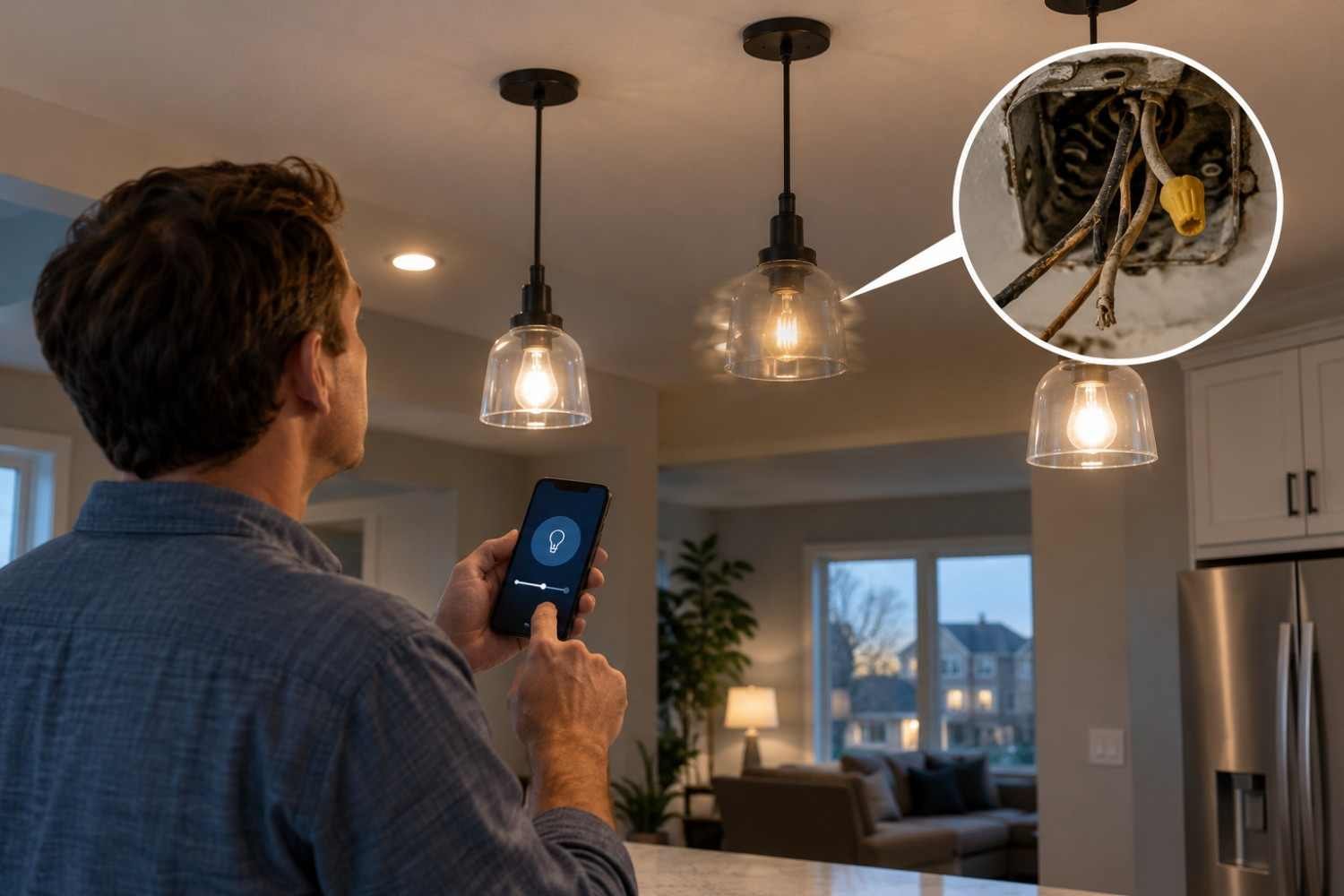
Some smart switches need a neutral connection, while others are designed for different wiring configurations. Compatibility with the fixture, load, dimming method, and existing switch box also matters.
That makes wiring conditions worth considering before upgrading traditional lights to smart lighting. A smart device should not be used as a way to work around an unexplained flicker, loose connection, or overheating switch. Fix the underlying electrical problem first, then choose equipment that matches the circuit and installation.
Know When to Stop Troubleshooting
A burning odor is one of the clearest reasons to stop. Melting insulation, overheated plastic, or an arcing connection can produce a distinctive smell before visible damage appears. Repeated breaker trips, sparks, smoke, hot wiring components, or unexplained power loss also move a lighting problem beyond casual troubleshooting.
The safest response is to stop using the affected lighting circuit and have the situation assessed by a qualified electrician. Avoid opening energized boxes, pulling wires out, or repeatedly resetting a breaker to see whether the problem disappears. Electrical faults can worsen without obvious warning.
FAQs: Identifying Common Lighting Wiring Problems That Should Never Be Ignored
1. Why are my lights flickering?
A flicker can come from a loose bulb, faulty fixture, incompatible dimmer, loose connection, circuit issue, or voltage problem. Persistent or widespread flickering deserves professional assessment.
2. Is a buzzing light switch dangerous?
It can be. A new or persistent buzz may indicate a failing switch, loose connection, incompatible dimmer, or overheating. Stop using it if buzzing occurs with heat, odor, or discoloration.
3. Why does one bulb keep burning out?
Frequent failures can result from excess heat, vibration, incorrect ratings, poor connections, or voltage problems. If replacement bulbs keep failing, investigate the fixture or circuit rather than simply buying more bulbs.
4. When should I call an electrician?
Call when you notice burning smells, scorching, sparks, hot switches, exposed wiring, repeated breaker trips, or unexplained electrical behavior. Those signs can indicate a serious wiring or component fault.
The Habits Worth Keeping
Good electrical awareness is less about learning to repair every wiring problem and more about recognizing when something does not look, sound, or feel right. A flickering light may be nothing more than a loose bulb, but the same symptom can sometimes be the earliest visible clue of a deeper electrical issue. Paying attention to patterns, recording changes, and resisting the urge to keep using a questionable fixture can prevent a small warning from becoming a larger problem.
Lighting should be convenient, reliable, and boring in the best possible way. When it starts buzzing, overheating, sparking, or smelling wrong, that is the moment to take it seriously.







One thought on “Identifying Common Lighting Wiring Problems That Should Never Be Ignored”