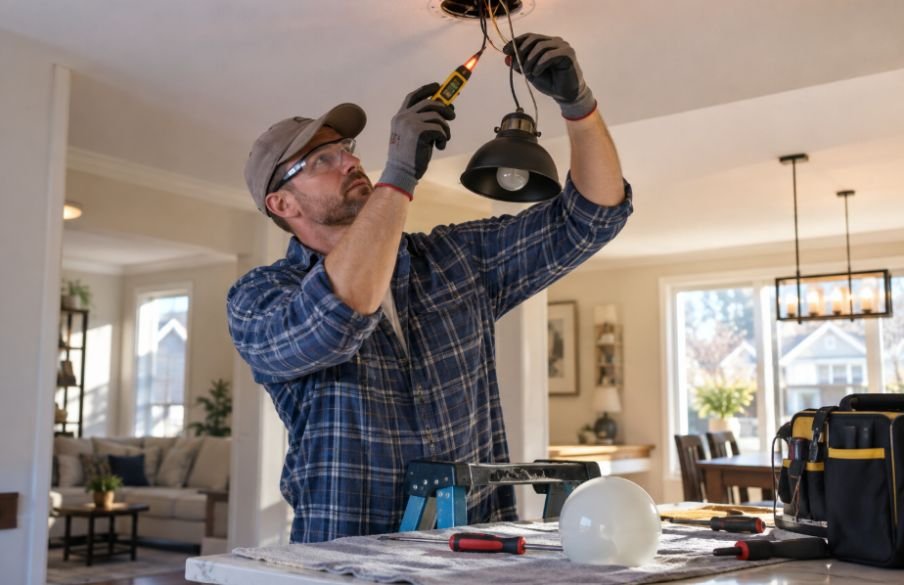
I noticed how easy it is to blame a light fixture when something goes wrong. A bulb that flickers, a switch that suddenly stops responding, or a ceiling light that works only sometimes can make the wiring seem like the obvious culprit. In practice, several smaller issues can create nearly identical symptoms, so I found that starting with the simplest possibilities makes troubleshooting much clearer.
I realized something else after dealing with lighting problems: electrical troubleshooting is less about poking around until something works and more about knowing where to stop. A breaker, switch, connection, fixture, or LED driver can all play a role. The safest approach is to identify the symptom, eliminate simple causes, and treat exposed wiring as a point where extra caution is required.
Start With the Simple Causes
Before opening a switch box or fixture, check whether the problem is actually inside the wiring. Try a known-good bulb if the fixture uses replaceable lamps. Check the circuit breaker and see whether it has tripped. If the lighting circuit is connected to a GFCI-protected circuit, a tripped GFCI can also interrupt power.
How to Troubleshoot Lighting Wiring Safely
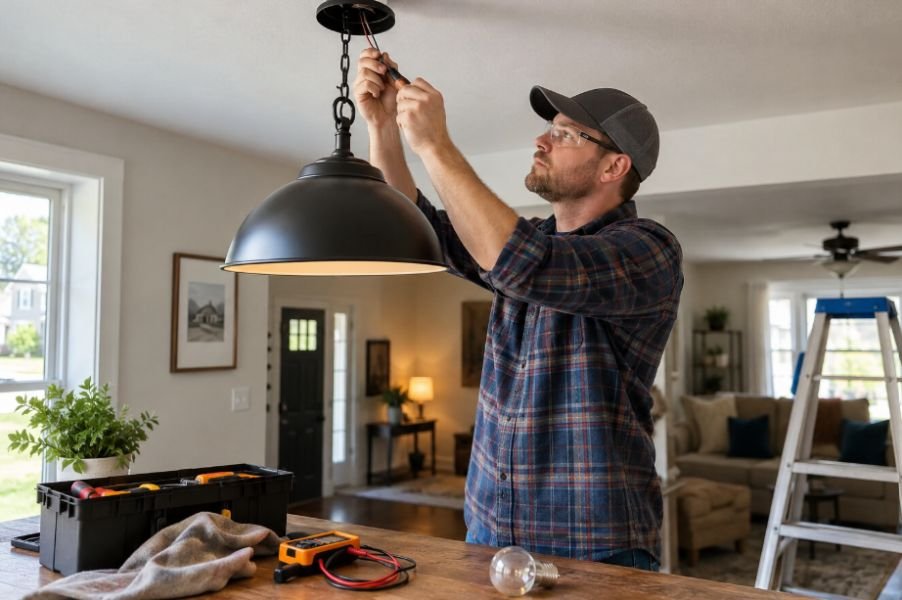
Safety comes before diagnosis. Turn off the appropriate circuit breaker and verify that the circuit is actually dead with a properly functioning voltage tester before touching lighting wires. Do not assume that flipping a switch has made the wiring safe. If you cannot positively establish that the conductors are de-energized, stop there and call a qualified electrician.
Match the Symptom to the Likely Fault
A flickering light has several possible causes. A failing bulb is an easy one to rule out, while loose connections can cause intermittent power. With LEDs, an incompatible dimmer or a failing LED driver can create flickering even when the house wiring is otherwise sound. If several lights flicker when a large appliance starts, the circuit or its connections may need further investigation.
If a breaker trips immediately when the light is switched on, a short circuit or fault deserves attention. A hot conductor contacting a neutral or grounded metal component can create a dangerous fault current. Do not keep resetting the breaker to see whether the problem disappears.
Check Switches and Connections Carefully
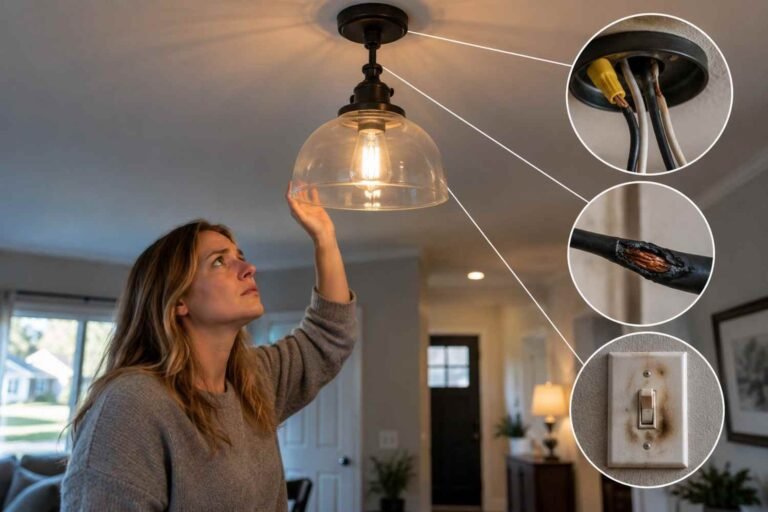
Loose terminals can produce intermittent operation, flickering, buzzing, or heat. Older wire connectors, loose terminal screws, and damaged conductors can all contribute to unreliable lighting. A switch that feels unusually warm, smells burnt, crackles, or shows discoloration should not be treated as a minor inconvenience.
Three-way lighting can be especially confusing because two switches control one fixture. Traveler wires and common terminals have specific roles, so a problem at either switch can affect the entire circuit. If a three-way light works from one location but not the other, the switching arrangement deserves attention rather than random wire swapping.
Reverse polarity is another serious concern. In a typical screw-base light socket, the energized conductor should connect to the center contact, while the threaded shell should remain connected to the neutral side. Incorrect connections can make the shell more hazardous when changing a bulb. Because polarity problems involve electrical connections, professional testing is the safer choice if you are unsure.
Modern LEDs Add Another Layer
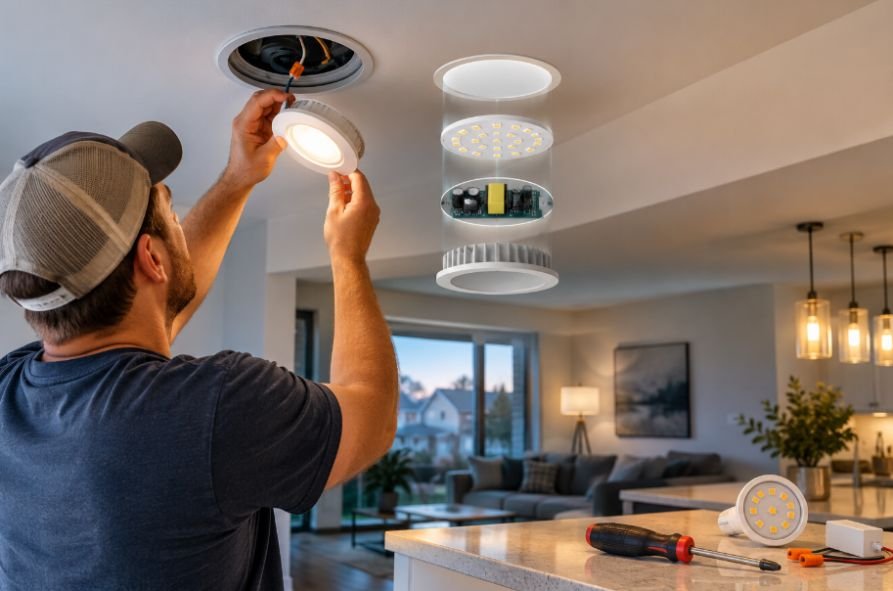
Older lighting problems are still common, but LED fixtures and smart controls have introduced new troubleshooting variables. Some LED lamps behave poorly with older dimmers, while certain smart switches require a neutral connection or have specific load requirements.
That is why a wiring diagnosis should consider the entire setup, not just the copper conductors. If you are replacing a conventional switch with a smart control, compare the switch requirements with the existing circuit before beginning. A useful smart light installation guide can also help explain compatibility, placement, and setup considerations before hardware is changed.
Know When the Problem Is Beyond DIY Troubleshooting
Some symptoms should end the troubleshooting session immediately. Burning smells, visible sparks, melted insulation, repeated breaker trips, exposed conductors, unexplained voltage readings, or hot switches are warning signs. So is uncertainty. Electrical boxes can contain multiple circuits, and older homes may have wiring configurations that are not obvious from the switch position or wire colors.
If the goal is a lighting upgrade rather than a repair, upgrading traditional lights to smart lighting should also begin with confirming that the existing circuit and controls are suitable.
Another useful clue is what happens immediately before the failure. A switch that feels normal but controls a dead fixture points toward the lamp, fixture, or connection. A switch that suddenly becomes noisy or warm raises a different concern. Likewise, a problem that appears after a renovation may involve a disturbed connection or an incorrectly configured control. Keeping track of when the symptom occurs can give an electrician much more useful information than simply saying that the light “doesn’t work.”
Frequently Asked Questions
1. Why does my light flicker?
A loose connection, failing bulb, incompatible dimmer, LED driver problem, or circuit issue can cause flickering. Start with the bulb and controls, then seek professional help if the problem persists.
2. Why does my breaker trip when I turn on a light?
A short circuit, damaged wiring, faulty fixture, or defective switch can cause immediate tripping. Do not repeatedly reset the breaker. Have the circuit inspected.
3. Can I test lighting wires myself?
You can verify whether power is present with an appropriate voltage tester, but opening or repairing energized wiring is unsafe. If you are uncertain about the circuit, contact an electrician.
4. Why does one light stop working while others still work?
The problem may be isolated to the bulb, switch, fixture, or connection serving that light. If basic checks do not identify it, professional testing can locate the fault.
The Habits Worth Keeping
Good lighting troubleshooting starts with restraint. The fastest solution is not always the one that involves opening a box and moving wires. A careful sequence, attention to symptoms, and a clear understanding of electrical warning signs can prevent a small lighting problem from becoming a dangerous one. Modern LEDs and smart controls make diagnosis more nuanced, but the basic principle remains simple: identify the problem before attempting a repair.
Knowing when to stop is part of knowing how to troubleshoot lighting wiring. A safe diagnosis is more valuable than a rushed fix, especially when the fault could be hiding behind the switch.






One thought on “How to Troubleshoot Lighting Wiring Safely and Spot Common Faults”