
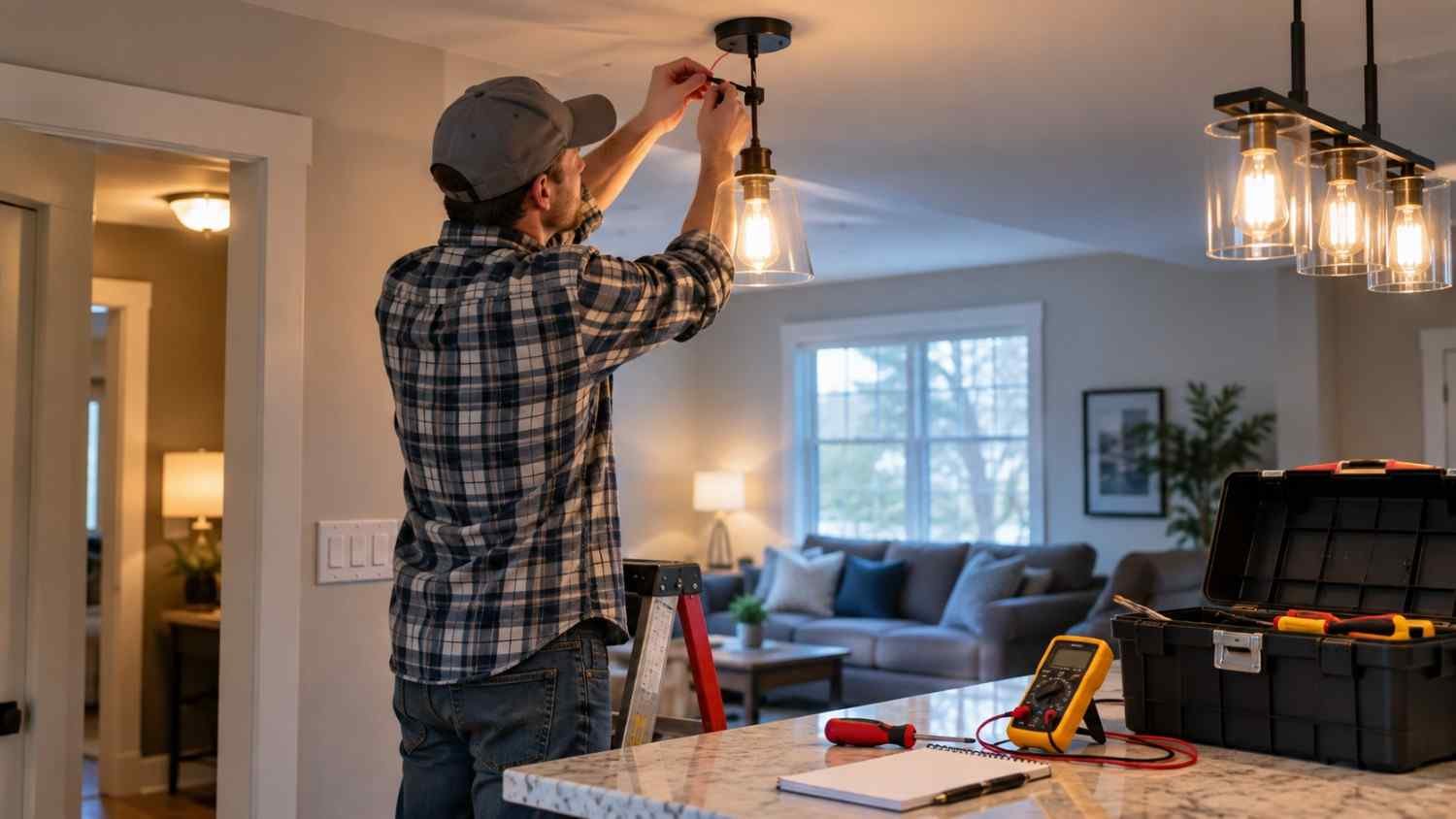
I used to assume a light that suddenly stopped working had one obvious culprit: the bulb. Then I noticed how often the same symptom could point elsewhere, especially when a breaker tripped, a switch felt different, or an LED fixture flickered.
I found the most useful approach is avoiding random part replacement. A lighting problem usually gives clues through its timing, location, and behavior. One dead lamp differs from several flickering fixtures, and a light that fails only with a dimmer needs a different approach.
Start With the Simple Checks
Before investigating wiring, narrow down the problem. If one bulb is dark, switch off the light and let it cool, then try a known-working bulb that matches the fixture. A loose lamp, failed driver, or worn socket can look like failure.
Next, look at the electrical panel. A tripped breaker can shut off an entire lighting circuit, sometimes along with other fixtures or receptacles. Resetting it once may restore operation, but repeated tripping can indicate a short, overload, damaged equipment, or another fault needing professional attention.
Check whether the problem affects one light, one room, or multiple areas. That observation is a useful diagnostic clue. If one fixture is affected, start locally. If several lights fail together, consider the switch, protection, connections, or supply.
Match the Symptom to the Fault
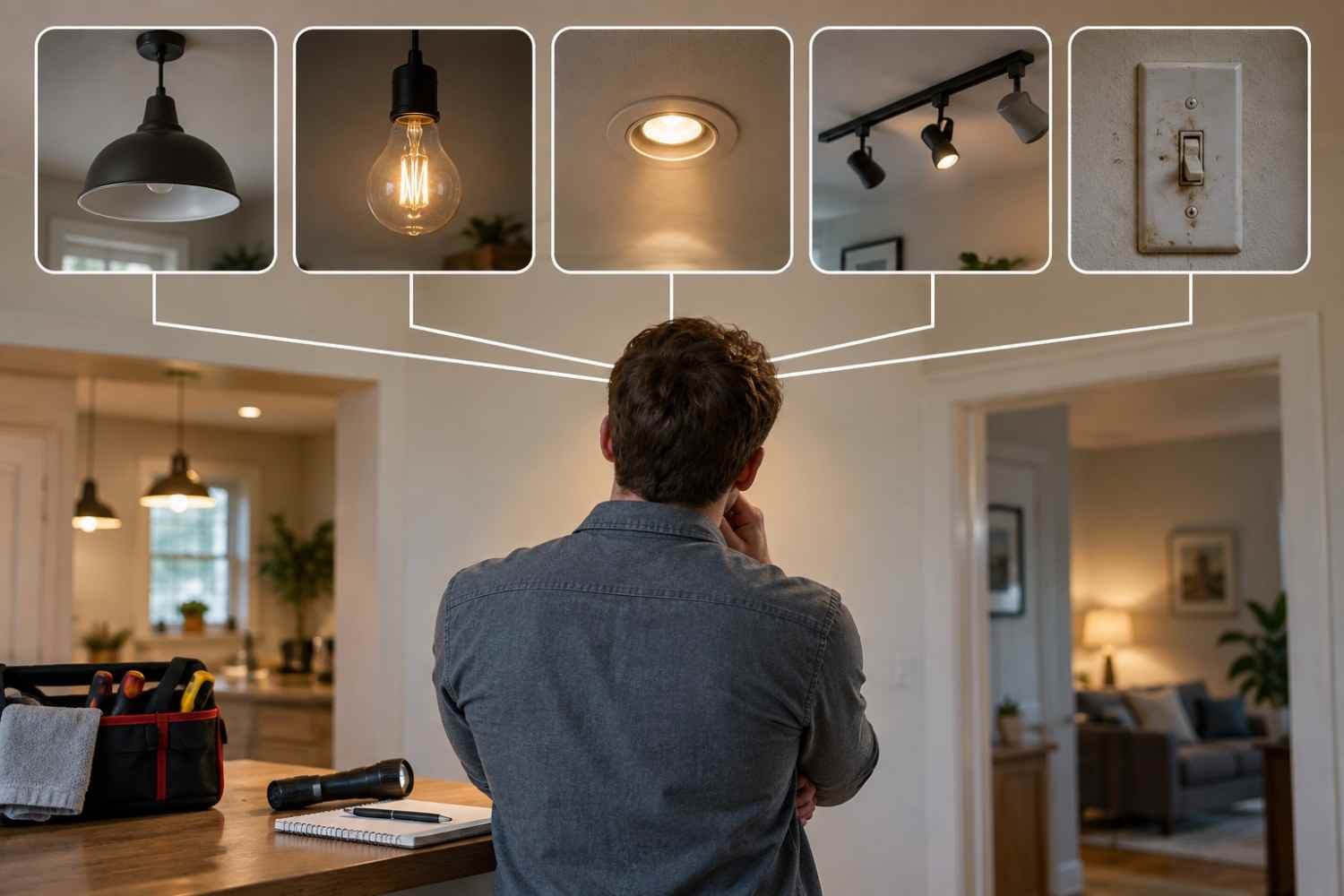
A dead light is straightforward, but flickering, dimming, and intermittent operation require more attention. Flickering can come from a loose bulb or aging lamp, but it can also point to a poor connection or incompatible dimmer.
LED lighting adds complexity. A bulb may be labeled dimmable while still performing poorly with an older or incompatible dimmer. You may see pulsing, flashing, a narrow dimming range, or a light that shuts off at a low setting. Matching the bulb, fixture, and control is often more useful than repeatedly replacing bulbs.
If lights dip when a large appliance starts, pay attention to the pattern rather than assuming the bulb is failing. Occasional changes differ from persistent voltage problems. When several fixtures respond together, an electrician can determine whether the circuit or supply needs attention.
When Wiring Becomes the Suspect
Once simple causes are ruled out, wiring deserves consideration. An open circuit can result from a broken conductor or failed connection, while a loose terminal can create intermittent contact. Problems may exist at a switch box, junction box, fixture, or another point along the branch circuit.
This is where how to troubleshoot lighting wiring becomes less about guessing which wire is bad and more about understanding the circuit. The hot conductor supplies power to the control and fixture, while the neutral completes the circuit. A problem in either path can leave a light dead or make its behavior unpredictable.
A multimeter can help a qualified person diagnose voltage, continuity, and resistance, but testing electrical wiring is not something to approach casually. A meter reading is meaningful only when you understand the circuit. For homeowners, visual observations and basic product substitution are safer starting points than opening energized boxes.
Don’t Overlook the Switch
Switches fail too. A worn switch may feel loose, inconsistent, or different from its usual positive action. A dimmer can develop buzzing, limited adjustment, flickering, or complete loss of control.
Three-way lighting adds variables because two switches control one fixture. If a light works from one location but not another, the control arrangement becomes an important clue. That does not mean the wiring is wrong; a failed switch can produce a similar symptom.
LED installations deserve attention because compatibility matters. Check whether the lamp and dimmer are designed to work together. If the problem began immediately after a lighting upgrade, that timing is valuable evidence.
Know When to Stop
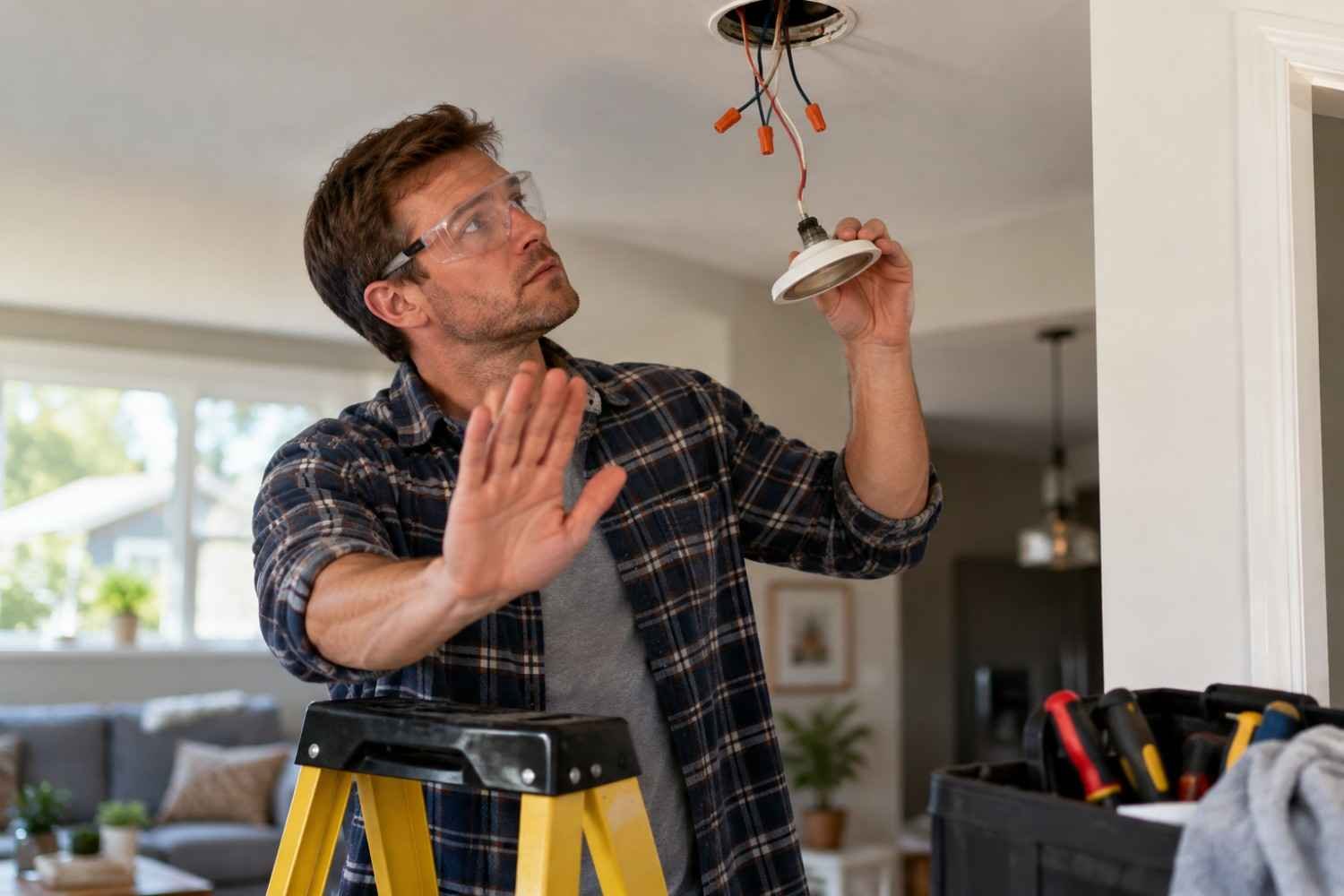
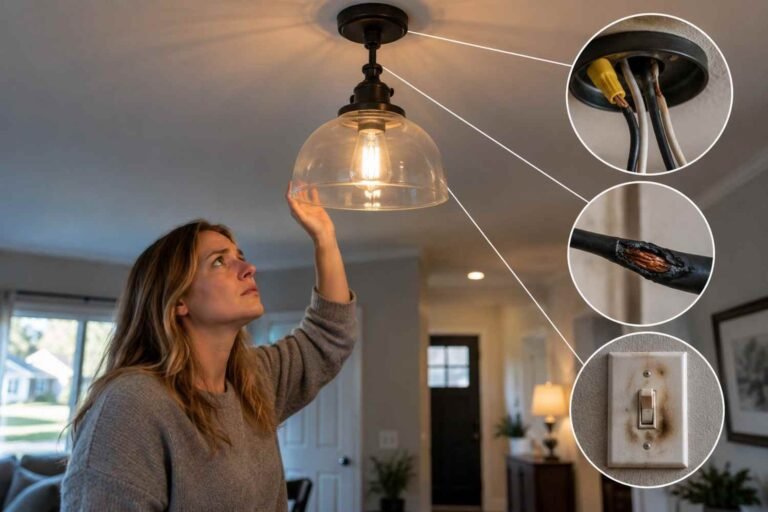
Some signs should change the goal from troubleshooting to safety. Stop using the circuit if you notice a burning smell, scorch marks, crackling, buzzing, unusual heat, visible damage, shocks, or repeated breaker trips. ESFI specifically identifies hot switch plates, discoloration, unexplained flickering, buzzing, odors, and recurring breaker trips as warning signs.
Do not handle internal wiring while a circuit is energized. Turn off power at the appropriate breaker and verify the circuit is dead with a properly rated voltage tester before touching electrical conductors. If you cannot identify the correct circuit or verify that power is off, stop and call a qualified electrician.
CPSC guidance also identifies lighting, switches, breakers, and wiring as potential electrical hazards.
A Better Troubleshooting Routine
A useful sequence is simple: observe the symptom, determine its scope, check the bulb and control, inspect warning signs, then consider deeper diagnosis. Note when the problem occurs and what else is happening. That information can save an electrician time if the fault is inside the circuit.
For identifying common lighting wiring problems, focus on patterns rather than isolated clues. One failed fixture suggests a local issue; several affected lights suggest something farther upstream. A problem that appears after an LED or dimmer upgrade points toward compatibility, while heat or burning odors raise an immediate safety concern.
FAQs: Lighting Circuit Troubleshooting Guide: Find and Fix Common Problems
1. Why did one light stop working?
Start with the bulb and fixture. Then consider the switch, breaker, and connections if other simple causes are ruled out.
2. Why are my LED lights flickering?
Possible causes include a failing LED, an incompatible dimmer, poor connection, or circuit issue. Check compatibility before assuming the wiring is faulty.
3. Should I test lighting wires with a multimeter?
Only if you have the knowledge and equipment to perform electrical testing safely; otherwise, have a qualified electrician diagnose the circuit.
4. Why does my breaker keep tripping when the light turns on?
Repeated trips can indicate a short circuit, overload, damaged component, or wiring fault. Do not repeatedly reset the breaker; arrange professional inspection.
The Value of Knowing Where to Stop
Good troubleshooting is about recognizing useful clues, not touching everything. A bulb swap, breaker check, or flicker observation can narrow the possibilities. Beyond those basics, electrical systems become less forgiving, and a mistake can create a shock or fire hazard.
Sometimes the smartest repair is the one you do not attempt. Know what the symptoms are telling you, make the safe checks you can, and bring in a qualified electrician when the circuit itself becomes the question.






3 thoughts on “Lighting Circuit Troubleshooting Guide: Find and Fix Common Problems”