
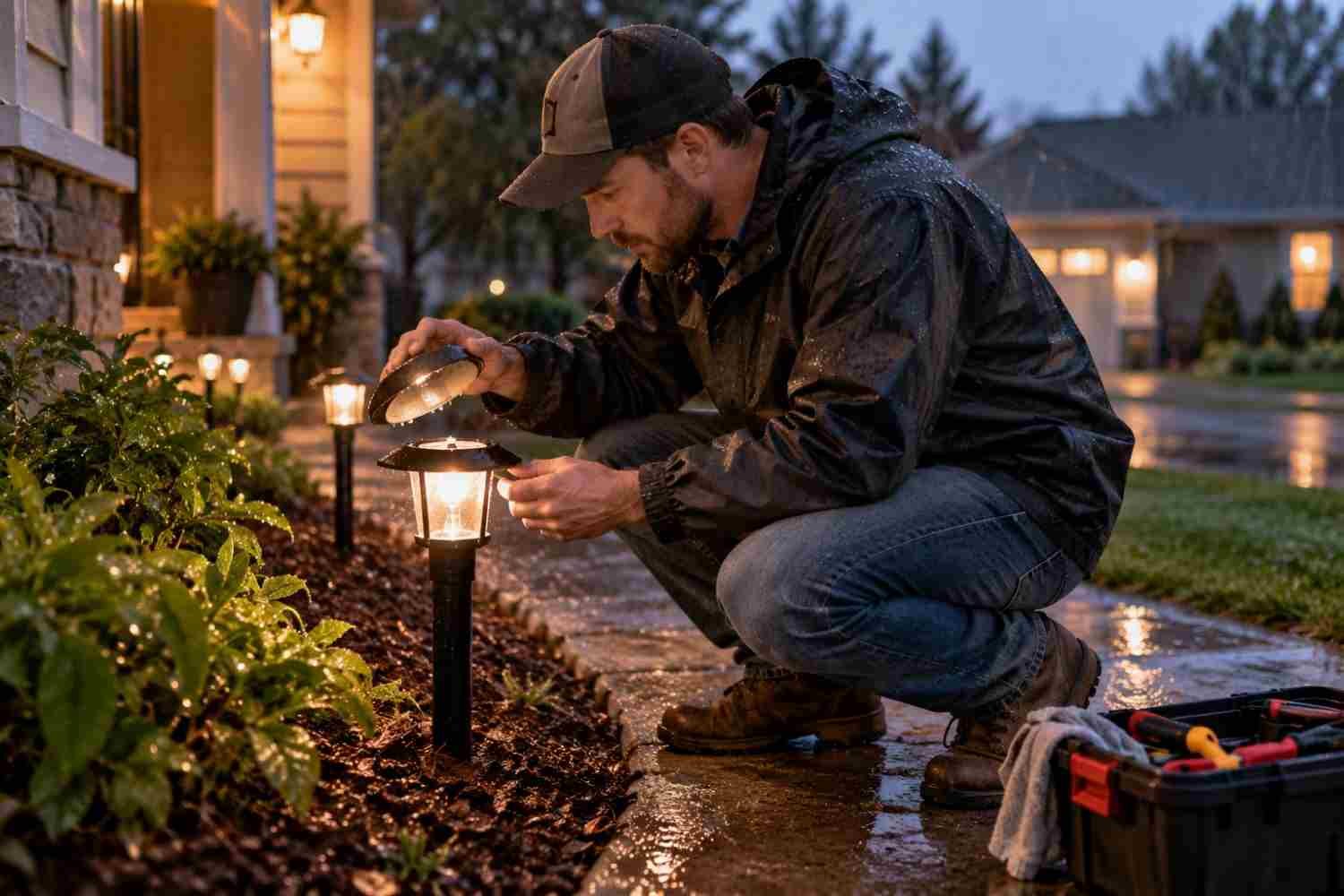
I noticed outdoor lights can behave strangely after a hard storm. One evening, everything may work normally, then a heavy downpour leaves a fixture dark, a breaker trips, or several landscape lights suddenly go offline. I found that the quickest way to make sense of it is to stop treating every failure like a bad bulb and look for where moisture may have reached the electrical system.
I also realized that rain itself is not always the real problem. Water can expose an older weakness, such as a cracked housing, worn gasket, loose connection, damaged cable, or poorly protected splice. Troubleshooting works better when it follows the symptoms instead of relying on guesswork. The goal is to find the moisture path, restore the system safely, and prevent the same failure during the next storm.
Start With Safety, Not the Fixture
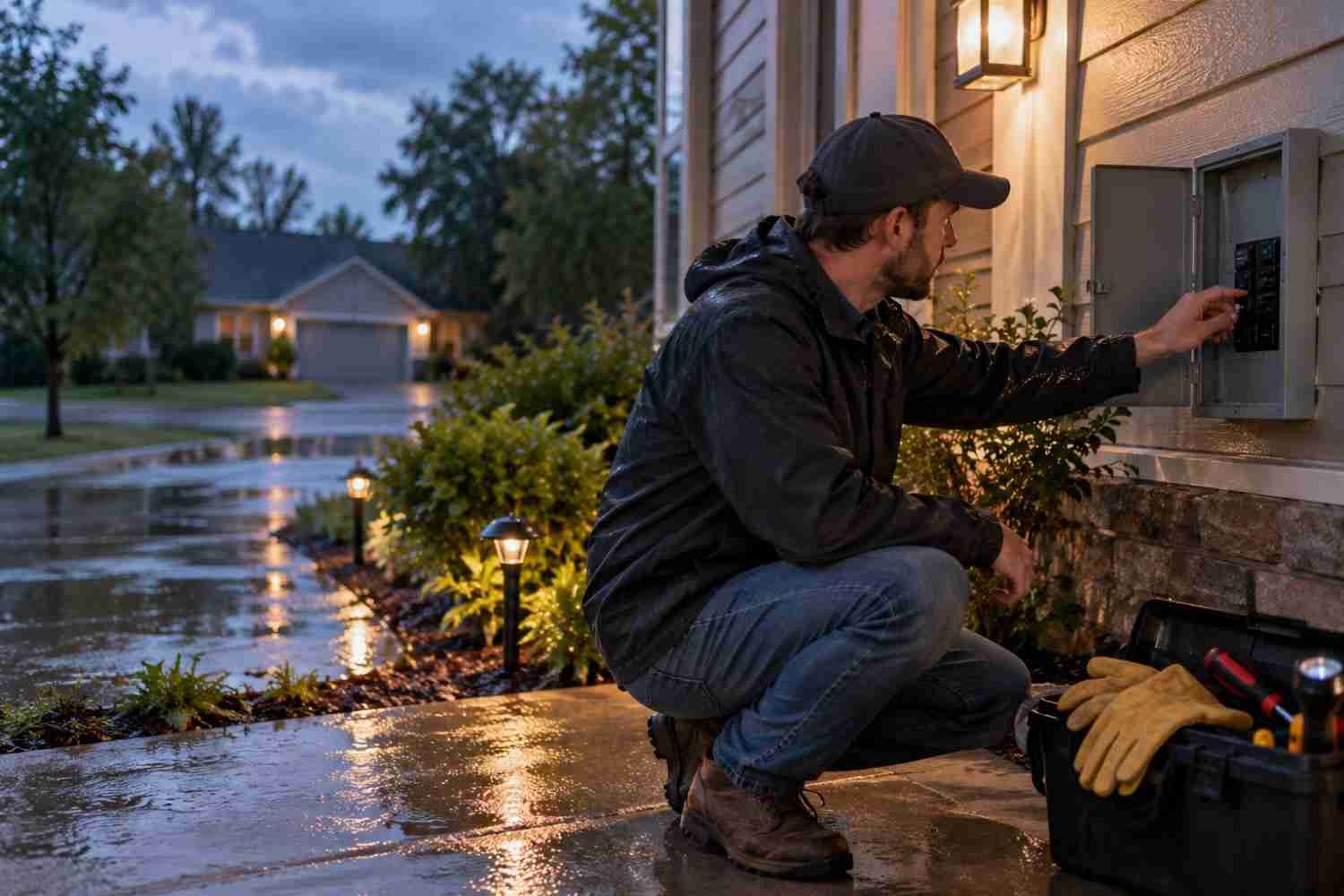
Outdoor electricity and standing water are a bad combination. A GFCI shuts off power when it detects current leaking from the intended circuit path, which can happen when electrical equipment becomes wet. Outdoor areas are among the places where GFCI protection is especially important.
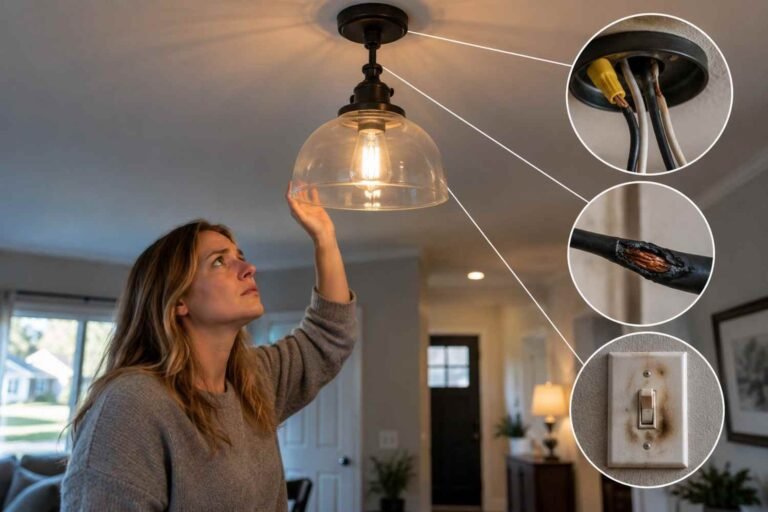
If a fixture, connection, or electrical box is visibly wet, do not open it or handle exposed wiring while energized. If you see damaged insulation, scorching, exposed conductors, or water inside an electrical box, stop and call a qualified electrician.
Find Out How Much of the System Failed
If one fixture stopped working, the problem may be local. A failed bulb, corroded socket, loose connection, or water inside the housing could be responsible. If several lights went dark together, look first at the shared switch, GFCI, breaker, or transformer.
A repeated trip is another useful clue. GFCIs respond to ground faults and leakage, so a trip after heavy rain can point toward moisture reaching a damaged electrical component.
Check the GFCI and Breaker
If outdoor lighting is connected through a GFCI receptacle, check whether it has tripped. A GFCI that trips again when the lights are switched on should not be repeatedly reset and ignored.
The same principle applies to the circuit breaker. If protection repeatedly trips after rain, the fault needs investigation rather than repeated resets.
Inspect Fixtures for Water and Corrosion
Once the power is safely off, look at the fixture itself. Check for cracked lenses, loose covers, deteriorated seals, damaged mounting points, or water collecting where it should not.
Temporary fogging is different from persistent droplets, standing water, or visible corrosion. Residue around a socket can indicate corrosion, while a damaged LED driver may fail even when the light eventually turns back on.
Do not assume a replacement bulb will solve a recurring problem. If the same fixture fails after every storm, the housing, seal, socket, or connection is likely part of the problem.
Outdoor fixtures should be rated for their installation environment. UL explains that fixtures used in wet locations need to be specifically marked suitable for wet locations, while damp-location fixtures are intended for moisture or condensation without direct exposure to flowing or splashing water.
Look Beyond the Fixture
Rain can reach the system through overlooked areas. Examine accessible cable-entry points and connection areas for moisture, corrosion, loose covers, or damaged insulation.
Do not dig into suspected buried wiring casually. Damage from landscaping, pests, or a shovel can become more troublesome when soil is saturated. Have suspected damage inspected professionally.
Prevent the Next Rain-Related Failure




3 thoughts on “How to Troubleshoot Outdoor Lights After Heavy Rain and Prevent Damage”