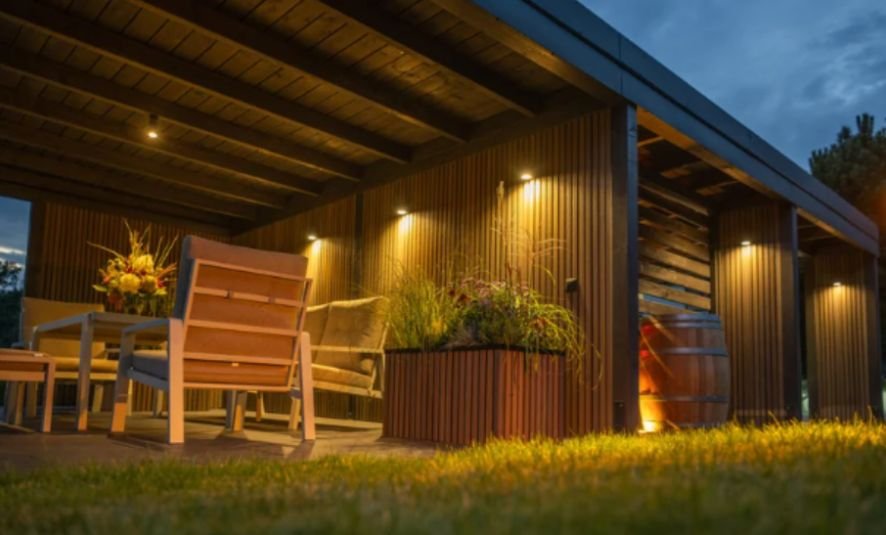
I believe patio lighting should do more than make an outdoor area visible. The right arrangement can turn an overlooked space into a comfortable setting for dining, entertaining, and relaxing after sunset.
The best outdoor lighting ideas for patios combine ambient, task, accent, and safety lighting instead of depending on one excessively bright fixture. With thoughtful placement, even a small patio can feel warmer, safer, and more spacious.
How Do You Plan an Effective Patio Lighting Layout?
Begin by deciding how each part of the patio will be used. A dining table needs comfortable task lighting, while a lounge area benefits from a soft, indirect glow. Steps, doors, pathways, and changes in floor level require dependable safety lighting. Grills and food-preparation counters need focused illumination that does not cast shadows over the work surface.
Next, plan three layers. Ambient fixtures provide general visibility, task lights support specific activities, and accent lights emphasize plants or architectural details. Combining these layers produces depth while preventing harsh brightness.
Check your available power sources before buying anything. Plug-in fixtures work near suitable outdoor outlets, while solar and rechargeable lights offer flexibility in areas without wiring. Permanent electrical connections should be completed by a qualified professional.
Create a Cozy Ceiling with String Lights
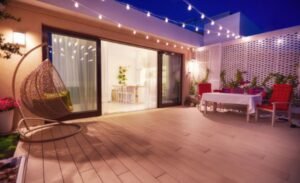
Globe and Edison-style string lights are popular because they deliver broad illumination without making a patio feel clinical. Arrange them in a zigzag pattern, create a V shape above a dining table, or run them around the perimeter of a pergola.
Measure the complete hanging route before selecting a strand, allowing extra length for gentle drops between mounting points. Long installations may need guide wire for support. Use outdoor-rated lights and mounting hardware, and keep electrical cords away from walking areas.
Warm white bulbs create an inviting appearance. Dimmable or smart string lights provide greater control when the patio shifts from family dining to quiet evening conversation.
Frame Patio Doors with Wall Sconces
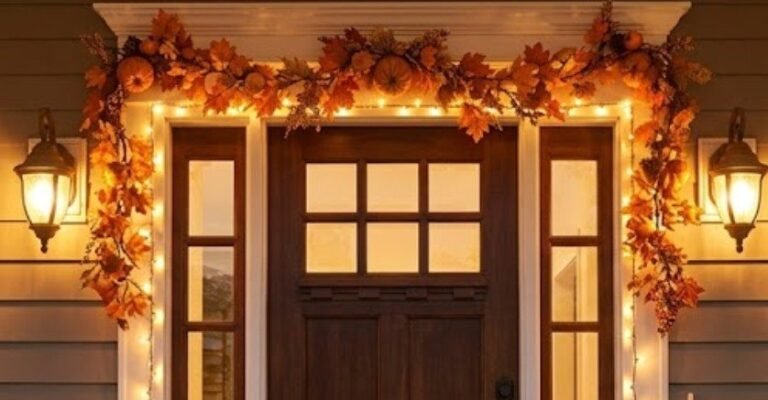
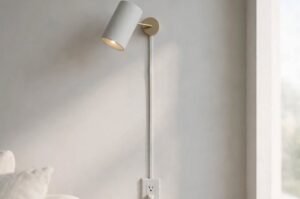
Wall sconces improve visibility around entrances while visually connecting the patio to the house. Matching fixtures on both sides of a door create symmetry, while evenly positioned sconces can illuminate a long exterior wall.
Choose shielded or downward-facing fixtures that direct light toward the ground. Exposed bulbs mounted near eye level can cause uncomfortable glare. The finish should complement nearby doors, furniture, and architectural materials so the fixtures look attractive during daylight as well.
Install Pendants Under a Covered Patio
A pendant light makes a covered patio feel like a complete outdoor room. Position one above the dining table or use several smaller pendants over a kitchen counter. A dimmer allows the fixture to provide useful dining light and softer illumination later in the evening.
Select a model rated for the conditions it will face. A covered location may still experience moisture, wind, and temperature changes. Maintain sufficient clearance above tables and walking areas, and confirm that the mounting structure can support the fixture.
Use Rechargeable Table Lamps for Flexibility
Portable table lamps are ideal for renters, small spaces, and patios without convenient outlets. They create an intimate pool of light on dining tables, side tables, and outdoor bars without requiring permanent installation.
Look for stable, outdoor-suitable designs with covered charging ports and diffused shades. Because rechargeable lamps are movable, you can rearrange them whenever the seating layout changes and store them during severe weather.
Outline the Patio with Solar Lights
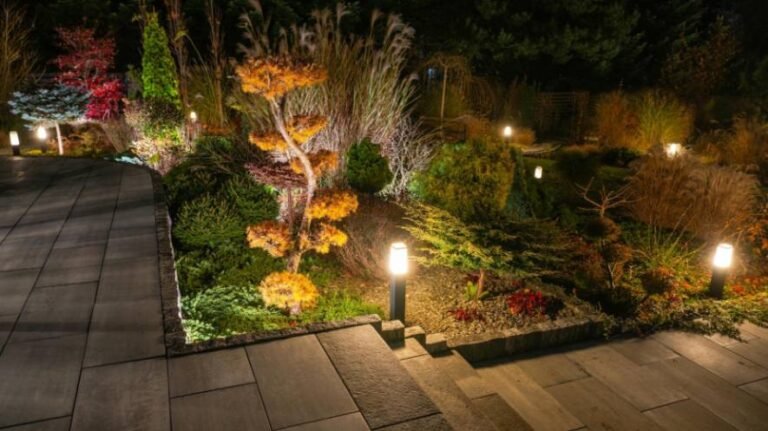
Solar stake lights can define the edge between a patio, garden, and lawn. They work particularly well for orientation and decoration, although many do not provide enough brightness for cooking or detailed tasks.
Install their panels where they receive reliable daylight. Trees, walls, and patio roofs can reduce charging performance. Avoid placing too many fixtures in a rigid line. Slightly staggered spacing usually produces a softer, more natural appearance.
Make Steps Safer with Low-Level Fixtures

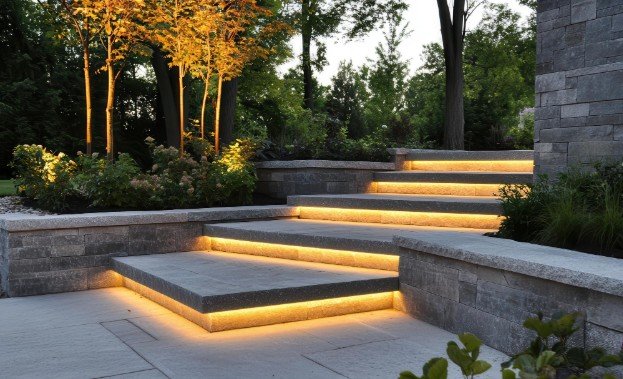
Recessed riser lights, under-rail LEDs, and low-mounted wall lights can reveal steps without flooding the whole patio. Position the fixtures below eye level and direct their beams across the walking surface to reduce glare.
Motion sensors are useful for steps and circulation areas that do not need continuous illumination. Before permanently installing anything, test the proposed position after dark to check for shadows and uncomfortable brightness.
Highlight Trees, Planters, and Textured Walls
Accent lighting creates visual depth by drawing attention beyond the edge of the patio. Aim a discreet spotlight through a tree canopy, across a stone wall, or toward a large planter. The light source should remain hidden whenever possible so viewers notice the illuminated feature rather than the fixture.
Do not point spotlights toward windows, seating areas, or neighboring properties. A few carefully selected focal points look more sophisticated than lighting every tree and surface.
Create a Natural Glow with Moonlighting
Moonlighting involves positioning a fixture above eye level and directing it downward through tree branches. The resulting shadows resemble natural moonlight and can cover a broad area without exposing a prominent fixture.
Make sure the beam does not shine directly into anyone’s eyes. Tree-mounted fixtures, elevated wiring, and other difficult installations should be handled by an experienced professional.
Hide LED Strips Under Built-In Features
Outdoor-rated LED strips can illuminate the underside of benches, counters, railings, and steps. Concealing the strip produces a floating glow and prevents individual LEDs from becoming distracting.
Use suitable channels or protected recesses to diffuse the light and reduce exposure. The strip, connectors, controller, and power supply must all be suitable for outdoor conditions. Indoor strips should not be used simply because they are installed beneath a covered feature.
Add Lanterns Around Conversation Areas
Lanterns provide decorative lighting without a permanent installation. Place them beside lounge furniture, on outdoor tables, or near planters. Grouping lanterns at different heights produces a more intentional appearance than scattering them randomly.
Battery-operated candles provide a flickering effect without an open flame. If real candles are used, place them inside stable enclosures and keep them away from fabrics, dry vegetation, children, pets, and windy areas.
Illuminate Cooking and Dining Zones Separately
Outdoor kitchens need clear task lighting above grills, sinks, counters, and preparation areas.
For recessed or overhead fixtures, understanding the LED beam angle for kitchen downlights can help you control how broadly light spreads across cooking and preparation surfaces.
Position the fixtures so the person cooking does not block the beam and cast a shadow over the work surface.
Dining areas need softer illumination. A shaded pendant, rechargeable lamp, or dimmable string-light canopy provides enough visibility without creating the brightness of a commercial space.
Choose a Comfortable Color Temperature
Warm white light around 2700K creates a relaxing atmosphere for dining and conversation.
Choosing the right color temperature is one part of knowing how to choose outdoor lighting for your home, since the light should complement both the space and how you use it.
A slightly cooler tone may support visibility in cooking areas, but strongly different colors positioned close together can make the patio look disjointed.
Instead of using one powerful source, distribute several lower-output fixtures across different heights. Dimmers, timers, and smart controls make it easier to create separate settings for meals, parties, and quiet evenings.
What Patio Lighting Mistakes Should You Avoid?
The most common mistake is excessive brightness. Exposed bulbs, upward-facing spotlights, and unshielded fixtures near seats can cause glare even when they do not appear especially powerful.
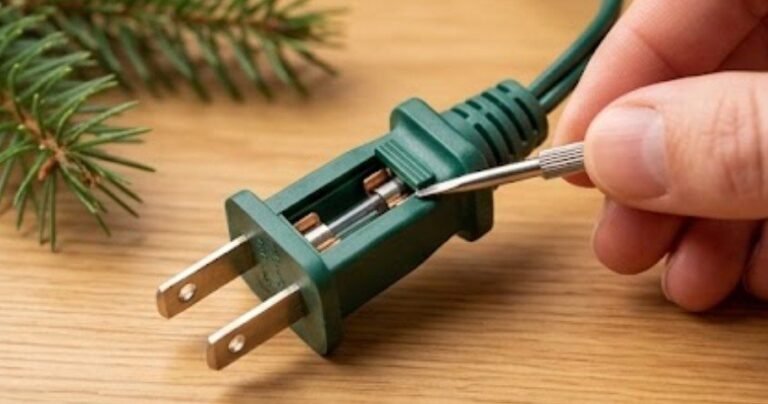
Other problems include mixing unrelated color temperatures, leaving electrical cords across walkways, overlooking steps, and using indoor fixtures outside. Always verify that lights, cables, plugs, and connectors are suitable for their location and expected exposure.
Frequently Asked Questions
1. What are the best outdoor lighting ideas for patios without outlets?
Rechargeable table lamps, solar stake lights, and battery-operated lanterns are practical choices. Combine multiple types so that decorative lighting does not have to provide all the functional illumination.
2. Are solar lights bright enough for a patio?
Solar fixtures are usually most effective for accent and orientation lighting. Cooking, dining, and larger seating areas may need a brighter rechargeable, plug-in, or permanently installed source.
3. Can outdoor string lights remain installed all year?
Outdoor-rated string lights may remain installed when the manufacturer permits it. Regularly inspect the cables, sockets, plugs, and mounting points, especially after high winds or severe weather.
4. Should every patio light have the same color temperature?
Using a consistent warm-white range creates a coordinated appearance. Task areas can use slightly cooler lighting, but major differences between neighboring fixtures may look distracting.
A Brighter Final Perspective
I find that successful patio lighting depends more on careful placement than on the number of fixtures. I begin with steps, entrances, pathways, and cooking surfaces before adding decorative elements. This approach ensures the patio remains functional as well as attractive.
By combining string lights, sconces, portable lamps, concealed LEDs, and selected landscape accents, I can create distinct layers without making the area excessively bright. The result is a patio that feels comfortable, secure, and ready to enjoy every evening.