
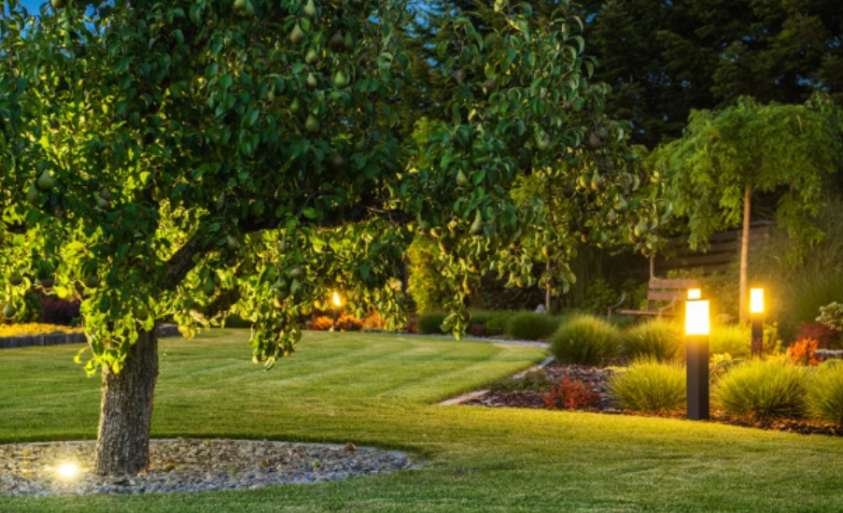
When I plan exterior lighting, I never begin by shopping for the most attractive fixture. I first walk around the property after sunset and observe where visibility is poor, which architectural elements deserve attention, and how each outdoor area is used. That simple inspection prevents me from purchasing lights that look appealing during the day but perform poorly at night.
Learning how to choose outdoor lighting for your home means balancing safety, comfort, appearance, durability, and energy use. The right plan illuminates entrances and walking surfaces without creating glare, wasting electricity, or making the property look unnaturally bright.
Start With the Purpose of Each Outdoor Area
Every exterior light should solve a specific problem. Before selecting fixtures, identify whether you need task, ambient, accent, or security lighting.
Task lighting supports activities and safe movement. It belongs near entrances, steps, gates, outdoor kitchens, and walkways. Ambient lighting creates comfortable general illumination for patios, porches, and entertaining areas. Accent lighting highlights trees, stonework, fountains, and architectural details.
Security lighting covers vulnerable areas such as driveways, side yards, detached garages, and rear entrances. Instead of leaving powerful floodlights on continuously, use motion sensors or scheduled controls. This provides light when needed without producing unnecessary glare throughout the night.
Match Each Fixture to the Correct Location
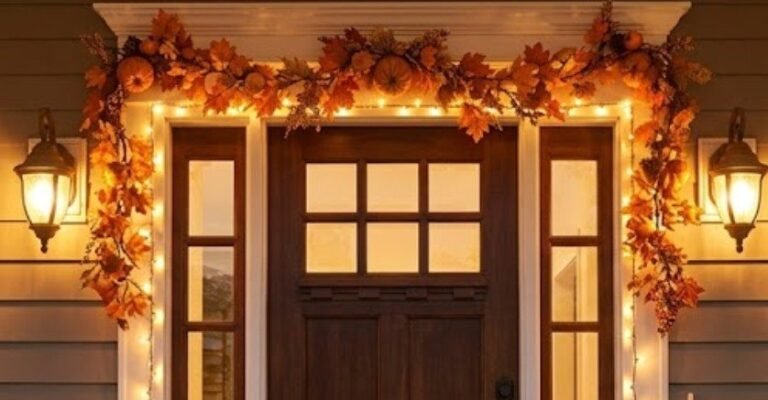
Outdoor fixtures work best when their design matches their intended location. Wall lanterns and sconces illuminate front doors, garage doors, and side entrances. Ceiling-mounted fixtures suit covered porches with limited overhead clearance, while pendants work well beneath tall, protected ceilings.
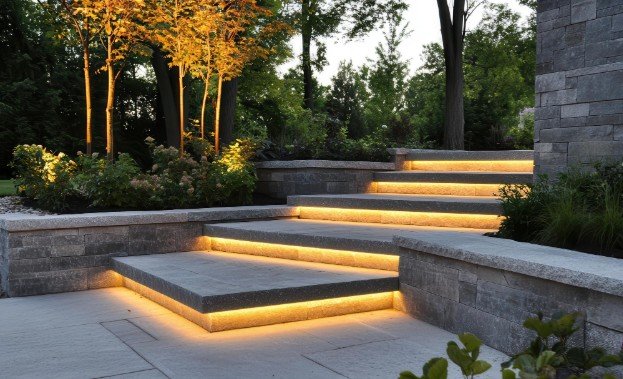
Path lights should reveal the edges of walkways rather than turn the entire yard into a brightly lit corridor. Step and deck lights help people recognize changes in elevation. Post lights can identify gates, long driveways, and property entrances.
Spotlights produce focused beams for trees, sculptures, and architectural details. Although sixty years of lasers have transformed our understanding of focused light, residential spotlights use controlled beams rather than lasers.
Floodlights cover wider areas and are better suited to security or large activity zones. Shielded fixtures help direct illumination toward the intended surface instead of neighboring properties or the sky.
Use Layers to Create a Balanced Lighting Plan
One extremely bright fixture cannot produce a comfortable outdoor environment. A layered plan distributes light across several levels and prevents harsh contrasts between intensely illuminated and completely dark areas.
Begin with practical lighting at doors, walkways, and steps. Add softer ambient lighting around seating and dining areas. Finish with a small number of accent lights aimed at selected landscape or architectural features.
Do not illuminate every plant, wall, or corner. Leaving some areas darker produces depth and allows focal points to stand out. It also reduces energy use, light trespass, and disruption to nocturnal wildlife.
Choose the Right Brightness in Lumens
Watts describe energy consumption, while lumens describe how much visible light a bulb produces. For that reason, compare LED products by lumen output rather than wattage.
An entryway needs enough illumination for visitors to see locks, handles, and changes in floor level. Path and step lights typically require lower output because they are positioned near the surface being illuminated. Security floodlights need more output, but greater brightness is not automatically better. Excessive light can produce glare and deep shadows that make visibility worse.
Dark-colored materials absorb more light, while pale siding, concrete, snow, and reflective surfaces return more light toward the viewer. Select the lowest useful output and use dimmable fixtures when possible.
Select a Comfortable Color Temperature
Color temperature is measured in Kelvin. Lower values produce a warmer appearance, while higher values create cooler, bluer light.
Warm white light around 2700K to 3000K generally complements residential architecture, landscaping, wood, brick, and outdoor entertaining areas. It creates a welcoming appearance without making the property feel commercial.
Cooler light may improve visibility in a specific work or security area, but it should be used carefully. Mixing several unrelated color temperatures across the front of a house can make the lighting design appear disorganized. Keeping visible fixtures within a consistent range creates a more polished result.
Compare Solar, Plug-In, and Wired Lighting
Solar energy systems are easy to install because they require no electrical cable. They work best in locations that receive dependable direct sunlight. Shade, short winter days, aging batteries, and cloudy weather can reduce their brightness and operating time.
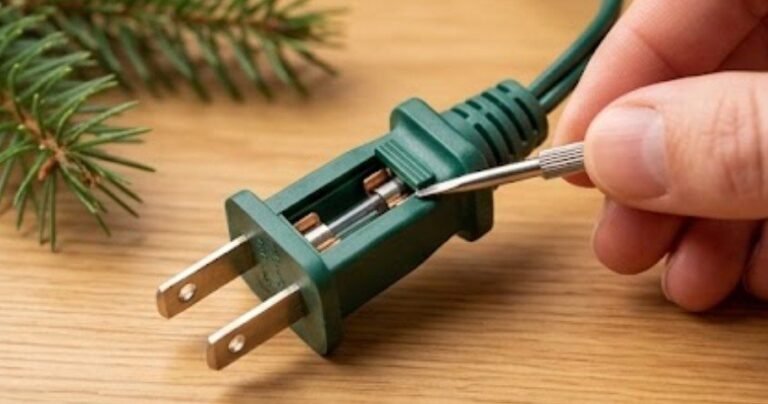
Plug-in lights offer convenient installation near an outdoor receptacle, but cords must be rated for exterior use and routed away from walking areas. Connections should remain protected from water.
Low-voltage landscape lighting uses a transformer to reduce household voltage, making it a popular choice for paths, gardens, and accent lighting. Proper cable sizing and transformer capacity remain important, especially across long runs.
Hardwired fixtures deliver dependable power for wall lights, ceiling fixtures, and security lights. New circuits, junction boxes, or unfamiliar wiring should be handled by a qualified electrical professional.
Check Wet and Damp Location Ratings
A fixture’s location rating matters more than its decorative style. Wet-location fixtures are designed for areas exposed directly to rain, snow, or water. They are appropriate for uncovered walls, posts, open gardens, and other exposed locations.
Damp-location fixtures are suitable for moisture but not direct precipitation. They generally belong beneath covered porches, roofed patios, and protected overhangs. A fixture described only as damp-rated should not be installed where wind-driven rain can reach it.
For added confidence, look for products evaluated by recognized testing organizations, such as UL or ETL. Always follow the manufacturer’s specified installation location.
Consider Weather and Fixture Materials
Climate affects the lifespan of exterior fixtures. Coastal salt air can accelerate corrosion, intense sunlight can fade finishes, and freeze-thaw cycles can damage poorly sealed components.
Solid brass, copper, stainless steel, and high-quality powder-coated materials can provide strong durability when suited to the environment. Examine the finish warranty and climate limitations instead of selecting by color alone.
Size Exterior Fixtures Proportionally

Exterior fixtures often look smaller in a showroom than they do online, yet undersized sconces can disappear against a large façade. As a practical starting point, a front-door fixture may measure approximately one-quarter to one-third of the door’s height.
Double doors, tall entryways, and wide garage doors can support larger fixtures. Before purchasing, create a cardboard template using the listed dimensions and hold it against the wall. This provides a more realistic sense of scale, clearance, and mounting position.
Fixtures should complement the home’s architecture without matching every finish exactly. Black, bronze, brass, and other finishes can work together when their shapes, proportions, or visual character feel related.
Add Controls for Convenience and Efficiency
Timers, photocells, motion sensors, and smart controls reduce unnecessary operation. Photocells switch lights on at dusk, while timers turn them off at a chosen hour. Motion sensors are useful near garages, driveways, and side entrances.
Smart outdoor lights can provide schedules, dimming, remote operation, and integration with compatible home systems.
These features can be especially useful for renters who want more control over lighting without making permanent changes to the property. Smart lighting for renters can provide convenient scheduling and automation while working within temporary living arrangements.
Confirm that the fixture, controller, power supply, and wireless connection are all suitable for outdoor conditions.
Frequently Asked Questions
1. How to choose outdoor lighting for your home without making it too bright?
Use several low-output, shielded fixtures instead of one powerful light. Illuminate doors, paths, steps, and selected features while allowing less important areas to remain darker.
2. Should all exterior lights match?
They do not need to be identical. Fixtures should share compatible proportions, finishes, shapes, or design characteristics so the overall exterior feels coordinated.
3. Is warm or cool light better outdoors?
Warm white light between approximately 2700K and 3000K usually works best for homes, patios, gardens, and entrances. Cooler light should be reserved for areas needing clearer task visibility.
4. When should I hire an electrician?
Hire a qualified professional when adding circuits, replacing damaged wiring, installing line-voltage fixtures, modifying junction boxes, or completing work beyond your experience.
The Final Glow
I find that the best exterior lighting plans feel subtle rather than spectacularly bright. I focus first on safe movement, then add comfort and visual interest with warm, carefully directed layers.
By checking brightness, color temperature, location ratings, materials, proportions, and controls before buying, I can create an exterior that feels welcoming while remaining practical, efficient, and considerate of its surroundings.




One thought on “How to Choose Outdoor Lighting for Your Home”