I used to think replacing a light fixture was one of those home projects that looked harder than it really was. After seeing how quickly a loose connection or rushed wire splice can turn an upgrade into a real electrical problem, I became more careful about what happens behind the finished fixture.
I also realized that lighting installation safety mistakes often come from small assumptions. A switch feels like enough protection, an LED seems like it cannot get hot, and an outdoor fixture may look weatherproof. Those shortcuts can hide risks until something starts buzzing, flickering, overheating, or tripping a breaker.
Common Lighting Installation Safety Mistakes Homeowners Make
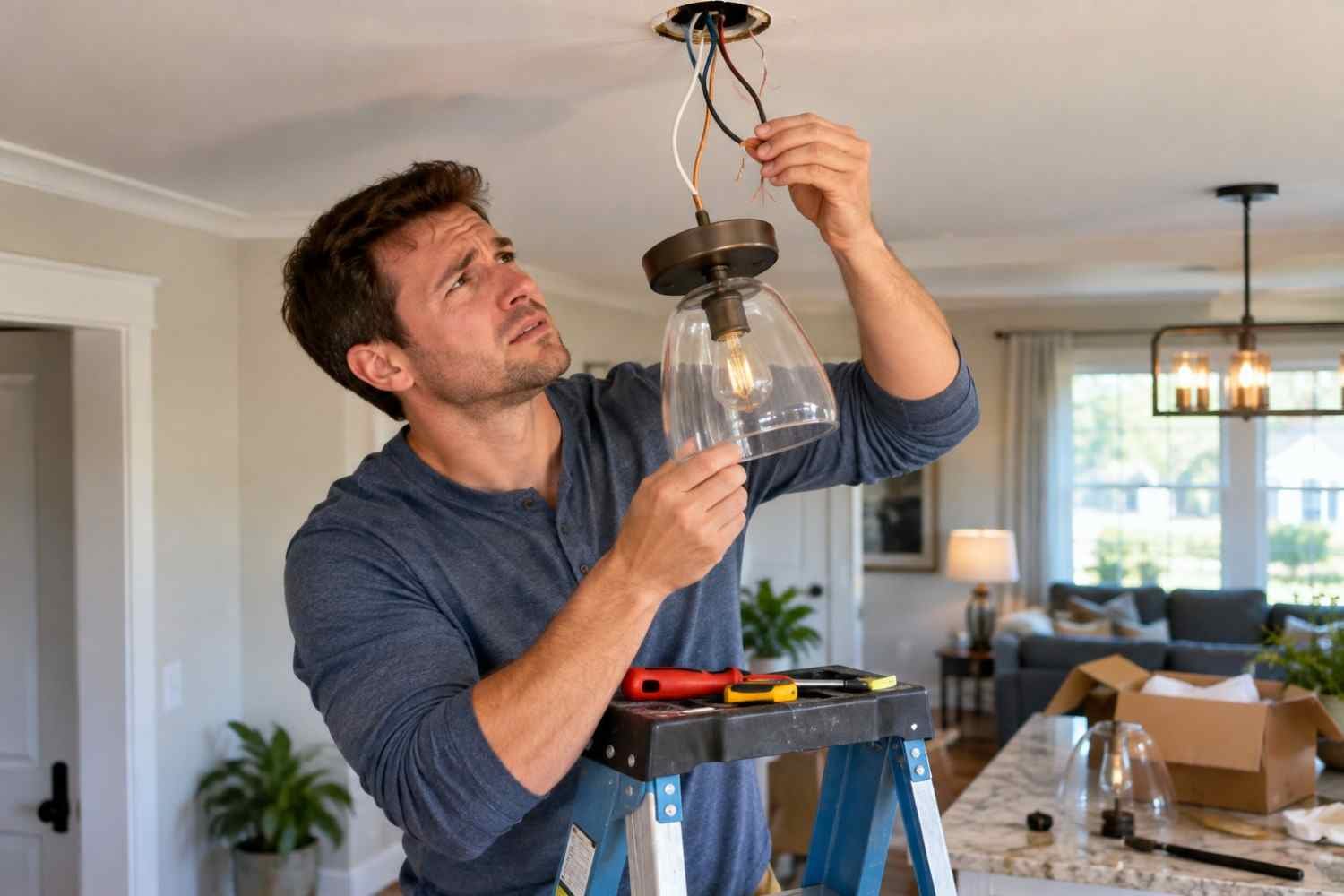
Lighting projects involve more than choosing a fixture and connecting a few wires. The circuit, mounting surface, fixture rating, heat environment, and location all matter. A safe installation means treating the electrical system as a whole.
1. Working Without Properly Cutting Power
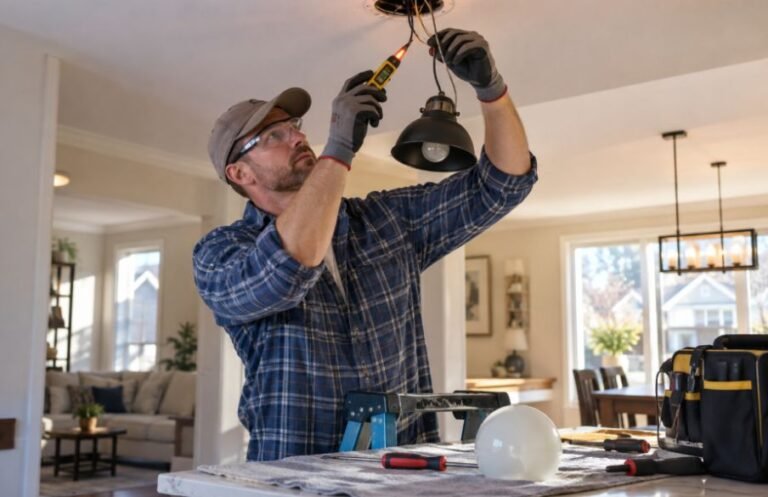
One of the most serious lighting installation safety mistakes is starting work before the circuit is de-energized. Turning off the wall switch does not necessarily remove power from every conductor in the box.
Switch off the appropriate breaker and verify that power is absent with a properly rated tester. If the wiring is confusing, damaged, unexpectedly energized, or different from the fixture instructions, stop instead of guessing. More complicated work is a reason to call a qualified electrician.
2. Ignoring Fixture and Bulb Ratings
A bulb that physically fits a socket is not automatically the right choice. Wattage limits, voltage, fixture design, location ratings, and dimmer compatibility can affect safe operation.
LEDs use less power than incandescent bulbs, but that does not mean every LED belongs in every fixture. Fully enclosed fixtures can trap heat, so the bulb should be approved for that application. Good LED fixture heat management also means keeping intended ventilation and installation conditions intact rather than covering vents or squeezing an oversized lamp into a tight housing.
3. Making Loose or Incorrect Wire Connections
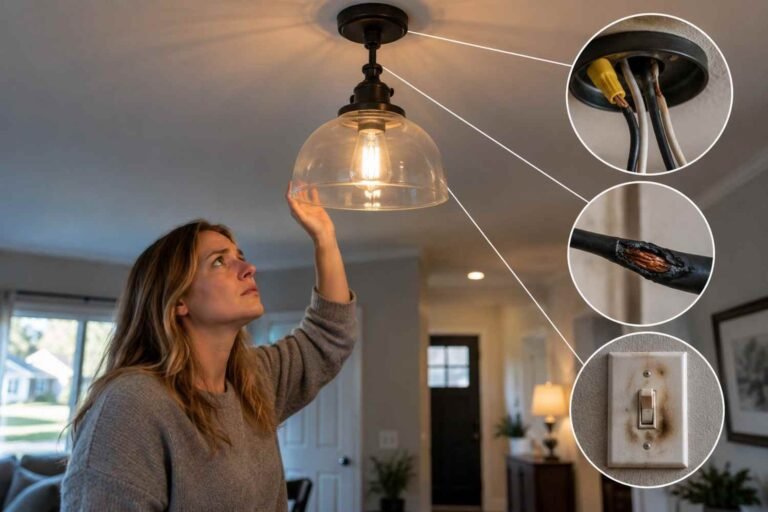
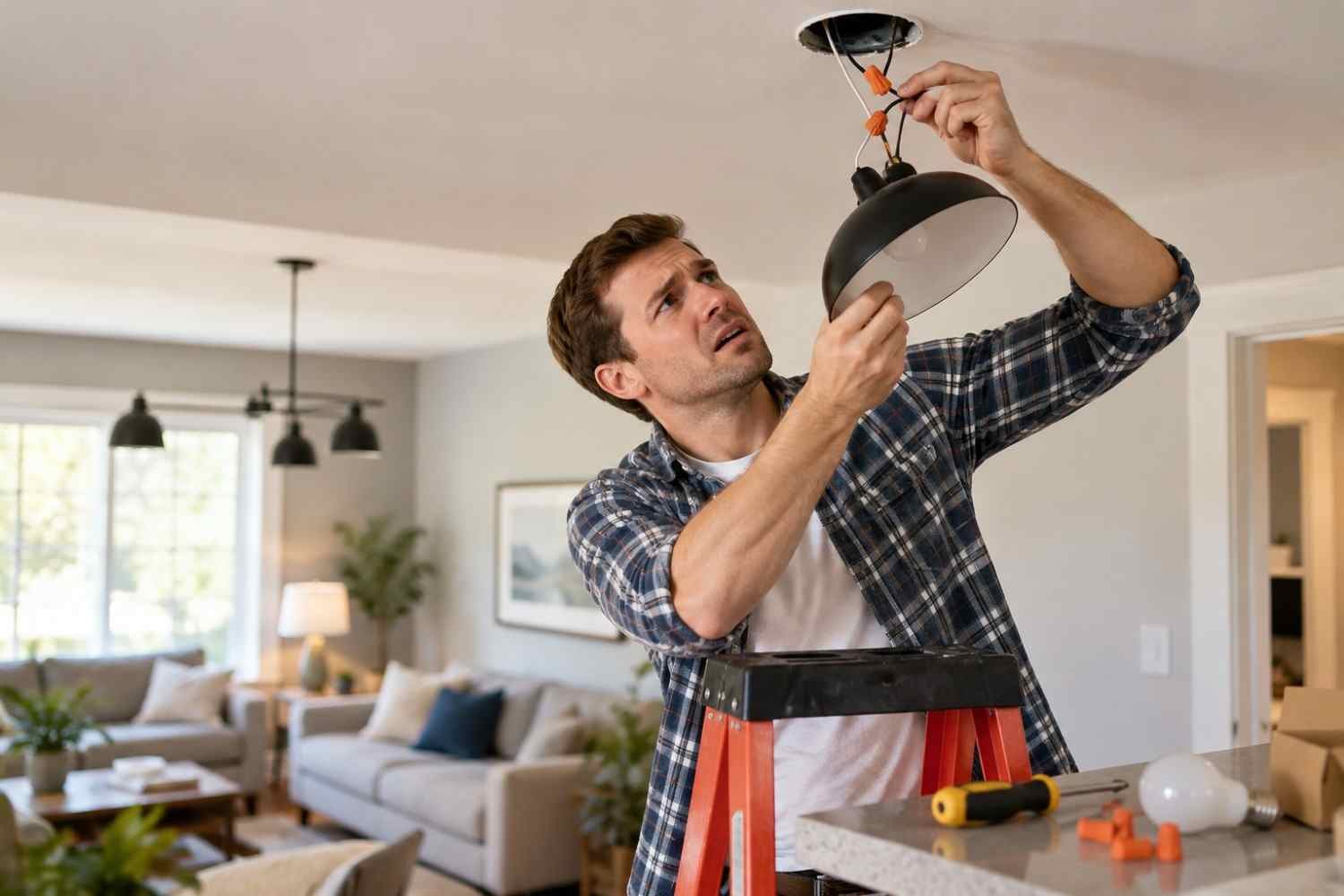
A fixture can look installed while a poor connection sits hidden inside the electrical box. Loose terminals, exposed conductors, damaged insulation, or missing grounding can create shock and fire hazards.
Connections should follow the fixture instructions and applicable electrical requirements. Wire connectors should match the conductors, and the junction box should remain accessible where required. Never hide a questionable splice behind drywall simply because the light works.
4. Overloading an Existing Circuit
Adding several fixtures to an existing circuit without considering its capacity is another common mistake. Problems may show up as flickering lights, warm switches, buzzing, burning odors, or breakers that trip repeatedly.
A breaker that trips is not simply an annoying obstacle to reset. It can signal an overload, short circuit, or another electrical problem. If the circuit cannot support the planned lighting load, the solution may involve a different circuit or professional assessment rather than repeatedly resetting the breaker.
5. Mounting a Fixture Without Enough Support
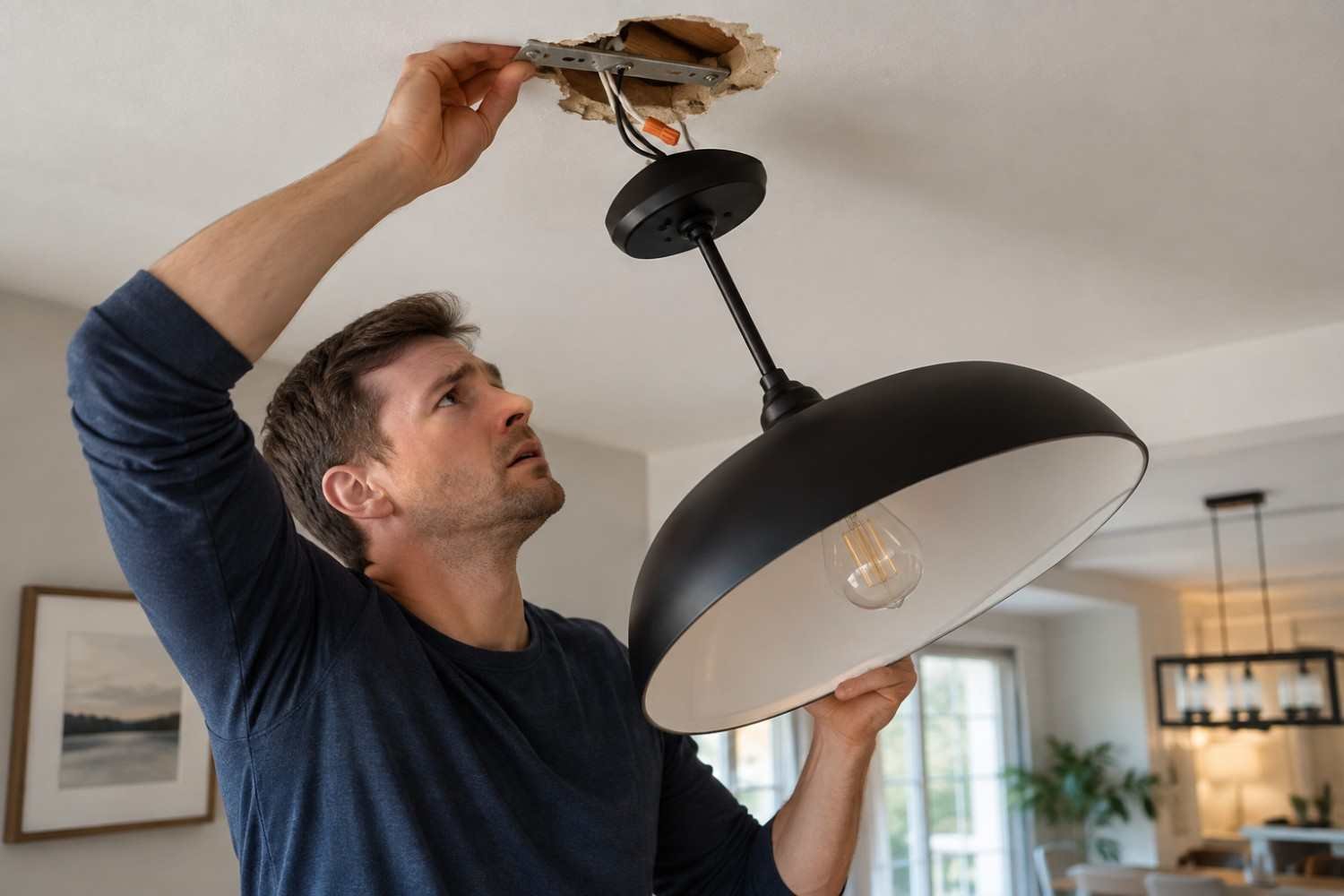
Electrical safety is not only about wires. A heavy chandelier, ceiling fan light, or decorative fixture needs suitable support for its weight and movement.
Using a standard box where a fixture-rated box is required can leave the installation unstable. Vibration can loosen hardware and stress wiring. Check the fixture weight, mounting instructions, box rating, and hardware before tightening everything into place.
6. Treating Outdoor Lighting Like Indoor Lighting
Outdoor lighting faces moisture, temperature changes, dirt, insects, and corrosion that indoor fixtures do not. Using an indoor-rated product outside can allow moisture to reach electrical components.
The fixture and equipment should be rated for the actual environment, whether damp or wet. Outdoor receptacles and applicable circuits may also require GFCI protection. Seals, covers, connectors, and drainage all matter. Good outdoor lighting corrosion prevention is about controlling moisture exposure and choosing materials designed for outdoor conditions.
7. Ignoring Warning Signs After Installation
Some problems appear only after the light has been operating for a while. A warm fixture, flickering lamp, buzzing sound, burning smell, discoloration, or repeated breaker trip deserves attention.
Do not keep using a fixture simply because it still produces light. Switch it off when there is a suspected electrical fault and have the problem evaluated. Small warning signs are easier to address before they become damaged wiring or a fire hazard.
When a Lighting Project Needs a Professional
There is a difference between replacing a compatible fixture and diagnosing an electrical system. Homeowners should be especially cautious when wiring is old or damaged, there is no clear grounding path, the electrical box is unsuitable, breakers trip repeatedly, or the project requires changes inside the panel.
Local requirements vary, so following the fixture manufacturer’s instructions and applicable electrical code matters. When something does not make sense, guessing is rarely a useful shortcut. A qualified electrician can identify the circuit, verify connections, assess capacity, and handle work that requires specialized knowledge.
FAQs: Common Lighting Installation Safety Mistakes Homeowners Make
1. Is it safe to install a light fixture myself?
A simple replacement may be manageable for someone comfortable with basic electrical work, but the circuit must be safely de-energized, and the installation must match the fixture instructions. Stop if wiring is unfamiliar or damaged.
2. Can LED bulbs overheat in a fixture?
Yes. LEDs produce less heat than incandescent bulbs overall, but they still need appropriate thermal conditions. Check whether the bulb is rated for enclosed fixtures and avoid blocking designed ventilation.
3. Do outdoor lights need GFCI protection?
Outdoor electrical installations can require GFCI protection depending on the equipment and location. Follow applicable code requirements and use products rated for the environment.
4. When should I call an electrician?
Call a qualified electrician for repeated breaker trips, damaged wiring, missing grounding, unexplained buzzing or heat, panel modifications, or any installation that you cannot confidently verify.
The Safest Installation Is the One You Do Not Have to Revisit
Good lighting should disappear into the background once it is installed. That is usually a sign that the fixture is secure, the circuit is appropriate, connections are sound, and the equipment can handle its environment. Taking a few extra minutes to check those details can prevent a frustrating repair later.
The smartest shortcut is not skipping safety steps. It is knowing which steps matter and when the job is better left to someone with proper training.