
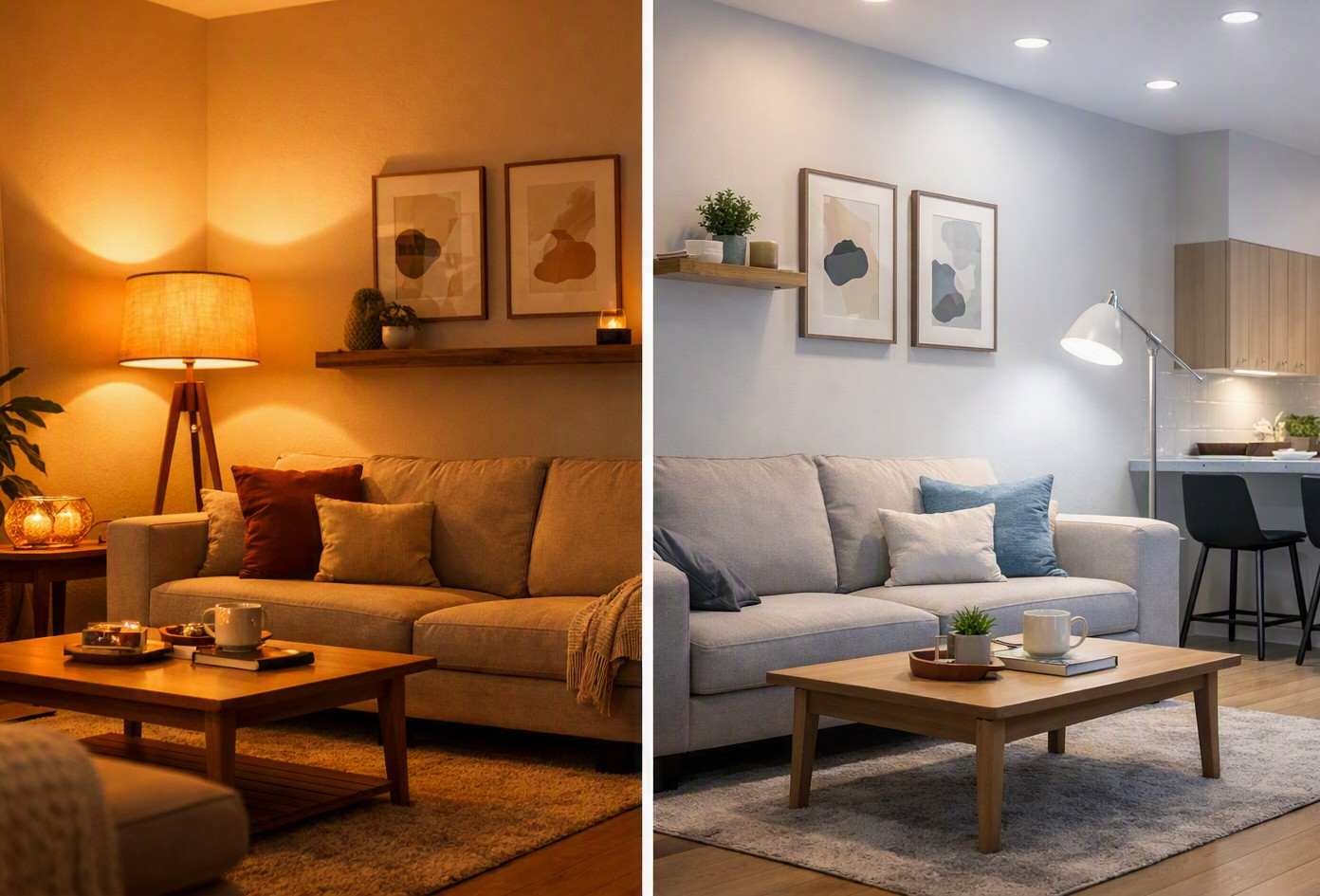
Lighting does more than brighten a room. It influences how comfortable a space feels, how colors appear, and how easily we complete daily tasks. When upgrading home lighting, many homeowners find themselves choosing between a traditional warm glow and a more flexible smart lighting solution.
The decision between warm white vs tunable white LED lighting depends on whether you prefer simplicity or complete control over your indoor environment. Warm white LEDs create a consistent, relaxing atmosphere, while tunable white LEDs allow you to adjust the color temperature based on your mood, activity, or time of day.
For US homeowners designing bedrooms, kitchens, living rooms, and home offices, understanding these differences can help create a more functional and comfortable home.
Warm White LED Lighting: A Simple Way to Create a Cozy Home
Warm white LED lighting produces a soft, yellow-toned glow that resembles traditional incandescent bulbs. Most warm white LED bulbs fall between 2700K and 3000K on the Kelvin lighting scale, making them popular for residential spaces where relaxation is the priority.
I often recommend warm white lighting for rooms where comfort matters most. Bedrooms, dining areas, family rooms, and entertainment spaces usually benefit from this warmer appearance because it creates a welcoming atmosphere.
The biggest advantage of warm white LED bulbs is their simplicity. They work with standard switches and many common dimmers, making installation easy for homeowners who want an affordable lighting upgrade without complicated controls.
Warm white lighting is also a good choice for evening environments because the lower color temperature creates a softer visual experience compared with cooler, blue-toned lighting. Since blue-toned light is often associated with increased alertness, many homeowners prefer warmer lighting at night. This is why understanding that blue light has a dark side can help you choose lighting that better supports a comfortable evening atmosphere.
However, the main limitation is flexibility. A warm white bulb stays at one color temperature. If you need brighter, cooler lighting for reading, working, or detailed tasks, you may need additional fixtures.
Tunable White LED Lighting: Adjustable Lighting for Modern Homes

Tunable white LEDs offer a completely different approach by allowing users to change the color temperature of their lighting. Instead of producing one fixed shade of white, these lights can transition between warm, neutral, and cool tones.
Most tunable white systems combine warm and cool LED channels inside one fixture. By adjusting the balance between these channels, homeowners can create different shades of white light, often ranging from around 2700K to 6500K.
This adjustable white lighting has become popular in smart homes because users can control brightness and color temperature through apps, remotes, automation systems, or voice assistants. Smart lighting platforms also allow scheduling, allowing homeowners to create different lighting scenes throughout the day.
For example, I can use a warmer setting in the evening when relaxing, switch to a neutral white tone while cooking, and choose a cooler daylight setting when working from home.
Warm White vs Tunable White LED Lighting: Key Differences Explained
The biggest difference between these two lighting options is control.
Warm white LEDs provide a fixed lighting experience. They are ideal when you already know the type of atmosphere you want and do not need frequent adjustments.
Tunable white LEDs provide flexibility. They allow one fixture to perform multiple roles by changing its color temperature whenever needed.
| Feature | Warm White LEDs | Tunable White LEDs |
| Color Temperature | Fixed around 2700K–3000K | Adjustable around 2700K–6500K |
| Flexibility | One consistent tone | Changes based on mood and activity |
| Best For | Bedrooms, dining rooms, living spaces | Kitchens, offices, multipurpose rooms |
| Controls | Switches and dimmers | Apps, remotes, voice assistants |
| Cost | Lower upfront cost | Higher investment but more features |
Which Lighting Works Best for Different Rooms?
Bedroom Lighting: Choose Comfort and Relaxation
Bedrooms are spaces where warm lighting usually performs best. A 2700K warm white LED bulb creates a calming space that works well for bedside lamps, ceiling fixtures, and accent lighting.
Tunable white lighting is also useful in bedrooms because it provides additional flexibility. A homeowner can use cooler lighting in the morning while getting ready and switch to warmer tones at night.
Kitchen Lighting: Tunable White Offers More Versatility
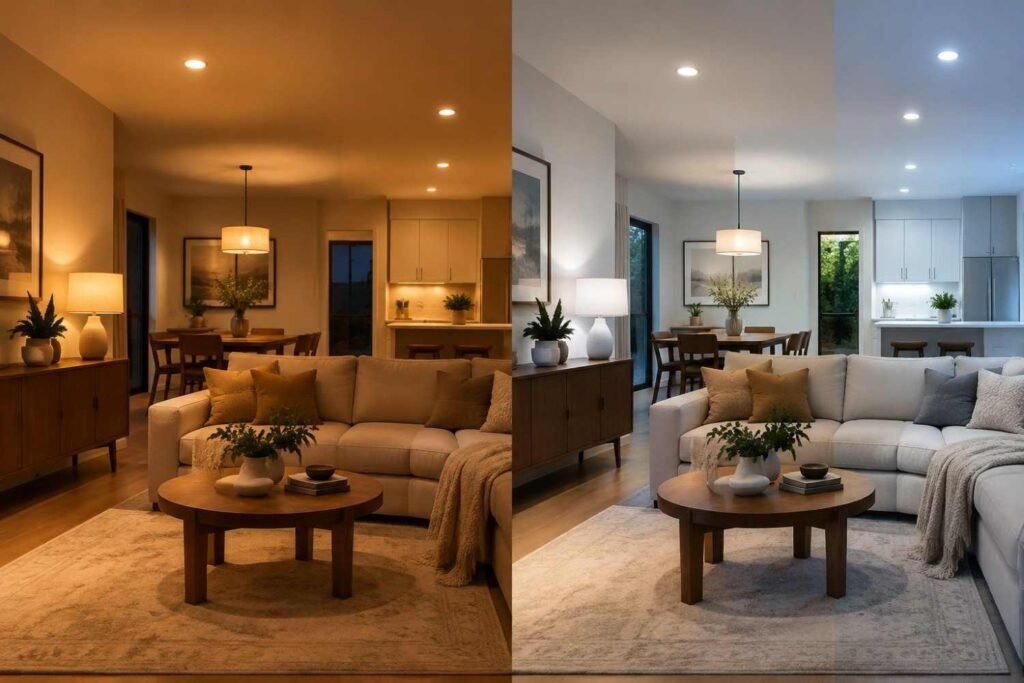
Kitchens require different types of illumination throughout the day. Bright, neutral lighting helps with food preparation, cleaning, and cooking, while warmer tones create a comfortable atmosphere during meals.
This is where tunable white LEDs provide an advantage. A single fixture can support both task lighting and ambient lighting without requiring multiple bulbs.
Home Office Lighting: Support Productivity and Focus
Home offices benefit from adjustable color temperature control because lighting needs change throughout the day.
Cooler white settings can provide a crisp environment during working hours, while warmer settings can make the room feel more comfortable during breaks.
For remote workers, tunable white lighting can be a practical smart home improvement.
Living Rooms: Match Your Lifestyle
Living rooms often serve multiple purposes, including watching movies, entertaining guests, reading, and relaxing.
Warm white lighting works well for homeowners who want a traditional cozy feel. Tunable white lighting is better for spaces that need to adapt between different activities.
Can Tunable White Lighting Support Natural Daily Rhythms?
Many homeowners choose tunable lighting because it supports human-centric lighting concepts. The idea is that lighting can be adjusted throughout the day to better match natural patterns of daylight.
Cooler, brighter lighting during daytime hours can create a more energetic environment, while warmer evening lighting can create a relaxing atmosphere. The U.S. Department of Energy notes that color-tunable products can be used for applications where changing light appearance throughout the day is desirable.
While lighting alone does not replace healthy sleep habits, choosing the right color temperature can improve the overall comfort of indoor spaces.
Is Tunable White LED Lighting Worth the Extra Cost?
Tunable white lighting usually costs more than traditional warm white bulbs because it requires additional LED channels, drivers, and control systems.
For homeowners upgrading a bedroom lamp or hallway fixture, warm white LEDs may provide everything needed.
However, tunable white LEDs can be worth the investment for smart homes, open-concept spaces, and rooms with multiple functions. Instead of installing separate warm and cool lighting solutions, one system can provide both options.
The right choice depends on how much flexibility you want from your lighting setup.
Common Mistakes When Choosing LED Color Temperature

One mistake homeowners often make is choosing lighting based only on brightness. Lumens matter, but LED color temperature also affects how a room feels.
Another mistake is mixing too many different lighting tones throughout a home. Using 2700K lighting in one room and very cool daylight lighting in another without planning can create an inconsistent look.
I also recommend checking CRI ratings, dimmer compatibility, and smart home integration before purchasing. Quality lighting should improve both visibility and the appearance of your furniture, flooring, and décor.
Frequently Asked Questions (FAQs)
1. Is warm white or tunable white LED lighting better for bedrooms?
Warm white lighting is ideal for creating a relaxing bedroom atmosphere, while tunable white LEDs provide additional control for morning routines and evening relaxation.
2. Can tunable white LEDs replace warm white bulbs?
Yes. Tunable white LEDs can produce warm white tones while also offering cooler settings for different activities.
3. Which option is more energy efficient: warm white or tunable white LEDs?
Both use energy-efficient LED technology. Energy consumption depends more on brightness level, usage patterns, and fixture efficiency than the color temperature itself.
4. Is warm white vs tunable white LED lighting better for smart homes?
Tunable white lighting is usually the better choice for smart homes because it supports automation, scheduling, and personalized lighting scenes.
Final Thoughts
Choosing between warm and adjustable lighting comes down to how you use your home. Warm white LEDs remain one of the easiest ways to create a comfortable and inviting atmosphere without complicated installation.
Tunable white LEDs provide a more advanced experience by allowing homeowners to adjust lighting throughout the day for different activities. For modern homes, smart spaces, and multipurpose rooms, that flexibility can make a noticeable difference. Even renters can enjoy these benefits through options like smart lighting for renters without rewiring, which allows upgrades using smart bulbs, plug-in fixtures, and wireless controls without making permanent electrical changes.
When I consider warm white vs tunable white LED lighting, I see it as a choice between simplicity and adaptability. The best option is the one that matches your lifestyle, your room’s purpose, and the atmosphere you want to create.








2 thoughts on “Warm White vs Tunable White LED Lighting: Which One Is Right for Your Home?”