
I started noticing how often outdoor lights came on for reasons that had nothing to do with anyone approaching the house. A passing car, a neighbor walking a dog, or movement near a driveway could leave a porch or side yard glowing for minutes. That made me look at motion sensor lighting differently. The goal is not simply to make a fixture turn on, but to place and adjust it so the light appears when it is genuinely useful.
I also found that installing motion sensor outdoor lights is less intimidating when the job is treated as two tasks: safe electrical installation and careful sensor setup. Replacing an existing exterior fixture can be manageable for a confident DIYer, while running new wiring is a different project. Getting that distinction right, then testing the finished light, can make the difference between a useful security feature and a frustrating one.
Start With the Location
Before touching a wire, decide what you want the light to detect. A front door, garage approach, driveway, side gate, stairway, or backyard path may each need a different sensor position. The sensor should cover the route people are likely to take without pointing toward a street or sidewalk where routine movement could cause repeated activation.
Check the Electrical Setup First
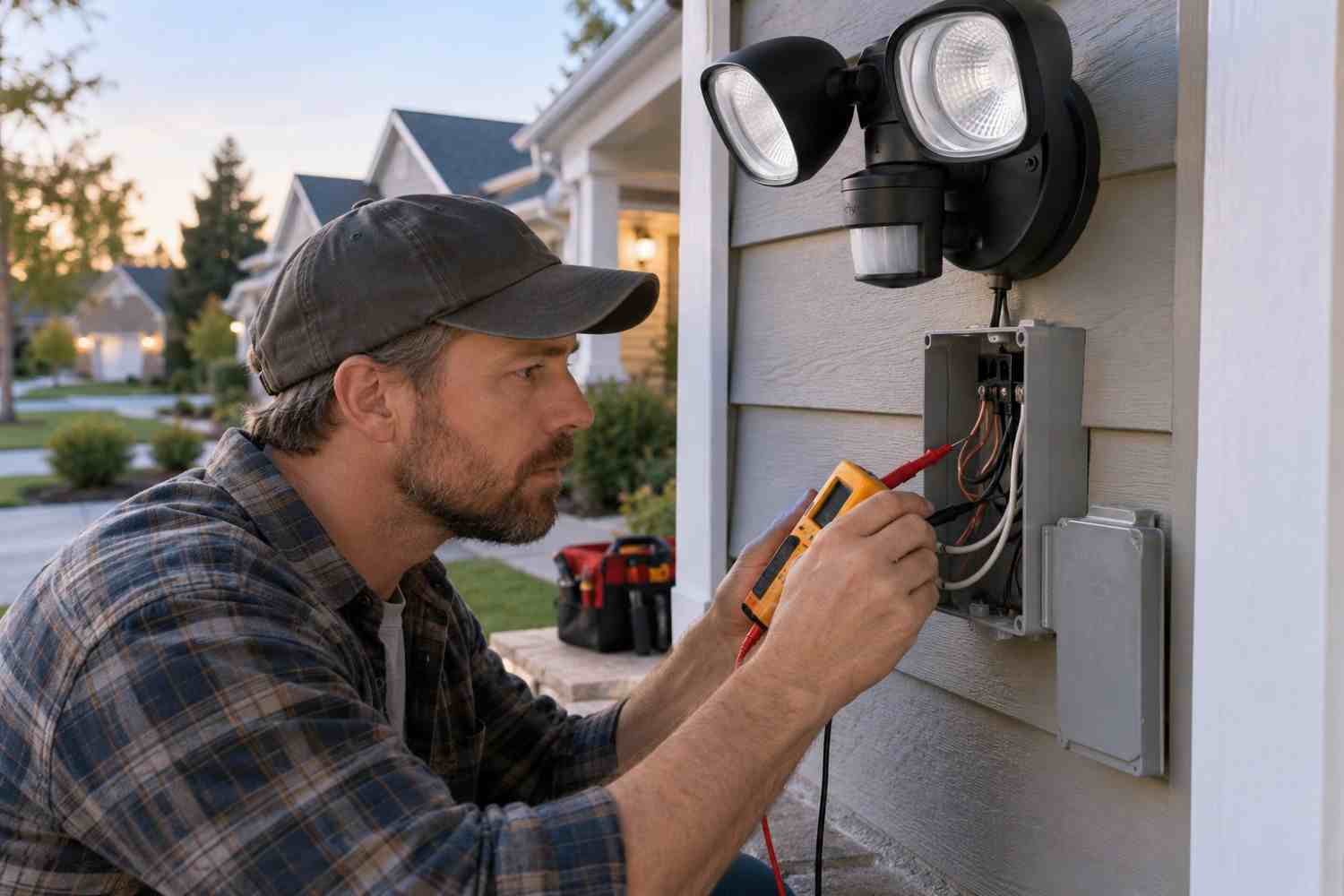
A hardwired motion light involves line-voltage electricity, so switch off the circuit breaker controlling the existing fixture and verify that the wires are dead with a voltage tester. Do not assume a wall switch alone makes the circuit safe. Manufacturer instructions and local electrical requirements should take priority over a generic wiring diagram.
Replacing an existing outdoor light is generally simpler because the electrical box and supply wiring are already there. A new location requiring cable, a different box, or circuit changes is a different project. If the wiring looks damaged, unfamiliar, or inconsistent with the fixture instructions, stop and get a licensed electrician involved.
Remove the Old Fixture and Make the Connections
With power verified off, remove the old fixture and expose the junction box. Keep the conductors supported while you inspect the connections. Do not rely on wire color alone if an older installation looks unusual. The new fixture’s instructions should identify line, neutral, and ground connections.
Outdoor installation also means thinking about moisture. The fixture, electrical box, and mounting arrangement need to be suitable for the location. Some exposed installations require wet-location-rated equipment, while protected areas may have different requirements. Follow the product listing and instructions rather than assuming every outdoor light is interchangeable.
Seal the Fixture and Restore Power
Restore power only after the installation is complete. If the light does not behave normally, shut the circuit off again before investigating. A light that remains on, refuses to activate, or behaves erratically may have a wiring, sensor, control, or configuration issue.
If the electrical side becomes confusing, a useful lighting circuit troubleshooting guide can help you think through circuit-related symptoms without randomly changing connections.
Adjust the Sensor for Real Movement
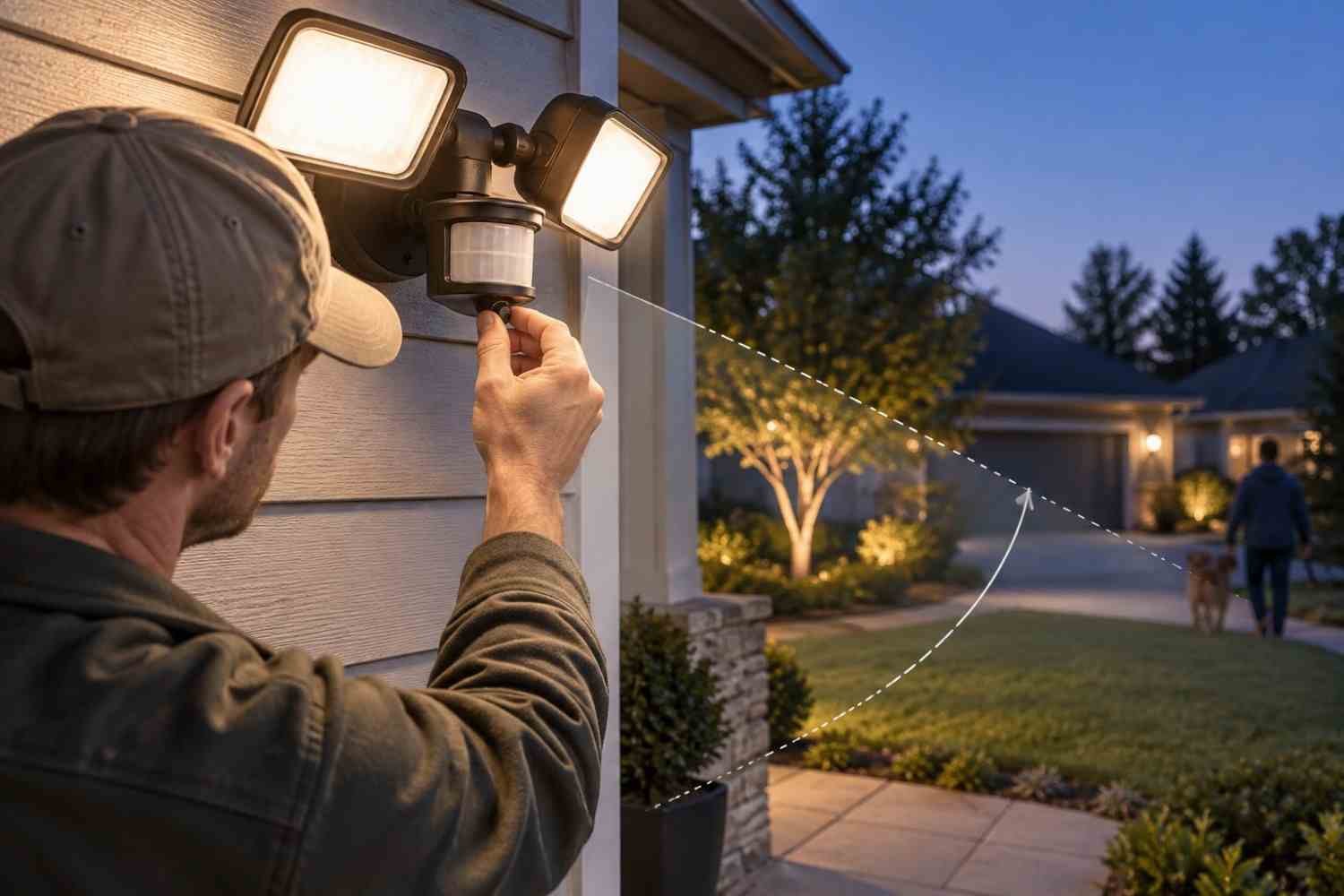
Installation is only half the job. Motion sensors work best when their detection zone matches how people actually approach the property. Aim the sensor toward the intended path and use its TEST or walk-test setting if provided. Walk across the area at different distances rather than standing directly in front of the sensor.
Many sensors are more responsive to movement across their field of view than movement directly toward them. That makes angle important. A sensor aimed along a driveway may behave differently from one aimed across a walkway. Adjust the range gradually until it covers the useful area without reaching too far.
Sensitivity, time delay, and daylight controls also deserve attention. High sensitivity can catch unwanted movement from animals, branches, or traffic. A long time delay can leave the light running after someone has passed. If the fixture includes a photocell or dusk-to-dawn control, set it according to the manufacturer’s directions.
Fix the Problems That Show Up Later
Even a correctly wired fixture can be annoying if its settings do not match the property. If the light activates repeatedly, look for moving branches, reflective surfaces, pets, traffic, or a detection zone that extends too far. If it misses people, check the sensor angle and range before assuming the fixture is defective.
If the light disconnects from an app or behaves differently from its previous setup, smart controls add another layer to troubleshoot. A smart light disconnecting troubleshooting resource can help when the electrical installation works but connected features do not.
Build Security Around Useful Light
The best installation is rarely the one with the widest detection range or brightest output. It is the one that responds predictably to real activity, stays protected from weather, and puts light where people actually need it. Testing the sensor from several directions is often more valuable than adding another fixture.
Why Small Adjustments Make a Big Difference
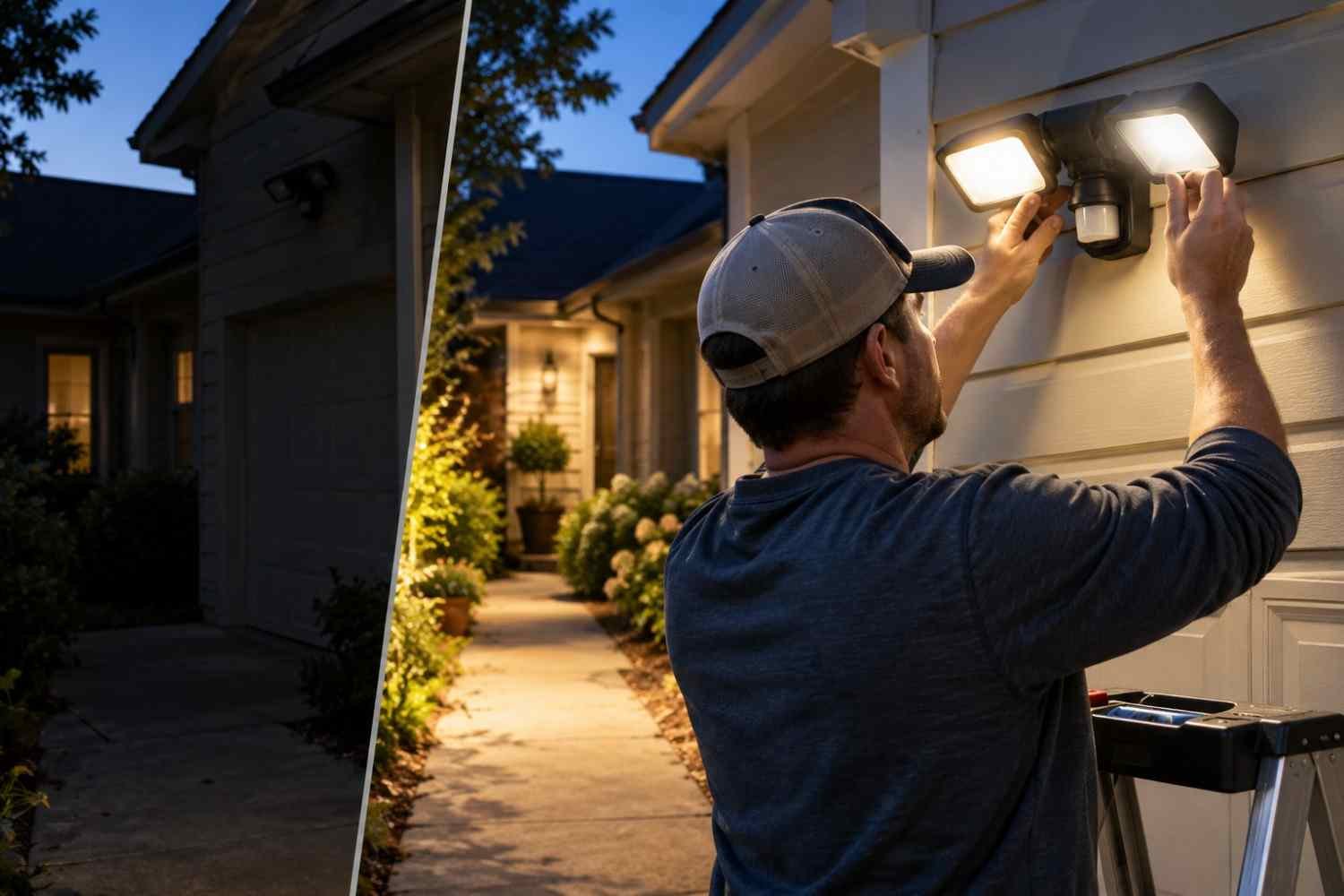
A motion light can look like a simple weekend upgrade, but its usefulness depends on details that are easy to overlook. Safe wiring protects the home, proper weatherproofing protects the fixture, and thoughtful positioning determines whether the sensor notices a person or reacts to every passing distraction. Treating installation and calibration as one project produces a better result than simply mounting the light and walking away.
A short walk test can reveal problems that remain invisible when viewed from indoors.
A well-adjusted motion sensor should feel almost invisible in daily life. You approach, the area becomes visible, and the light shuts back down when you leave. That quiet reliability is what turns a basic exterior fixture into useful home lighting.
FAQs: Installing Motion Sensor Outdoor Lights for Better Security and Convenience
1. Can I replace an existing outdoor light with a motion sensor light?
Often, yes. Replacing an existing hardwired exterior fixture can be simpler than installing a new circuit. Verify compatibility, shut off power at the breaker, test the conductors, and follow the fixture’s instructions.
2. How high should a motion sensor light be mounted?
There is no universal height for every model. Follow the manufacturer’s recommended range, then adjust the sensor angle and detection zone based on the area you need to cover.
3. Why does my motion light keep turning on?
An overly wide detection zone, high sensitivity, passing vehicles, animals, moving vegetation, or reflective surfaces can cause repeated activation. Narrow the range and reposition the sensor before changing other settings.
4. Should an electrician install a hardwired motion light?
A confident DIYer may handle a straightforward replacement, but new wiring, unfamiliar circuits, damaged conductors, or uncertainty about electrical connections are good reasons to hire a licensed electrician.