
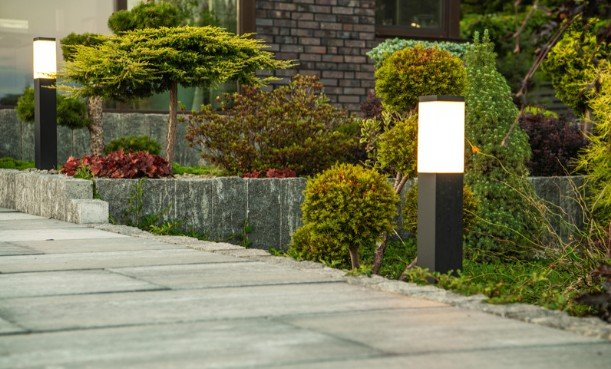
I have always found outdoor lighting most useful when it responds naturally to the way people move around a property. A light that activates as someone approaches a door, driveway, or pathway offers visibility without remaining on throughout the night.
In this guide to motion sensor outdoor lighting explained, I will clarify how the technology works, which options are available, and how thoughtful placement can improve safety, convenience, and efficiency.
What Is Motion Sensor Outdoor Lighting?
A motion-activated outdoor light combines a fixture with a sensor that monitors a specific detection area. When the sensor identifies movement, it sends a signal that switches on the light. After a preset period without further activity, the fixture automatically turns off or returns to a dim setting.
These lights are commonly installed near entrances, garages, driveways, garden paths, gates, and side passages. Their effectiveness depends on the sensor technology, mounting position, detection range, field of view, and sensitivity settings.
How Do Outdoor Motion Sensors Work?

Not every motion detector operates in the same way. The three principal options are passive infrared, microwave, and dual-technology sensors.
Passive Infrared Sensors
Passive infrared sensors, commonly called PIR sensors, are widely used around homes. They monitor changes in infrared energy within their field of view. When a warm person, animal, or vehicle moves across the detection zones, the changing heat pattern causes the light to activate.
A PIR detector does not literally recognize a person. It responds to changes in infrared radiation. This explains why someone crossing the sensor’s field may be detected more reliably than someone walking directly toward it.
PIR sensor models are affordable, energy-efficient, and suitable for most residential spaces. However, animals, warm airflow, direct sunlight, or major temperature changes may occasionally cause false activation.
Microwave Sensors
Microwave sensors emit low-power signals and monitor how those signals reflect from surrounding objects. Movement changes the reflected pattern and activates the fixture.
These sensors can detect subtle movement and cover relatively broad areas. Their high sensitivity can also become a disadvantage because they may identify activity beyond the desired zone or through thin materials. Correct adjustment is especially important near roads, sidewalks, and neighboring properties.
Dual-Technology Sensors
Dual-technology sensors combine PIR and microwave detection. Many models require both technologies to identify movement before switching on the light. This approach can reduce unwanted activation, although the fixtures are generally more expensive. If the system is installed near a garage, you may also need to adjust garage door sensors separately to maintain reliable detection and prevent interference.
Motion Sensors vs. Dusk-to-Dawn Lights
Motion sensing and dusk-to-dawn control are different functions. A motion detector responds to activity, while a photocell responds to surrounding light levels. Dusk-to-dawn fixtures switch on after sunset and remain illuminated until daylight returns.
Some outdoor lights combine both technologies. The photocell prevents daytime activation, while the motion sensor controls brighter illumination after dark. Other models maintain a soft background glow overnight and increase to full brightness when someone approaches.
Key Benefits of Motion-Activated Lighting

Automatic illumination makes it easier to find keys, carry shopping, use steps, or walk along a dark path without searching for a switch. It can expose obstacles, uneven paving, garden borders, and other potential tripping hazards.
Sudden illumination may also draw attention to activity near vulnerable entrances. However, outdoor lighting should form one part of a broader security strategy that may include strong locks, clear sightlines, alarms, and cameras.
Energy efficiency is another valuable benefit. Because the fixture operates only when required, it normally consumes less electricity than a comparable light left at full brightness all night. Limited operating time can also reduce glare and unnecessary artificial light around wildlife habitats and neighboring homes.
Types of Outdoor Motion Sensor Lights
Hardwired fixtures provide consistent power and are well suited to entrances, garages, and permanent security installations. Adding new wiring or replacing an electrical box may require a qualified electrician.
Solar fixtures are useful in locations without an electrical connection. A panel charges the internal battery during daylight, and the stored energy powers the light after dark. Their performance depends on panel placement, available sunlight, battery condition, seasonal weather, and nearby shade.
Battery-powered lights are easy to install around sheds, gates, and occasional-use areas. They avoid wiring but require periodic battery replacement or charging.
Smart motion lights may provide app controls, customised schedules, notifications, camera integration, and adjustable detection zones. Buyers should check whether advanced features require stable Wi-Fi, a hub, cloud storage, or a paid subscription.
Choosing the Right Outdoor Fixture
Start by considering what the light needs to accomplish. A porch usually needs comfortable illumination around the door, while a wide driveway may require an adjustable floodlight with a broader beam.
Brightness should match the size and purpose of the area. Excessive output can produce glare, deep shadows, and complaints from neighbors. Warmer color temperatures often create a more comfortable appearance than harsh blue-white illumination.
Check the stated detection distance and field of view, but remember that real-world performance may differ. Installation height, outdoor temperature, obstructions, movement direction, and sensitivity can all influence detection.
Useful controls include adjustable lamp heads, sensitivity, range, illumination duration, manual override, and dusk-to-dawn operation. The fixture should also have a weather or wet-location rating appropriate for its level of exposure.
Where to Position Motion Sensor Lights

Avoid pointing the detector toward busy roads, public paths, reflective surfaces, moving branches, or ventilation equipment. These areas may cause repeated activation. Keep plants trimmed and ensure the sensor lens has an unobstructed view.
Direct the light downward toward the surface that needs illumination. Proper aiming limits glare, reduces light entering neighboring windows, and prevents unnecessary illumination of the sky.
After installation, activate test mode and perform a walk test from several directions. Begin with low sensitivity and increase it gradually. Set the illumination period long enough to cross the area safely without leaving the fixture on unnecessarily.
Common Problems and Simple Fixes
A light that repeatedly switches on may be reacting to pets, wildlife, branches, vehicles, insects, heat sources, or excessive sensitivity. Cleaning the lens, lowering the range, removing obstructions, or redirecting the sensor may solve the problem.
If the light does not activate, confirm that it has power and is set to the correct operating mode. Check the bulb, clean the detector, and determine whether its photocell is preventing daytime activation. Solar lights may need better sunlight exposure or a replacement battery.
A fixture that remains on continuously may have entered manual override or dusk-to-dawn mode. Resetting the controls according to the manufacturer’s instructions can often restore normal operation.
Frequently Asked Questions
1. What does motion sensor outdoor lighting explained mean for beginners?
It means understanding how an outdoor fixture detects movement, switches on automatically, remains illuminated for a selected period, and then turns off when activity stops.
2. Will animals activate an outdoor motion light?
Yes. Pets and wildlife can trigger many PIR sensors. Reducing sensitivity, narrowing the detection zone, or changing the sensor angle may limit these activations.
3. Can the lights work during daylight?
They can, but fixtures with photocells normally prevent daytime operation. Test mode is generally provided so the sensor can be adjusted before dark.
4. How long should the light remain on?
The ideal duration depends on the location. It should remain illuminated long enough for a person to cross the area, unlock a door, or complete the intended activity safely.
Final Takeaway
I believe the best responsive lighting is not necessarily the brightest or most complicated. It is the system that detects movement reliably, illuminates the correct area, and avoids disturbing the surroundings. By choosing the right sensor, power source, weather rating, brightness, and placement, anyone can create outdoor lighting that improves visibility while limiting wasted energy, glare, and false activation.







One thought on “Motion Sensor Outdoor Lighting Explained: A Practical Guide”