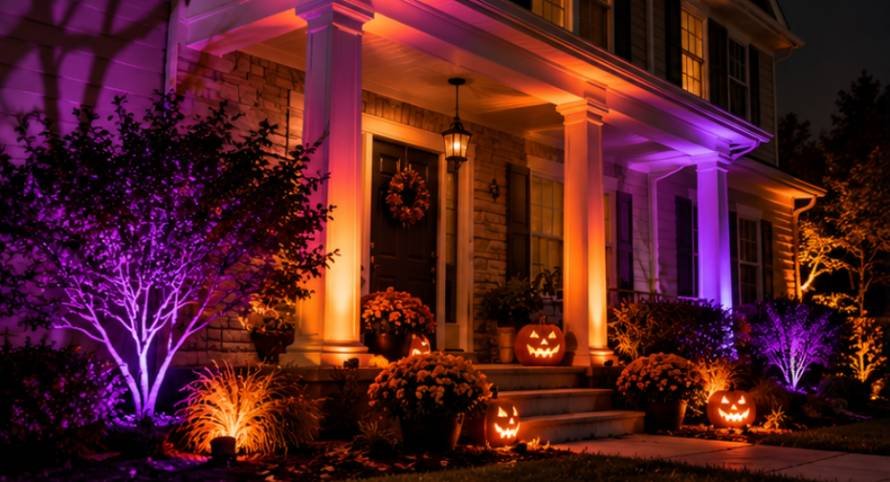
One low light can do more for a Halloween yard than a dozen bright decorations. Aim it upward beneath a tree, skeleton, tombstone, or porch column and the shadows suddenly grow taller, stranger, and more dramatic. That is the basic idea behind how to set up halloween uplighting: use controlled light from below to exaggerate shape, texture, and shadow instead of illuminating everything evenly.
For U.S. homes, outdoor-rated LED spotlights or floodlights make the effect easy to create. Placement matters as much as color, while electrical safety matters even more because these fixtures sit near soil, moisture, walkways, and trick-or-treaters.
Why Uplighting Makes a Yard Look More Haunted
Normal porch lighting shines downward and makes objects easy to recognize. Uplighting reverses that visual logic. Light from below creates unfamiliar shadows, emphasizes bark and stone textures, and throws enlarged silhouettes onto walls or fences.
A prop several feet in front of a garage door can appear much larger once a low spotlight is aimed past it.
LEDs work especially well because they are directional, dimmable, and available in color-changing versions. The U.S. Department of Energy notes that LEDs offer strong optical control and work readily with sensors and lighting controls.
Choose the Mood Before You Choose More Fixtures
Floodlights suit broad walls, hedges, and porch areas. Spotlights create tighter beams for tree trunks, skeletons, tombstones, and individual props. Smart RGB fixtures add programmed color changes, fades, and motion-triggered scenes.
| Color | Best use | Effect |
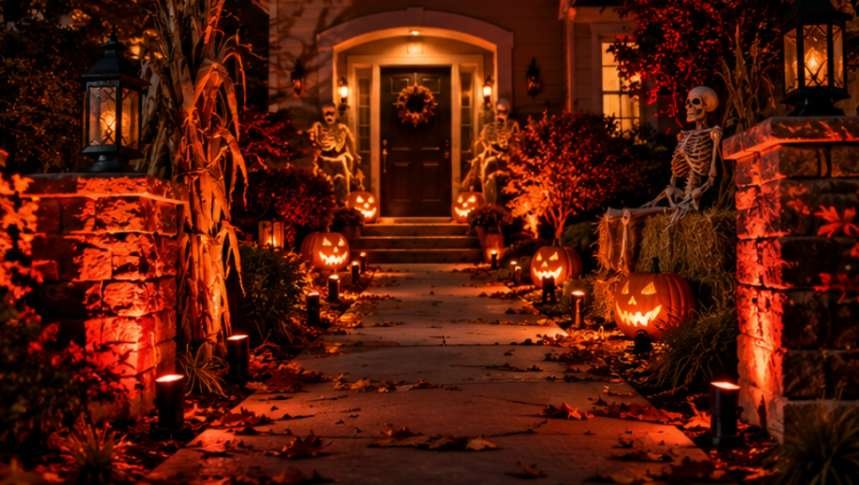
| Orange | Pumpkins, brick, porches | Warm, classic glow |
| Purple | Walls, shrubs, fences | Mysterious, theatrical |
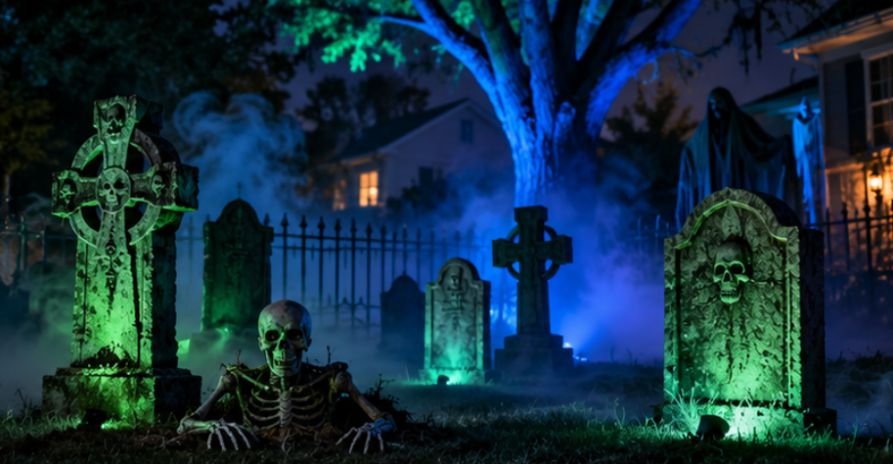
| Green | Fog, graveyards, zombies | Unnatural, eerie |
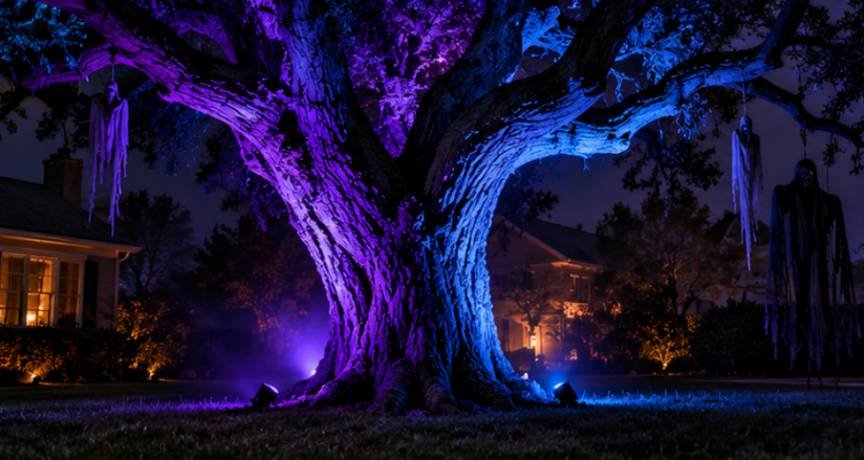
| Blue | Ghosts, pale props, trees | Cold, moonlit |
| Red | Doorways, monsters | Intense, dramatic |
Two or three coordinated colors usually look more intentional than lighting every surface differently. Bright white can wash out a spooky scene, so reserve it for safety lighting or selective highlights. The same approach works for seasonal displays when creating a warm, welcoming porch atmosphere with Thanksgiving outdoor porch lighting ideas.
How to Set Up Halloween Uplighting Step by Step
Test the Layout After Dark
Do the first serious layout at night. Daylight hides glare, beam spread, and shadow length.
Choose a few focal points, then identify walls, fences, garage doors, or landscaping that can catch shadows. Mark the route visitors will use so fixtures and cords stay out of the walking path.
Place Fixtures Low and Close
For trees, columns, statues, or full-size props, begin with the fixture about one to three feet from the base and tilt it upward. Move it closer for a steeper look or farther back for broader coverage.
There is no universal distance because beam angle, brightness, subject height, and background distance all change the result.
Aim for Contrast, Not Maximum Brightness
Halloween lighting works because some areas remain dark. Aim a spotlight so part of the beam grazes the prop and continues toward a wall or fence. Rotate the fixture until the shadow looks recognizable but distorted.
Tree branches work especially well. If the result looks flat, dim the fixture before adding another one.
Secure Every Fixture and Connection
Ground stakes should be firmly seated, and lights on hardscape should use stable, manufacturer-approved bases or brackets.
Electrical Safety Foundation International advises using outdoor-rated decorations and extension cords, inspecting equipment for damage, matching cord capacity to the connected load, and using GFCI-protected circuits outdoors. Review the ESFI outdoor decoration safety guidance.
The U.S. Consumer Product Safety Commission similarly recommends outdoor-certified lights and GFCI-protected receptacles or portable GFCIs. See the CPSC decorating safety guidance.
Keep Cords Out of the Trick-or-Treater Route
Children may arrive in groups, wear costumes that limit visibility, or step off the usual sidewalk. Good pathway illumination can help define the walking route and make changes in direction or elevation easier to notice.
Best lighting ideas for garden pathways can provide practical ideas for lighting outdoor walkways while keeping fixtures and glare under control.
NFPA warns that electrical cords used in Halloween displays can create trip hazards. Route cords along landscaping edges rather than across the main walkway. Its Halloween safety guidance is a useful pre-event check.
Utah State University Extension recommends outdoor three-prong cords, grounded outlets, GFCI protection, and keeping electrical connections above ground and away from water. See its outdoor electrical decorating advice.
If the display requires permanent wiring, new receptacles, or outlet repair, use a licensed electrician.
Use Smart Effects Without Overdoing Them
Smart RGB uplights can pulse, dim, fade, or respond to motion. A motion sensor might trigger a brief red wash on a skeleton while the background stays purple.
Keep rapid flashing limited. Slow fades and short triggered changes usually feel more deliberate and are less likely to overwhelm visitors.
DOE notes that LED systems integrate readily with sensing and local controls. Its LED lighting basics explains why LEDs suit controllable lighting effects.
Run a Five-Minute Visual and Safety Test
Stand at the sidewalk and look toward the house. You should notice the intended focal point without staring directly into a bare LED.
Then walk the route guests will take. Check for exposed stakes, cords, loose props, wet connections, and glare at child eye level. Illinois Extension also recommends discarding damaged cords and using equipment rated for outdoor use.
Finally, turn on every effect at once. If the scene becomes confusing, dim or remove one layer. Darkness is part of the design.
Where Uplighting Does Not Work Well
Uplighting is weaker when there is no surface to receive the light or shadow. A small prop in an open lawn may disappear unless a tree, fence, wall, fog effect, or backdrop sits behind it.
It can also create glare when fixtures point toward sidewalks, streets, neighboring windows, or approaching guests. Re-aim or shield the light instead.
Frequently Asked Questions
1. What angle should Halloween uplights use?
Start with a steep upward angle and adjust from the sidewalk. The best angle depends on beam width, prop height, background distance, and desired shadow.
2. What color uplighting is best for Halloween?
Orange feels traditional; purple, green, blue, and red create stronger theatrical effects. Two or three coordinated colors usually work best.
3. Can indoor LED lights be used outside?
No. Use fixtures, plugs, and extension cords specifically rated for outdoor use because exterior equipment may encounter moisture, dirt, temperature changes, and damage.
4. How many uplights does a front yard need?
Many small yards can create a convincing scene with three to six carefully placed fixtures. Light the main focal points first, then add background coverage only where needed.
Make the Darkness Do Some of the Work
Once you understand how to set up halloween uplighting, the real design tool is contrast. One tree glowing from below, one stretched shadow on a garage door, or one prop that changes color as visitors approach can feel more theatrical than a yard packed with fixtures.
Start with a few focal points, keep lights low, protect outdoor connections, and test the display from a trick-or-treater’s viewpoint. Then subtract anything that competes with the scene. The best Halloween lighting leaves enough darkness for the imagination to finish the job.



One thought on “How to Set Up Halloween Uplighting for a Spookier Yard”