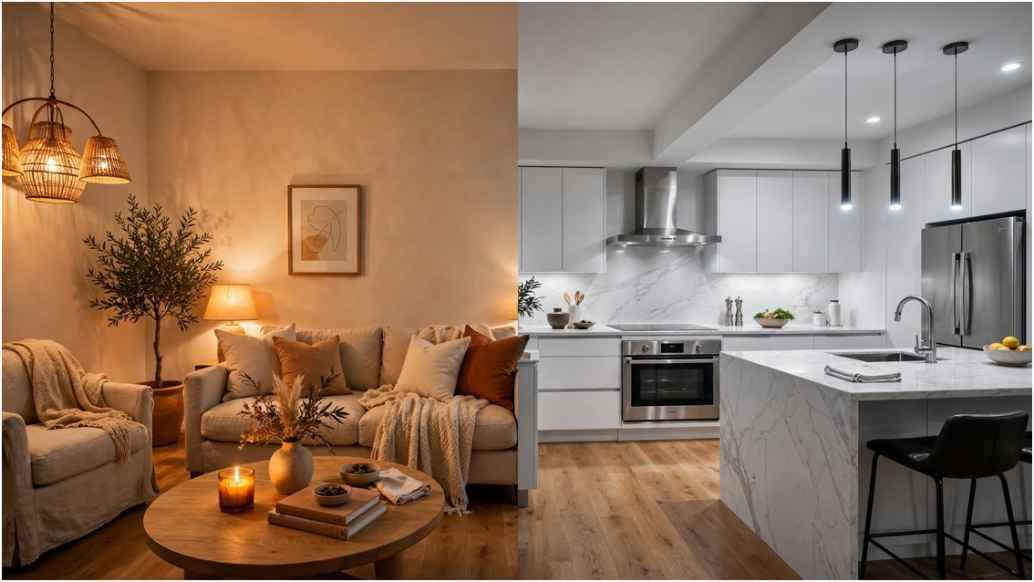
I spent three years buying the wrong light bulbs before I understood warm white vs cool white indoor lighting room by room. My kitchen looked like a hospital hallway. My home office put me to sleep by 3 p.m. The fix wasn’t a fancier bulb. It was matching the right Kelvin temperature to what actually happens in each room.
Here’s the room-by-room system I use now, backed by Department of Energy and Sleep Foundation research, plus two weeks of testing bulbs myself with a cheap light meter.
What Warm White and Cool White Actually Mean
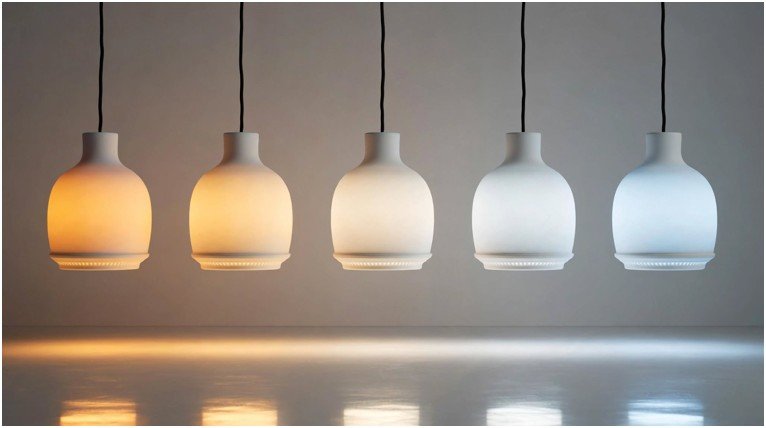
Color temperature is measured in Kelvin, not on a scale of cozy versus clinical. Warm white sits at 2700K to 3000K. Cool white runs from 3500K to 4100K. Daylight bulbs climb to 5000K and beyond.
The Kelvin Scale in Plain English
Energy Star’s own consumer guide places warm white and soft white at 2700K-3000K, cool white and bright white at 3500K-4100K, and natural daylight at 5000K-6500K (Energy Star lighting guide). I keep this range taped inside my kitchen cabinet, because every bulb box lists a Kelvin number and remembering three brackets beats guessing from the packaging photo.
Color Rendering Matters as Much as Color Temperature
The Kelvin number tells you the color of light. It doesn’t tell you how accurately that light shows true color. The Department of Energy rates that separately as the Color Rendering Index, or CRI, on a 1-100 scale, and recommends 80 or higher for most residential rooms. I learned this after buying a cheap 3000K bulb that still made my walls look faintly green. The Kelvin number was right. The CRI, at 72, was not.
Living Room and Dining Room: Warm White Wins for Gathering
Warm white in the 2700K-3000K range keeps these rooms feeling like somewhere you’d actually want to sit. The Department of Energy notes that warm light is more flattering to skin tones and clothing, which is exactly why it works at a dinner table.
If you read on the couch, add one lamp with a 3500K bulb next to your usual seat instead of switching the whole room. That’s the fix I use: one task lamp, everything else warm.
Kitchen: Why I Switched to Cool White Over My Counters
Kitchens need visibility, not vibe, at least at the counter. State lighting guidance for indoor task areas, kitchens included, recommends 30 to 50 footcandles of illumination, well above what a cozy living room needs (state lighting design standards).
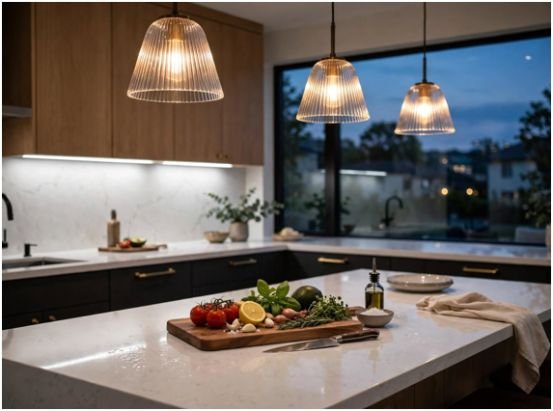
A cool white bulb around 3500K-4100K over the stove and counters makes it easier to tell if the chicken is actually done. I kept warm white under my cabinets for evening cooking, so the room doesn’t feel clinical after 7 p.m.
My Two-Week Bulb Swap: What I Actually Noticed
I ran the same fixture over my kitchen island with a 3000K bulb for one week and a 4000K bulb the next, logging readings from a cheap lux meter each evening. The 4000K week measured noticeably brighter for the same wattage, and chopping vegetables felt less like squinting.
The 3000K week photographed warmer and felt calmer at dinner, but I caught myself under-seasoning food I couldn’t see clearly. That’s the trade-off in one sentence: cool white shows you the truth, warm white sets the mood.
Bedroom: Warm White Protects Your Sleep
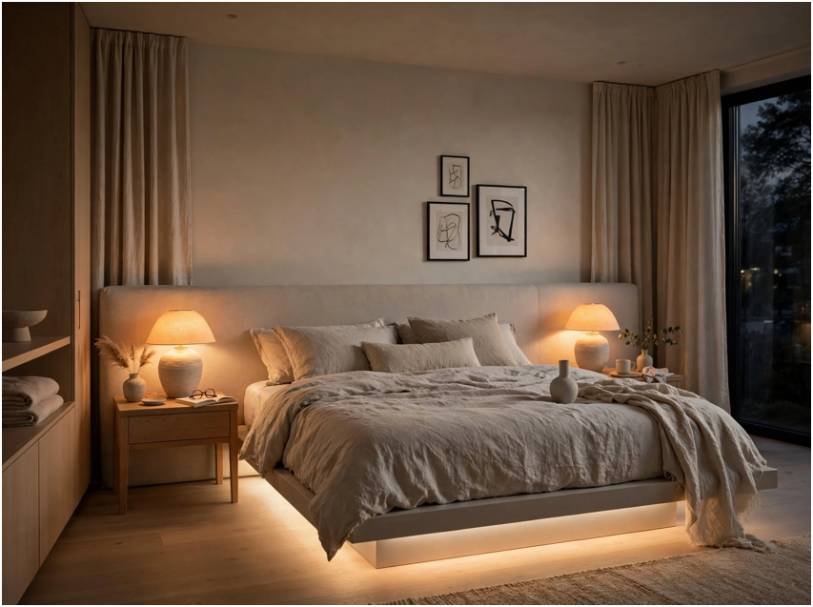
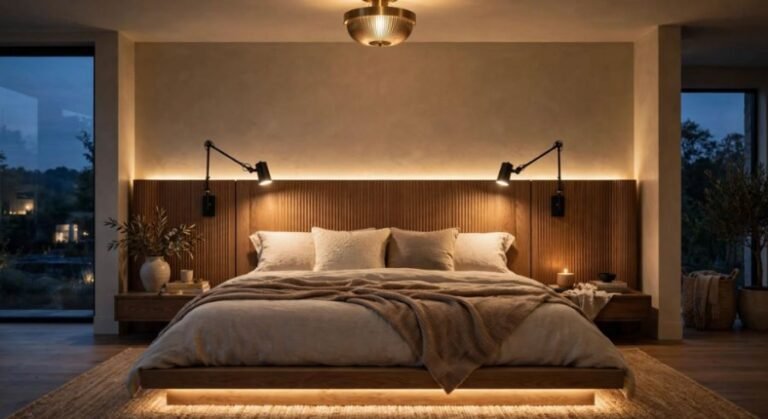
Warm white belongs in the bedroom, full stop. The Sleep Foundation explains that blue light, the kind heavy in cool and daylight bulbs, suppresses melatonin and can push back your body’s natural wind-down signal.
I dropped every bedroom bulb to 2700K and moved my reading lamp onto a dimmable warm bulb on its own switch. If you want the full setup, I break down exactly how I layer ambient task and accent lighting in bedroom so no single overhead fixture does all the work.
Bathroom: The One Room That Needs Both
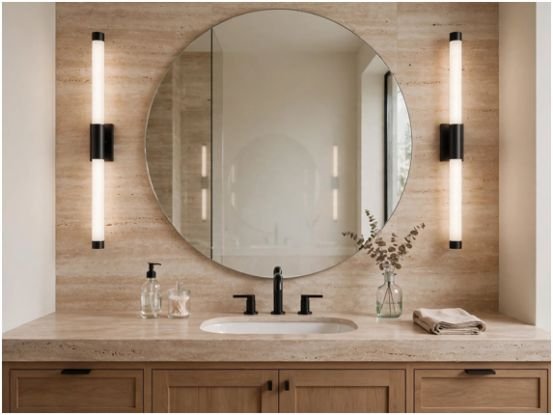
Vanity Lighting for Accuracy
Shaving, makeup, and skincare need color accuracy, so I keep a 4000K bulb with a CRI above 90 around my mirror. Anything warmer makes it hard to judge how a foundation shade actually looks in daylight.
Overnight Light for Comfort
Overhead lighting stays warm white, closer to 2700K, for late-night trips and relaxed baths. A dimmer on that circuit does more for comfort than any bulb swap ever will.
Home Office: Cool White for Focus, With One Caveat
Cool white between 3500K and 4100K keeps me alert during long writing sessions, which lines up with general guidance that cool light suits visual tasks because of its higher contrast. The caveat: cool light late in the day works against you the same way it does in the bedroom. I switch my desk lamp to a warm 2700K bulb after 6 p.m. and keep working under lower, cozier light instead of daylight-mimicking bulbs.
How Many Lumens Do You Actually Need?
Kelvin picks the color. Lumens pick the brightness, and getting this wrong makes even the right color temperature feel off. I get asked this constantly, so I put together a full breakdown of how many lumens do i need to light a living room, room size and ceiling height included. The short version: general living spaces need less raw brightness than kitchens or offices, no matter which white you choose.
Quick Kelvin Cheat Sheet by Room
| Room | Kelvin Range |
| Living room / dining room | 2700K-3000K |
| Kitchen (task areas) | 3500K-4100K |
| Kitchen (under-cabinet, evening) | 2700K-3000K |
| Bedroom | 2700K |
| Bathroom vanity | 4000K, CRI 90+ |
| Bathroom overhead | 2700K |
| Home office (daytime) | 3500K-4100K |
| Home office (evening) | 2700K |
FAQ
1. Can I mix warm white and cool white bulbs in the same room?
Yes, as long as you separate them by fixture or task; mixing them on the same circuit looks mismatched.
2. What Kelvin is closest to natural daylight?
5000K to 6500K is the closest match to daylight, per Energy Star’s own bracket.
3. Does cool white use more electricity than warm white?
No. For LEDs, color temperature doesn’t change energy use; wattage and lumens do.
4. What color temperature is best for staging a home to sell?
Neutral 3000K-3500K reads clean without feeling cold in photos and walkthroughs.
Your Bulbs Aren’t Neutral. Stop Treating Them Like They Are.
Every room in your house is already telling you what temperature it needs. Living rooms and bedrooms want warmth. Kitchens, vanities, and desks want clarity. Tonight, check the Kelvin number on your worst-lit room instead of the wattage, and swap one bulb this week. Start with the bedroom. It’s doing more damage to your sleep than any other fixture in the house.






One thought on “Warm White vs Cool White Indoor Lighting Room by Room: My Real-Home Breakdown”