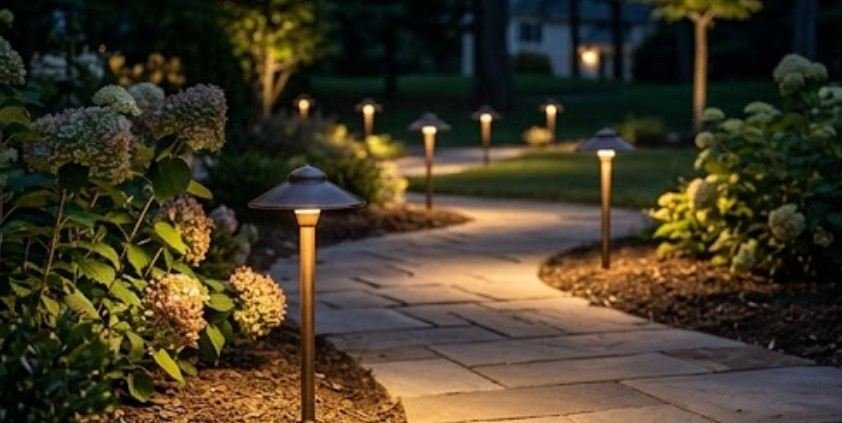
Standard household outlets pump 120 volts of electricity through your yard—enough power to cause severe shock or ignite dry mulch if an outdoor cable gets snagged by a stray shovel. Low voltage landscape decorative lighting solves this safety hazard by stepping that power down to a harmless 12 volts, cutting your outdoor energy consumption by up to 80% while transforming dark outdoor spaces into high-end architectural showcases.
Homeowners frequently sink thousands of dollars into outdoor upgrades, only for those investments to disappear the moment the sun goes down. Installing a low-voltage system bridges that gap, blending residential security with nighttime kerb appeal without requiring an expensive electrician.
The Physics Behind 12-Volt Outdoor Systems
The magic of low-voltage exterior lighting relies on a main step-down transformer plugged into a standard GFCI outdoor receptacle. This unit takes high-voltage grid electricity and reduces it to a safe 12-volt AC current.
According to safety standards published by the Occupational Safety and Health Administration (OSHA), low-voltage electrical current drastically lowers the risk of arc flashes and fatal shock. Because the system carries minimal electrical pressure, cables do not require heavy steel conduit or deep trenching. You can safely bury low-voltage wire just 6 inches below the surface, well clear of major root systems and hardscaping foundations.
Modern systems rely heavily on Solid-State Lighting (SSL) technology. The U.S. Department of Energy (DOE) reports that quality LED fixtures consume a fraction of the wattage of traditional halogen bulbs while lasting up to 25,000 hours or more, virtually eliminating frequent bulb replacements.
Core Fixture Types for Decorative Accent Lighting
Designing an outdoor layout requires troubleshooting lighting wiring matching specific fixture styles to the architectural features and plant life in your garden.
Path Lights
Path fixtures cast soft pools of light directly onto walkways, garden beds, and stairs. Running between 1W and 4W LED lamps, options like mushroom-style downlights protect night vision while guiding foot traffic safely across uneven terrain.
Pagoda Lights
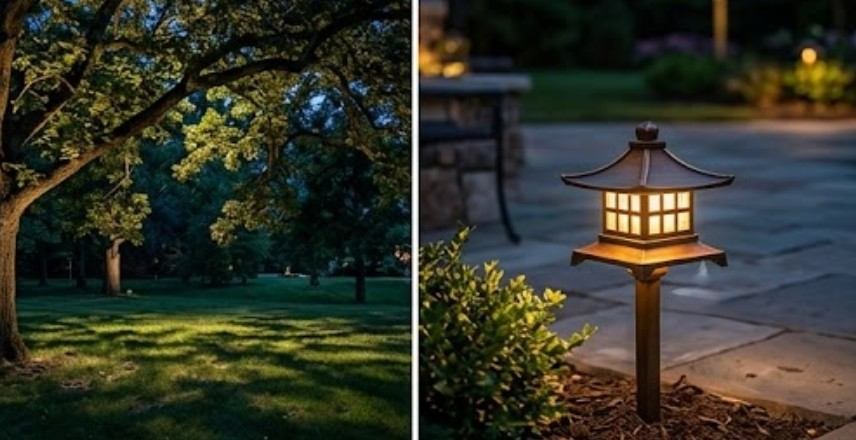
Featuring multi-tiered metal louvers, pagoda lights deliver 360-degree radial illumination. Their classic aesthetic makes them ideal for framing entryways, defining driveways, or highlighting flower borders.
Spotlights and Up-lights
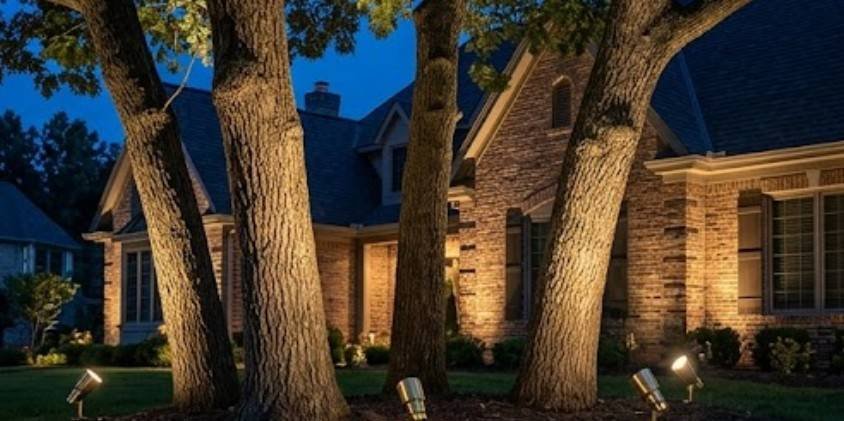
Spotlights project narrow, intense beams to highlight tall trees, architectural columns, or garden statues. Up-lighting foliage creates striking silhouettes and adds depth to a property line.
Well Lights and Deck Accents
Buried flush with the ground or recessed directly into timber decking, well lights wash flat surfaces with light without creating tripping hazards.
Mastering Voltage Drop and Electrical Calculations
The primary technical challenge in low-voltage landscape lighting design is voltage drop—the gradual loss of electrical pressure along a wire run due to resistance. If your voltage drops below 10 volts, LEDs will flicker, shift color temperature, or fail prematurely. Conversely, delivering more than 15 volts will burn out fixtures.
To maintain performance, choose the right wire gauge based on load and distance:
| Wire Gauge | Maximum Wattage Load | Recommended Distance | Best Application |
| 16 AWG | Up to 100 Watts | Under 50 Feet | Short runs, small garden beds |
| 14 AWG | Up to 150 Watts | 50 to 100 Feet | Medium pathways, perimeter lights |
| 12 AWG | Up to 300 Watts | 100 to 150 Feet | Main trunk lines, heavy spotlighting |
| 10 AWG | Up to 400 Watts | Over 150 Feet | Commercial property, long driveways |
To calculate your total system capacity:
- Add up the total wattage of all planned fixtures.
- Multiply that sum by 1.25 to leave a 25% safety headroom for future expansion.
- Select a transformer rated higher than your final total.
For example, a layout featuring ten 3-watt path lights and four 5-watt spotlights equals 50 watts. Applying the 1.25 safety factor gives you 62.5 watts, meaning a standard 75-watt transformer is the ideal choice.
Waterproof Connections and Wire Concealment
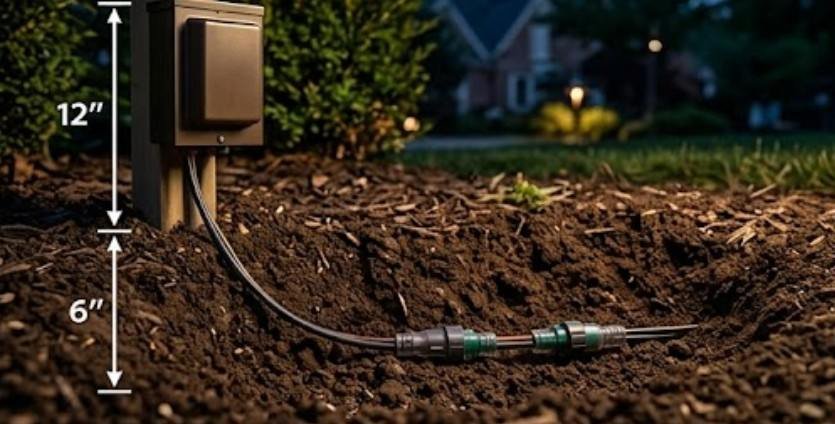
Moisture is the primary enemy of outdoor electrical systems. Direct-burial wires rust rapidly when exposed to groundwater, leading to system failure.
Always discard standard twist-on wire nuts in favor of silicone gel-filled, waterproof connectors or heat-shrink solder sleeves. The silicone gel coats the open copper ends, sealing out moisture and preventing corrosion under the soil.
If you need to cross hardscape paths without tearing up stone pavers, consider routing lines along existing retaining walls, or shield the wire inside flexible conduit along edge borders.
Real-World Applications and Creative Lighting Strategies
Effective landscape design relies on contrast, depth, and shadow rather than blinding brightness.
- Moonlighting: Mount a wide-angle spotlight high up in a large hardwood tree, angling it downward through branches to create natural shadow patterns across lawns.
- Silhouetting: Place a hidden spotlight behind a bold garden feature or specimen plant, aiming it at an adjacent wall to frame the object’s shape.
- Wall Washing: Position low-wattage floodlights close to textured stone or brick surfaces to create warm, ambient reflections.
For proper installation practices, consult residential outdoor safety guidelines published by the National Fire Protection Association (NFPA) and energy safety recommendations from the U.S. Consumer Product Safety Commission (CPSC).
Common Installation Pitfalls to Avoid
- Over-illuminating the yard: Placing fixtures too close together creates harsh glare and hot spots. Space path lights at least 6 to 8 feet apart.
- Ignoring transformer location: For smart light installation mount transformers at least 12 inches above ground level to prevent water splashes during heavy storms.
- Mixing bulb color temperatures: Stick to warm white bulbs (2700K to 3000K) for plants and residential structures. Cool white bulbs (4000K+) look harsh on homes and make natural greenery look unnatural.
Frequently Asked Questions
1. How deep do low-voltage landscape lighting cables need to be buried?
Low-voltage wires only need to be buried 6 inches underground. Unlike 120V commercial lines, they do not require deep trenching or rigid metal conduit.
2. Can I connect low-voltage lights to an existing 120V system?
No. Connecting 12V fixtures directly to a 120V line will destroy the lights instantly. You must run all low-voltage fixtures through a step-down transformer.
3. Why are my landscape lights dim at the end of the wire run?
Dim lights at the end of a line indicate voltage drop caused by undersized wire, an overloaded circuit, or a cable run that exceeds distance limits.
4. Do LED low-voltage lights require special transformers?
Most modern LED fixtures work with standard AC landscape transformers, but checking for DC compatibility ensures consistent performance and eliminates bulb flicker.
Transforming your outdoor space with low voltage landscape decorative lighting balances home security, visual appeal, and energy efficiency. By calculating your power loads carefully, using weather-sealed connectors, and spacing fixtures thoughtfully, you can build a stunning, professional-grade outdoor lighting layout that elevates your home’s exterior for years to come.





One thought on “Transform Your Yard Safely: The Complete Guide to Low Voltage Landscape Decorative Lighting”