
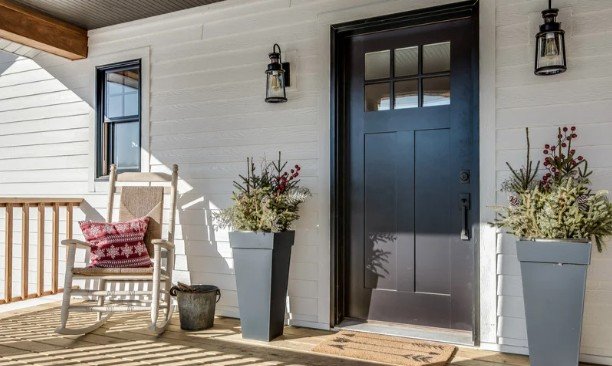
I believe a front porch should feel inviting before anyone reaches the door. The right lighting can reveal the character of an entrance, guide visitors safely and make even a modest exterior look thoughtfully designed. These front porch lighting ideas for every home combine visual appeal with practical illumination, helping you create an entrance that works beautifully after sunset.
Choose Lighting That Fits Your Porch
Before selecting a fixture, consider the porch’s dimensions, ceiling height and exposure to rain. A compact entrance may need only one wall light, while a wide porch can support sconces, pendants and accent lighting.
Fixtures should complement the scale of the door rather than disappear against the exterior. As a general design guideline, a wall fixture can measure approximately one-quarter to one-third of the door’s height. Check its dimensions from the street as well, because outdoor fixtures often look smaller after installation.
Always choose fittings designed for their intended location. A light beneath a fully covered roof may require a damp-location rating, while a fixture exposed directly to rain needs to be approved for wet conditions. Local electrical requirements should also guide permanent installations.
Frame the Door With Matching Sconces
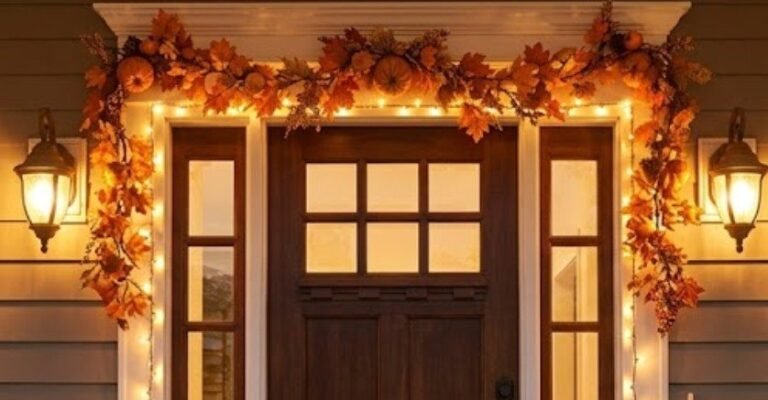
Installing matching sconces on both sides of the door creates symmetry and distributes light evenly around the handle, lock and threshold. This arrangement suits traditional, contemporary and transitional exteriors.
Choose fixtures that provide comfortable illumination without shining directly into visitors’ eyes. Frosted glass and shielded designs can soften the output, while clear glass produces a sharper, more decorative sparkle.
Use One Statement Sconce on a Small Porch
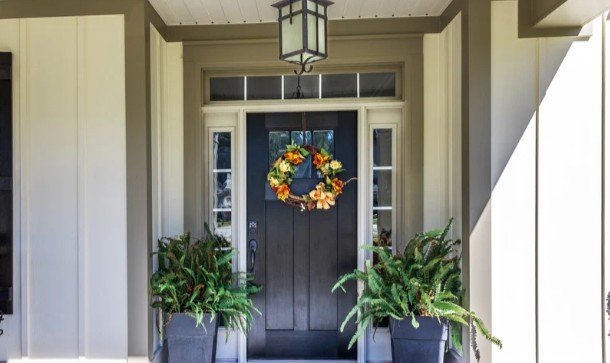
A narrow entrance does not always have room for two lights. One distinctive sconce can illuminate the doorway without making the wall feel crowded. Position it near the handle side when possible so the lock remains easy to see.
An asymmetrical arrangement can appear intentional when the fixture relates to another exterior feature, such as the door colour, house numbers or nearby planter.
Hang a Lantern Under a Covered Entry
Maintain enough clearance beneath the fixture for people and open doors. On a tall porch, a larger lantern can prevent the light from appearing undersized against the surrounding architecture.
Select a Flush Mount for a Low Ceiling
Flush-mounted ceiling lights are useful where a pendant would hang too low. They occupy minimal vertical space and spread ambient light across the entrance.
Simple circular or square designs work well on modern porches. Traditional glass-and-metal versions can provide the same practical coverage without conflicting with an older exterior.
Layer Different Sources of Light
One bright fixture can create harsh contrast and leave steps or corners in darkness. Layered lighting produces a more balanced result by combining ambient, task and accent illumination.
A ceiling light can supply general brightness, sconces can illuminate the door and low-level fixtures can reveal steps. Soft accent lights may then highlight columns, stonework or plants without overpowering the entrance.
Illuminate Steps and Pathways
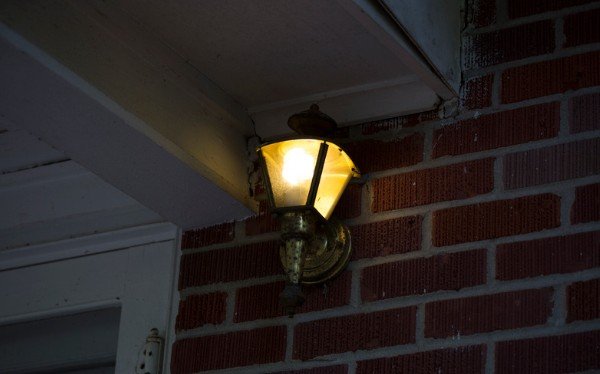
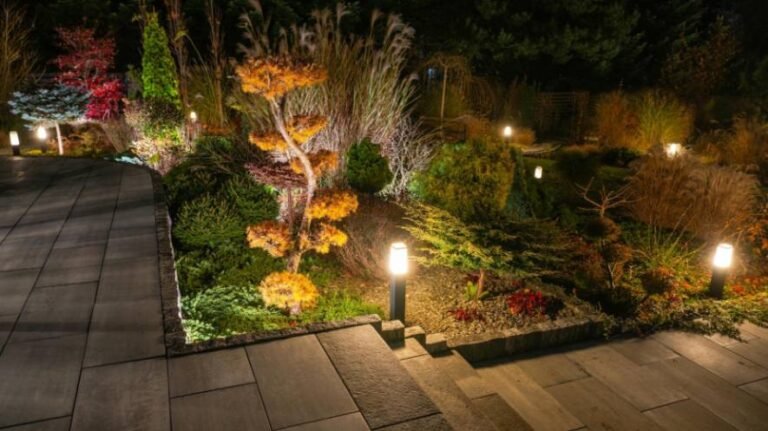
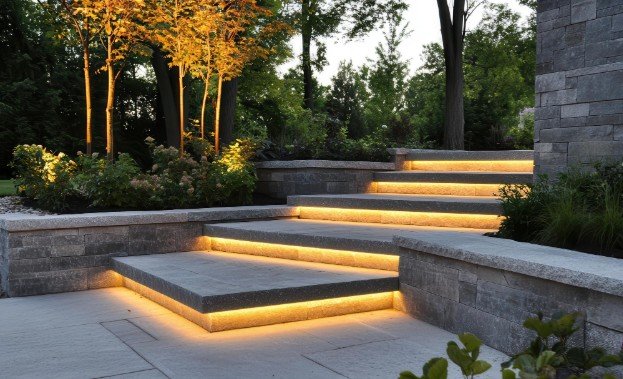
Step and pathway lighting helps visitors identify changes in elevation. Recessed riser lights, railing-mounted fittings and low path lights can define the route to the door while contributing to the overall design.
Aim light toward walking surfaces and avoid excessive brightness. Well-directed illumination usually improves visibility more effectively than a powerful fixture that creates glare or deep shadows.
Match Fixtures to the Architecture
Traditional homes often suit lantern forms, curved details and finishes such as aged brass or bronze. Farmhouse entrances pair naturally with gooseneck barn lights, simple metal shades and matte black finishes.
Contemporary houses benefit from geometric sconces, understated flush mounts and vertical up-and-down lights. Coastal porches can accommodate nautical cages and weather-resistant finishes, while Craftsman-style homes generally look cohesive with substantial fixtures featuring warm metal and textured glass.
The goal is not to copy the architecture literally. A restrained contrast, such as clean black sconces beside a traditional door, can create a memorable focal point.
Add Smart and Motion-Activated Lighting
Smart outdoor bulbs and fixtures allow you to schedule lights, adjust brightness and control the entrance remotely. Dusk-to-dawn settings can automatically activate lighting as natural light fades.
Motion sensors are especially useful near doors, paths and steps. Position them carefully so normal street activity, moving branches or passing animals do not cause unnecessary activation. Timers and dimming controls can also reduce energy use while keeping the porch available when needed. When installing dimmable LED fixtures, check whether the bulbs and controls are compatible with TRIACs, which are commonly used to regulate brightness in traditional wall dimmers.
Try Solar and Plug-In Options
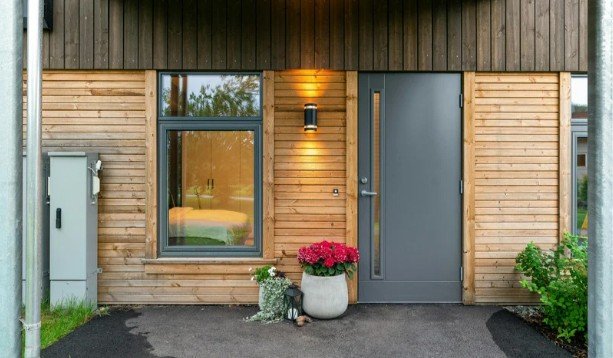
Solar lights provide a convenient solution where permanent wiring is unavailable. They work best in positions receiving dependable sunlight during the day. Shaded porches may experience shorter operating times, particularly during cloudy seasons.
Outdoor-rated plug-in lanterns and string lights can create atmosphere around a seating area. Every light, cable, connector and outlet should be suitable for outdoor use and protected from water.
Choose a Comfortable Light Colour
Warm light generally makes an entrance feel welcoming and complements wood, brick and traditional finishes. Colour temperatures around 2700K create a soft appearance similar to familiar residential lighting.
Cooler light can look crisp against contemporary materials, but overly blue or powerful lighting may feel institutional. Shielded fixtures, lower output and carefully directed beams help limit glare and unnecessary light spill.
Highlight House Numbers and Architectural Details
Visitors, delivery drivers and emergency responders should be able to identify the entrance clearly. A small directed fixture or illuminated number plate can keep the address visible without flooding the entire façade.
Accent lighting can also reveal columns, textured masonry, an arched doorway or a decorative ceiling. Select one or two meaningful features rather than illuminating everything equally.
Frequently Asked Questions
1. What are the best front porch lighting ideas for every home?
Versatile options include paired sconces, a covered pendant, a flush-mounted ceiling light and low-level step illumination. The best combination depends on the porch’s scale, architecture and exposure to weather.
2. How bright should a front porch light be?
It should clearly reveal the door, lock and walking surface without producing uncomfortable glare. Fixture design, beam direction and the number of light sources matter as much as raw brightness.
3. Should porch lights match other exterior fixtures?
They do not need to be identical, but repeating a finish, shape or design detail creates continuity. Porch, garage and pathway fixtures should look as though they belong to the same exterior scheme.
4. Are solar lights suitable for a front porch?
Solar lights can work well as accents or pathway markers when their panels receive adequate daylight. A wired or rechargeable fixture may be more dependable for essential entrance illumination.
Final Thoughts
I see porch lighting as both a design decision and a practical investment. A well-planned arrangement can make an entrance safer, highlight the home’s best features and create a warm welcome every evening. By choosing suitable outdoor fixtures, using comfortable light and matching the scale of the architecture, you can build an entrance that feels polished without becoming overlit.






One thought on “Front Porch Lighting Ideas for Every Home”