
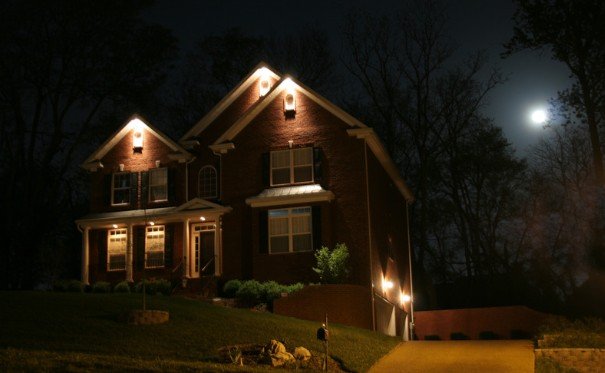
I believe a driveway should do more than provide a place to park. It should guide people safely toward the house, complement the surrounding landscape, and make the property feel welcoming after sunset. The best driveway lighting ideas for safety and style accomplish all three without covering the entrance in harsh, uncomfortable light.
A successful design starts with understanding where illumination is actually needed. Entrances, curves, parking areas, garage doors, steps, and connecting walkways deserve particular attention. Once these zones are identified, different fixtures can be layered to create a balanced result.
Why Driveway Lighting Matters
A dark driveway can make boundaries, surface changes, obstacles, and pedestrians difficult to see. Thoughtful lighting helps drivers judge the width of the pavement while allowing visitors to walk toward the house more confidently.
Lighting also influences the character of a property. Symmetrical lanterns can complement a traditional home, while recessed fixtures and narrow bollards suit contemporary architecture. The goal is not to make the driveway as bright as daytime. It is to provide controlled illumination that reveals important areas without producing glare.
Plan the Driveway in Lighting Zones
Before choosing fixtures, divide the driveway into functional zones. Begin at the street entrance, where lights can help visitors identify the property. Continue along curves and narrow sections that require clear edge definition. The parking or turnaround area needs broader coverage, while the garage and walkway to the front door should provide a visible destination.
Consider slopes, retaining walls, drainage channels, gates, and changes in pavement level. These features can become hazards when they disappear into shadows. Planning by zone prevents unnecessary fixtures and creates a more consistent visual experience.
Lighting Ideas That Combine Function and Beauty
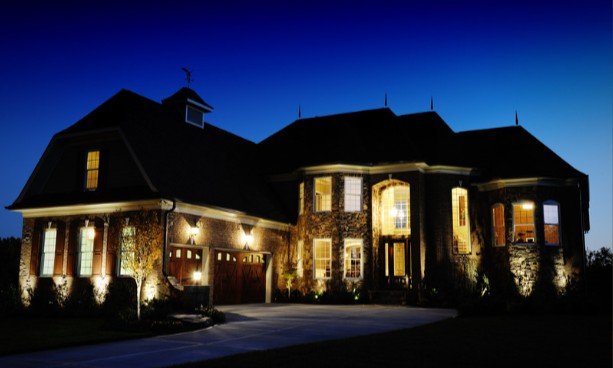
Mark the Entrance With Pillar Lights
Lights installed on gateposts, masonry columns, or entrance pillars make a driveway easier to locate. Lantern-style fixtures complement classic architecture, while clean rectangular designs create a modern appearance. The fixtures should illuminate the entrance and pavement rather than shining toward approaching drivers.
Define Edges With Path Lights
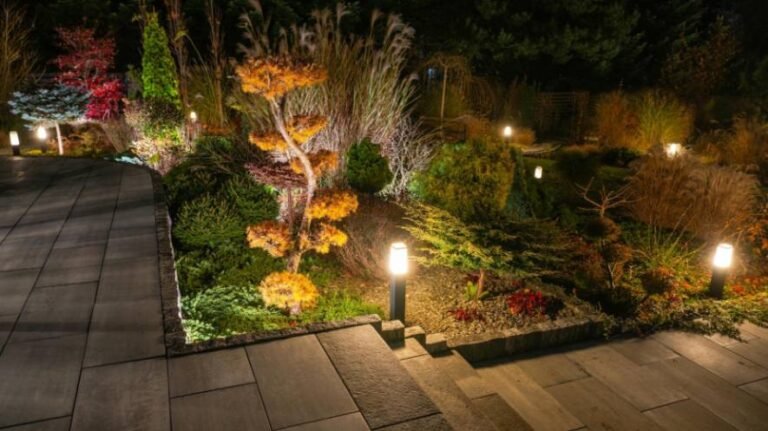
Low path lights can outline a driveway without dominating the landscape. Staggering them often creates a softer appearance than placing fixtures in two perfectly straight rows. Their beam should fall across the pavement instead of remaining inside the adjoining lawn.
Path lights are particularly helpful near curves and pedestrian routes. Keep them far enough from the pavement to avoid contact with vehicle doors, lawn equipment, tires, and snow-clearing tools.
Use Bollards Along Long Driveways
Bollards provide stronger visual guidance than small stake lights and work well along long or wide driveways. Shielded models direct illumination downward, reducing glare and unwanted light spill.
Install Recessed Driveway Lights
Recessed fixtures provide a clean look because they sit level with the surrounding surface. They can mark pavement edges, gateways, parking bays, or transitions between materials.
Only use fixtures specifically approved for the intended outdoor environment. If vehicles may cross them, confirm that the product has an appropriate load rating. A standard landscape fixture should never be assumed to support vehicle traffic.
Frame the Garage With Wall Lights
Wall-mounted sconces beside or above garage doors illuminate the destination while strengthening the home’s architectural symmetry. Downward-facing or shielded fixtures help control glare and keep light away from neighboring windows.
Garage lighting should be coordinated with the front entrance. Matching finishes or related fixture shapes can make the entire exterior feel intentionally designed.
Add Motion-Activated Security Lighting
Motion sensors provide stronger illumination when a vehicle or person enters the property. They can improve visibility while reducing the need to operate high-output lights continuously.
Position and adjust sensors carefully so passing traffic, small animals, or moving branches do not cause repeated activation. A short, practical operating period is usually more comfortable than leaving bright security lights on throughout the night.
Create Moonlighting From Trees
A shielded fixture mounted high in a mature tree can cast gentle downward light through branches. This technique creates natural-looking shadows and can illuminate a large section of the driveway without lining it with fixtures.
Tree-mounted equipment requires careful installation and future maintenance. The mounting method should accommodate tree growth without damaging the trunk or electrical components.
Illuminate Steps and Connecting Walkways
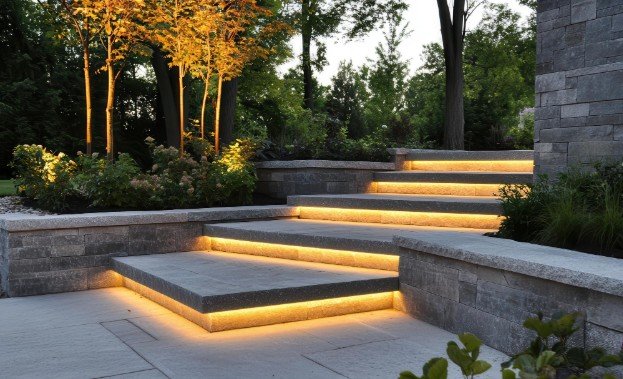
Driveway lighting should continue along the pedestrian route to the house. Step lights, wall lights, or low path fixtures can reveal stairs, uneven surfaces, and changes in elevation.
This connection is frequently overlooked. A bright parking area followed by a dark walkway still leaves guests navigating an avoidable hazard.
Highlight Landscaping Selectively
Uplighting a specimen tree, textured wall, or carefully chosen planting bed can add depth to the entrance. Accent lighting should remain secondary to navigation lighting so decorative brightness does not compete with the driveway itself.
Use narrow, controlled beams and avoid pointing fixtures directly into the sky. Selective illumination usually creates a more sophisticated result than lighting every plant.
Choose the Right Power Source
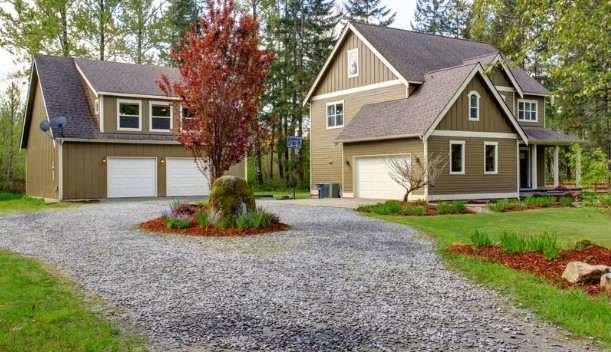
Solar lights offer simple installation and work best in places receiving dependable direct sunlight. Shade, short winter days, dirt, snow, and aging batteries can reduce their nighttime performance. They are often better for decorative marking than for areas requiring reliable illumination.
Low-voltage systems provide more consistent output and can support multiple landscape fixtures from a transformer. Line-voltage fixtures may be suitable for garages, pillars, or permanent installations, but new circuits and buried wiring should be handled according to local requirements by a qualified electrician.
All fixtures, connectors, cables, outlets, and controls must be suitable for their outdoor exposure. Weather resistance, corrosion protection, temperature tolerance, and water intrusion are especially important around driveways.
Prevent Glare and Overlighting
More light does not automatically create better visibility. Excessive brightness can make deep shadows harder to see and cause discomfort for drivers. Use shielded fixtures, downward beams, timers, dimmers, and motion controls to place light only where and when it is useful.
Warm light generally produces a comfortable residential appearance. It also complements brick, wood, stone, and planting more naturally than extremely cool, blue-toned illumination.
Frequently Asked Questions
1. What are the best driveway lighting ideas for safety and style?
The strongest designs combine shielded path or bollard lights with garage lighting and carefully placed accents. The ideal combination depends on the driveway’s length, curves, slopes, landscaping, and architectural style.
2. How far apart should driveway lights be?
There is no universal spacing measurement. Beam spread, fixture height, driveway width, brightness, and surrounding surfaces all affect coverage. Follow the manufacturer’s photometric and placement guidance, then evaluate the design after dark.
3. Are solar lights suitable for a driveway?
Solar fixtures can mark edges and entrances when they receive sufficient sunlight. A wired system is generally more dependable for shaded locations or areas that require consistent safety lighting throughout the night.
4. Should driveway lights be symmetrical?
Symmetrical placement suits formal entrances and traditional architecture. Staggered placement often looks more natural and can provide better coverage along curved or landscaped driveways.
A Safer and More Welcoming Arrival
I would approach driveway lighting as a combination of navigation, architecture, and restraint. Every fixture should either reveal a hazard, clarify the route, support security, or enhance a carefully selected feature.
By layering shielded path lights, garage fixtures, motion controls, and a small amount of accent lighting, I can create an entrance that feels polished without becoming excessively bright. The result is a driveway that remains practical at night while contributing genuine character to the property.






One thought on “Driveway Lighting Ideas for Safety and Style”