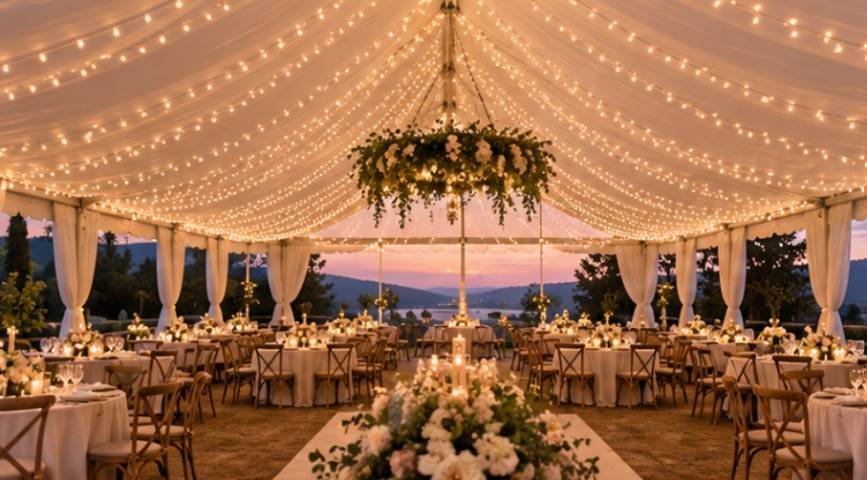
A wedding light canopy can make a tent feel cinematic, but the effect depends more on planning than on the bulbs. The safest approach to how to hang wedding canopy lights is to separate the jobs: the tent frame or support cable carries the load, approved fasteners hold the strands, and the electrical cord supplies power without being stretched or left in guest traffic.
That distinction matters because a beautiful ceiling can become a safety problem if cords sag too low or extension cords cross a dance floor.
Choose the Canopy Pattern Before You Buy Lights
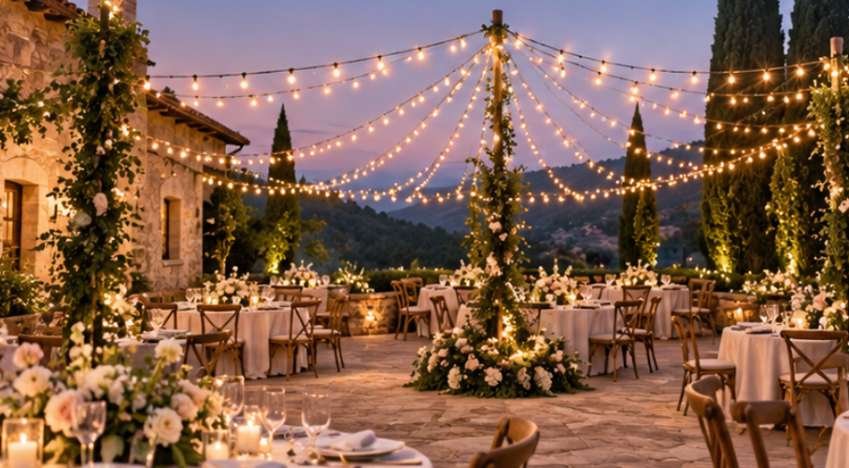
Parallel rows create a clean ceiling. Crisscross strands make a wide tent feel fuller. A radial pattern draws attention toward a center pole, chandelier, sweetheart table, or dance floor.
The structure determines what is realistic. Frame tents may offer rigid members for approved clips, while pole tents and open-air spaces may need guide wires or lighting poles. Ask the venue or rental company which attachment points are approved.
Similar planning principles apply to indoor seasonal displays, where festive mantel decorative lighting ideas can help you arrange accent lights around architectural features without creating visual clutter.
| Pattern | Best For | Main Consideration |
| Parallel rows | Long rectangular tents | Easy spacing and measurement |
| Crisscross | Dance floors | Requires secure opposing anchors |
| Radial | Center-pole tents | Needs a rated center point |
| Perimeter lighting | Smaller receptions | Uses less cable |
Measure the Real Run, Including Drape
Measure every span before ordering, then add length for the decorative curve and route to power.
For example, six 30-foot cross-tent runs require 180 feet before slack. Adding about 10% for a gentle drape brings the total to roughly 198 feet. If another 20 feet is needed to reach power, plan for about 218 feet.
Do not guess how many strands can be connected end to end. Follow the manufacturer’s maximum connected-length or wattage limit. The U.S. Consumer Product Safety Commission advises inspecting lights for damage, using outdoor-certified lighting outside, and using GFCI protection for outdoor lighting.
How to Hang Wedding Canopy Lights Step by Step
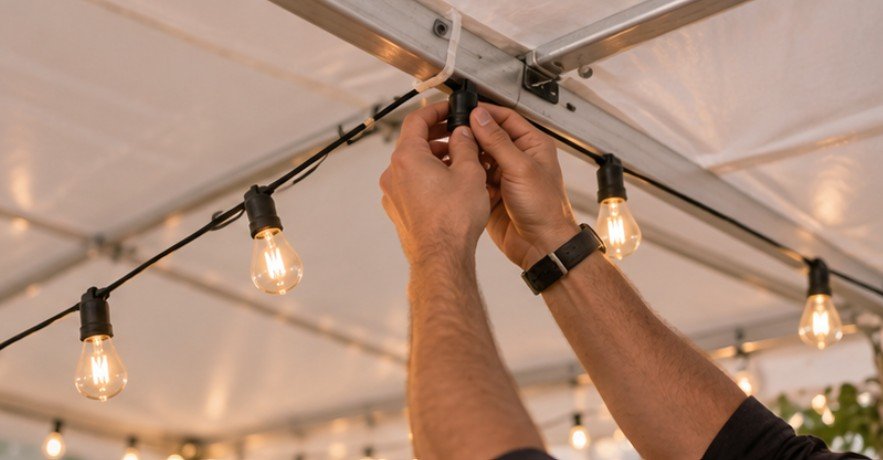
Start at the Power Source
Locate the outlet, temporary distribution point, or approved generator connection first. This prevents a finished canopy from needing a cord across a walkway.
Cornell event electrical safety electrical guidance recommends GFCI protection outdoors or in damp areas and says cords and outlets must have enough capacity for connected equipment. It also advises against chaining extension cords together.
Give Long Spans Their Own Support
For wide unsupported runs, a properly rated steel guide wire can carry the lighting load while the electrical strand remains relaxed. Use hardware suitable for the tent frame or freestanding pole system.
Do not tension the light cord as though it were structural cable. For tall installations, large tents, unfamiliar framing, or windy sites, use the tent provider, venue electrician, or professional lighting installer.
Fasten the Strands Without Crushing Them
Attach lights to the approved frame or guide wire with suitable lighting clips, ball bungees, or weather-resistant zip ties. Work in one direction so spacing stays consistent.
Fasteners should secure the strand without pinching the cable jacket. OSHA rules for temporary lighting inside tents require wiring to be securely installed and protected where it may be damaged. Ground-level cords accessible to the public must also be guarded or covered to reduce tripping hazards.
Leave a Controlled, Even Drape
A shallow curve feels softer than perfectly taut string lights. Choose one reference drop and repeat it across the ceiling.
The exact sag depends on span length, strand construction, attachment method, wind exposure, and manufacturer instructions. The goal is decorative slack, not loose loops hanging into guest space.
Test Before Finalizing Fasteners
Turn on each section before trimming zip ties or removing ladders. Look for dead bulbs, flicker, uneven spacing, excessive tension, and color differences.
Then dim the venue’s other lighting and view the canopy from the dance floor and main tables. A setup that looks sparse in daylight can appear much fuller after sunset.
Keep Power Cords Out of Guest Traffic
Run cords along approved tent legs, protected edges, or designated service areas instead of across entrances, aisles, or dancing zones.
The Electrical Safety Foundation International recommends outdoor-rated extension cords outdoors, matching cord capacity to the load, inspecting cords before use, and using GFCI protection outside. It also warns against connecting one extension cord to another.
A cord that seems harmless during setup can become a trip hazard once servers, photographers, children, and guests fill the room.
Outdoor Weddings Need a Weather and Power-Line Check
Keep connectors away from standing water and verify that lights, extension cords, plugs, and distribution equipment are appropriate for the location. For additional guidance on choosing weather-resistant fixtures for outdoor seasonal displays, outdoor waterproof Hanukkah porch lights explains how waterproof ratings and protected connections can help lighting withstand rain, moisture, and winter conditions.
Illinois Extension recommends outdoor-rated cords, GFCI-protected outlets for outdoor decorations, and keeping people, ladders, and light strands at least 10 feet from overhead power lines
If wind, severe rain, saturated ground, or tent movement becomes a concern, follow the venue or tent provider’s weather plan rather than trying to retension overhead lights.
Mistakes That Create Last-Minute Problems
Uneven spacing is obvious, but poor power planning is more disruptive and often leaves installers scrambling for extra extension cords.
Other errors include overtightening zip ties, damaging cable insulation with fasteners, exceeding connection limits, hiding plugs under fabric, and asking the electrical cord to carry structural tension.
The CPSC identifies inadequate wire size, strain relief, and overcurrent protection as hazards in decorative lighting products. Product listings and manufacturer limits should therefore be treated as part of the installation plan.
A Five-Minute Check Before Guests Arrive
Walk the installation with the lights on. Look for loose fasteners, inconsistent sag, damaged insulation, partially connected plugs, and floor-level cable in traffic areas.
Follow the power path to the receptacle. Confirm outdoor connections are protected as required and that tables, speakers, bars, or floral installations have not created new pinch points.
Frequently Asked Questions
1. Can wedding string lights hang directly from a tent frame?
Usually, if the rental company approves the attachment method and location. Never attach lights to rented framing or fabric without confirming the tent provider’s rules.
2. Do wedding canopy lights need guide wire?
Long unsupported spans often benefit from guide wire because it carries structural tension. Short runs attached to approved rigid framing may not need separate cable.
3. How much slack should canopy lights have?
Use enough slack for a shallow, consistent curve without creating low loops. The appropriate sag varies by span, strand type, wind exposure, and manufacturer guidance.
4. Can I use indoor string lights under an outdoor wedding tent?
Not if they may be exposed to outdoor or damp conditions. Use equipment rated for the environment and connect outdoor lighting through appropriate GFCI protection.
Make the Ceiling Look Effortless
The best wedding light canopies look weightless because the difficult decisions were made before installation. Measure every run, identify power first, use approved structural support, protect cords from guest traffic, and test everything before the room fills.
Once those fundamentals are handled, how to hang wedding canopy lights becomes a design problem rather than a troubleshooting exercise. The goal is not simply to suspend bulbs overhead. It is to create an even, warm ceiling of light that feels intentional in person, photographs beautifully, and stays dependable through the final dance.



One thought on “How to Hang Wedding Canopy Lights for a Clean, Romantic Glow”