I used to think an LED fixture was either working or dead. Then I ran into lights that flickered, dimmed, or quit unexpectedly, and the real question became less about the LEDs and more about what had actually failed. A loose connection or separate driver can be a very different problem from a damaged integrated board.
I also noticed how easy it is to spend money twice when a quick diagnosis could settle the issue. Replacing a perfectly good fixture wastes a useful product, while repeatedly repairing a failing unit can become its own expense. The choice comes down to the fixture’s condition, failed component, repair access, and cost for homeowners.
Start With the Actual Failure
First, identify what is going wrong. Flickering does not automatically mean the LED array is dying. A loose connection, driver, dimmer, or control problem can create similar symptoms. ENERGY STAR notes that LED lights are not universally compatible with every dimmer.
Turn off power before inspecting connections, and do not open energized equipment. If you encounter repeated breaker trips, burning smells, exposed conductors, or uncertain wiring, bring in a qualified electrician.
When Repairing Makes Sense
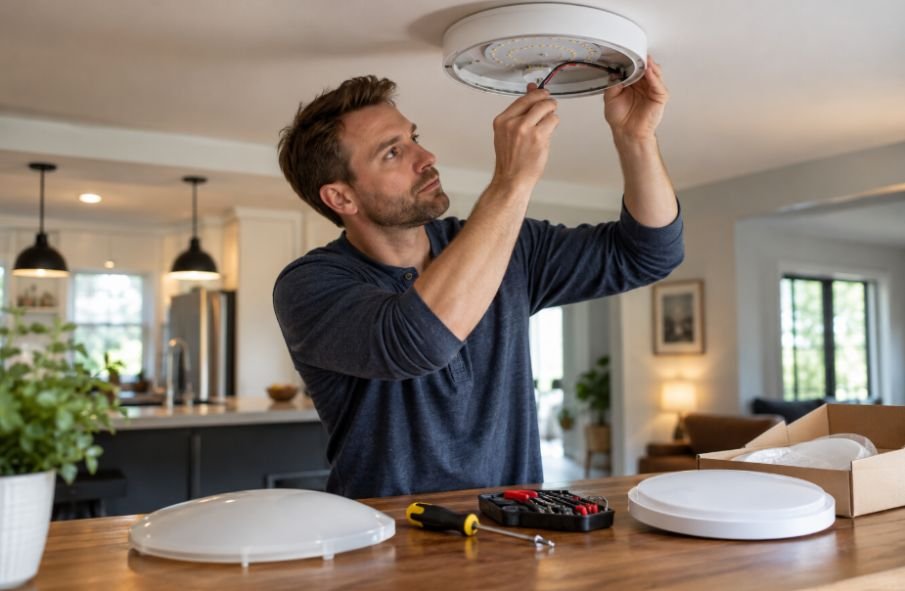
Repair is usually the better move when the failed part is identifiable, accessible, and replaceable. A loose terminal, damaged connector, or external driver can be corrected without disturbing a healthy LED module. This is attractive when the fixture is relatively new or costs more than its replacement components.
An external driver is one of the clearest repair candidates. Drivers regulate power delivered to LEDs and can become a limiting component in luminaire reliability. Some designs make them replaceable.
High-end decorative fixtures deserve the same calculation. A custom chandelier may have a finish or mounting arrangement that is expensive to reproduce. If the housing and board remain sound, repair can make more sense.
When Replacement Is the Better Investment
Replacement becomes more attractive when the fixture has deteriorated. Cracked lenses, badly corroded housings, heat-damaged parts, or evidence of moisture inside electrical compartments are not good candidates for endless patching. Outdoor fixtures deserve caution because water can damage electronics while leaving the exterior looking normal.
The same applies when an integrated LED board fails, and no replacement module is available. An integrated fixture may have no conventional bulb to swap, and repair can cost more than a comparable new fixture.
Age matters, but it should not be the only factor. DOE says LED useful life is typically described by the point at which output reaches about 70% of initial light output, with many quality products rated around 30,000 to 50,000 hours or longer. Output, reliability, condition, and serviceability tell you more than age.
Look Closely at Repeated Problems
One failed component may be unlucky. Several electrical problems are different. Repeated driver failures, recurring flicker, worsening dimming, or multiple repairs suggest the fixture may no longer be dependable.
Heat is another clue. LED systems need thermal management because heat affects LEDs and nearby electronics. DOE reliability guidance explains that temperature can accelerate changes within these components. If a fixture repeatedly runs hot, replacing only the failed component may postpone failure.
Compare repair cost with a new fixture, including labor. A $40 repair on a $250 specialty fixture may be sensible. Repeatedly spending $90 on a $100 fixture is harder to justify.
Outdoor Damage Changes the Calculation
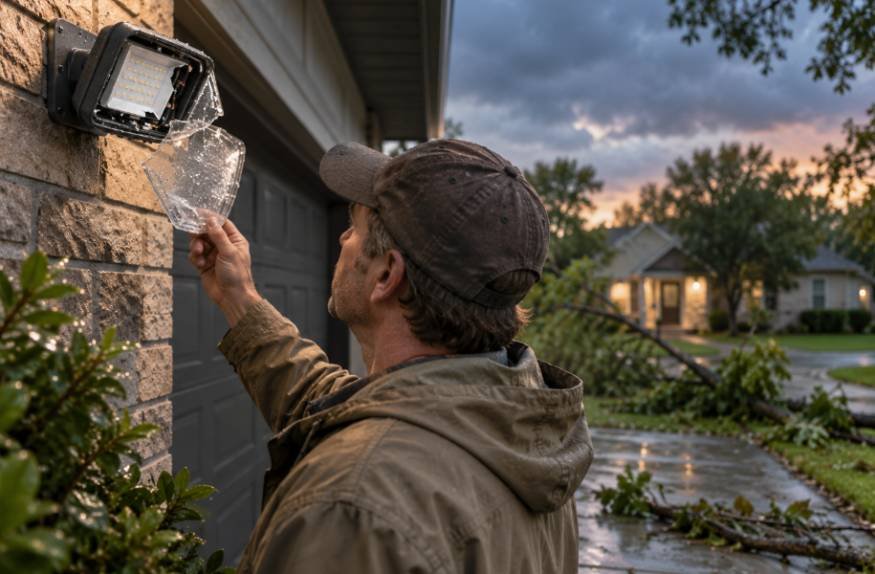
Moisture is particularly important with exterior lighting. If an outdoor fixture stops working after a storm, determine whether the problem is at the fixture, connection, switch, or upstream circuit. Do not assume the LED assembly failed.
For troubleshooting steps, how to troubleshoot outdoor lights after heavy rain can help separate weather-related issues from fixture failure.
If water has entered the housing and corrosion is visible around electrical components, replacement is generally safer. Drying a wet fixture may restore operation without fixing corrosion or compromised seals. A weather-exposed fixture needs the right enclosure and installation, not merely a working light source.
Consider What a New Fixture Adds
Replacement can make financial sense even when the old fixture is repairable. Newer luminaires may provide better distribution, efficiency, maintenance, or controls. DOE guidance emphasizes comparing efficiency, light output, application, and lifetime cost rather than purchase price alone.
Controls can change the value equation. A replacement might add dimming, sensing, scheduling, or app-based control that the old fixture cannot support. If the system is being modernized, app-controlled lighting installation may be a sensible part of the upgrade.
A Simple Repair-or-Replace Check
Ask five questions before making the call:
- What exactly failed?
- Is the failed component replaceable?
- Is the fixture structurally and electrically sound?
- What will repair cost, including labor?
- What would replacement improve?
If the answers point toward one inexpensive failure, repair is reasonable. If they point toward corrosion, inaccessible electronics, repeated failures, or a better low-cost replacement, replace it.
Frequently Asked Questions
1. Can an LED fixture be repaired?
Yes, depending on its design. Loose connections, external drivers, connectors, and some LED modules can be replaceable. Sealed fixtures are often less practical to repair.
2. How do I know if the LED driver is bad?
Flickering, delayed startup, unexpected shutoff, or abnormal dimming can indicate driver trouble, but these symptoms can have other causes. Test before replacing it.
3. Is it cheaper to repair or replace an LED fixture?
It depends on the fixture and failed component. Repair usually wins when a replaceable part is inexpensive, and the fixture remains sound. Replacement can be cheaper when labor or parts approach a new unit’s price.
4. Should a water-damaged LED fixture be repaired?
Minor external moisture issues may be diagnosable, but visible corrosion, damaged seals, or water inside electrical compartments make replacement the safer choice.
The Better Choice Is the One That Lasts
The most economical lighting decision is rarely about choosing the cheapest option today. Repair makes sense when it restores a sound fixture with one manageable failure. Replacement makes sense when the fixture is unreliable, unsafe, difficult to service, or outdated enough that a new unit delivers more value. Looking at the whole system helps avoid waste and false savings.
A good LED fixture should earn its place by providing dependable light, not by surviving endless repairs. Diagnose first, compare costs, and choose the option that leaves you with lighting you can trust.