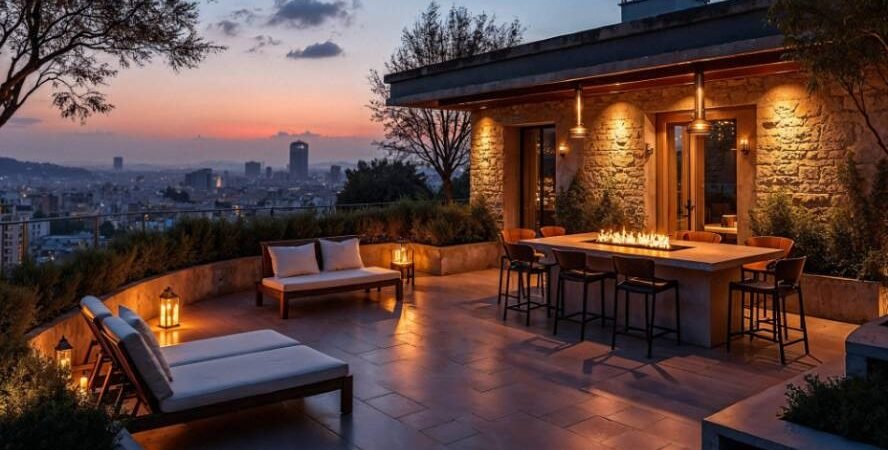
I once assumed that one powerful floodlight could solve every visibility problem outside. Instead, it produced uncomfortable glare near the house while making distant corners appear even darker.
I learned that understanding how to light a dark backyard requires a layered plan built around movement, activities, security, and atmosphere. Several modest fixtures placed with purpose generally create better results than one excessively bright light.
Inspect the Backyard After Sunset
Begin by walking through the garden after complete darkness has fallen. Follow the routes normally used between the house, patio, shed, gate, and other outdoor areas. Identify steps, uneven paving, low branches, raised borders, pool edges, and sudden changes in ground level.
Next, mark the spaces used for dining, cooking, relaxing, or entertaining. Consider how your dining room furniture selection influences the layout, since table dimensions and seating positions affect where fixtures should be placed. Notice dark fence lines, side passages, hidden entrances, and large shrubs that block light. Choose one or two attractive features, such as a tree, sculpture, textured wall, or water feature, that deserve visual emphasis.
This inspection divides the property into practical lighting zones and prevents money being wasted on fixtures that do not solve a genuine problem.
Build Three Layers of Light
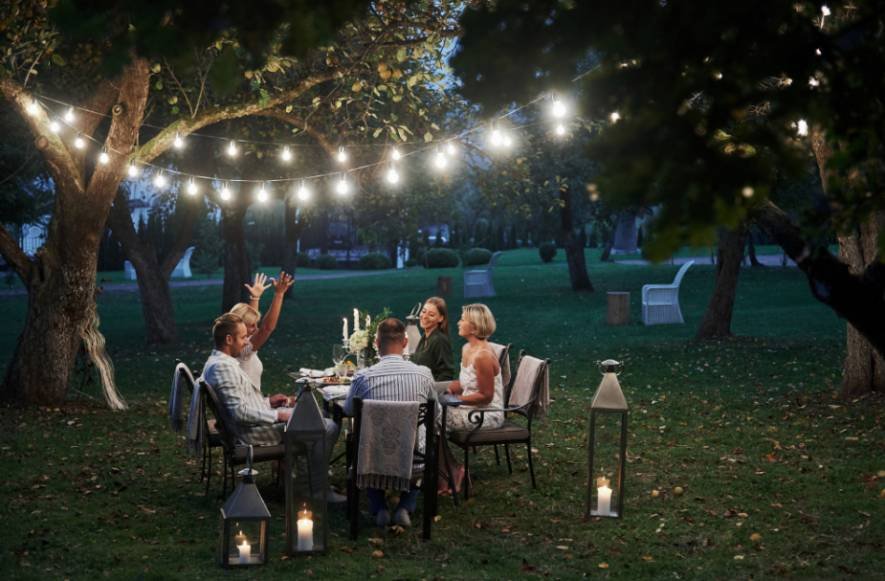
An effective layout combines ambient, task, and accent lighting. Ambient illumination creates a gentle background glow around patios and gathering spaces. Wall sconces, outdoor pendants, string lights, and shielded downlights can provide this layer.
Task lighting improves visibility where people walk, cook, unlock doors, or use steps. Path fixtures, stair lights, barbecue lights, and directional wall fixtures are suitable choices.
Accent lighting adds depth by drawing attention to selected landscape or architectural features. Spotlights can reveal a tree trunk, while a broader beam can softly wash a wall or hedge. Combining these layers creates a balanced scene without eliminating every shadow.
Light Paths and Steps First
Safety-sensitive areas should receive attention before decorative features. Choose shielded path fixtures that cast light across the walking surface rather than directly into people’s eyes.
Path lights usually appear more natural when staggered on alternating sides of a walkway. Avoid placing them in two perfectly straight rows, which can make the path resemble an airport runway. The correct distance between fixtures depends on their beam spread, height, and brightness, so test the spacing before installation.
Recessed riser lights can illuminate individual steps without becoming visually dominant. Deck-post and under-rail lights also help define platform edges and changes in elevation.
When choosing fixtures for these areas, compare solar vs wired outdoor lighting to determine which power source best suits the location and reliability requirements.
Create Comfortable Patio Lighting
Outdoor dining and seating areas need soft illumination at several heights. Weather-rated string lights can define an open patio, while pendants work well beneath gazebos, pergolas, and covered terraces. Wall-mounted fixtures provide dependable background light near the house.
Outdoor lighting can also be designed to remain attractive and useful throughout changing seasons, rather than being limited to occasional entertaining. Explore these year-round decorative backyard lighting ideas for creating a consistent outdoor glow across patios, gardens, and gathering spaces.
Rechargeable lanterns and outdoor-rated table lamps add an intimate glow near chairs and dining tables. They can also be repositioned whenever the furniture arrangement changes.
Warm white light around 2700K usually feels more relaxing than cool white illumination. Using a consistent color temperature across nearby fixtures helps the entire design feel coordinated rather than pieced together.
Brighten Boundaries and Dark Corners
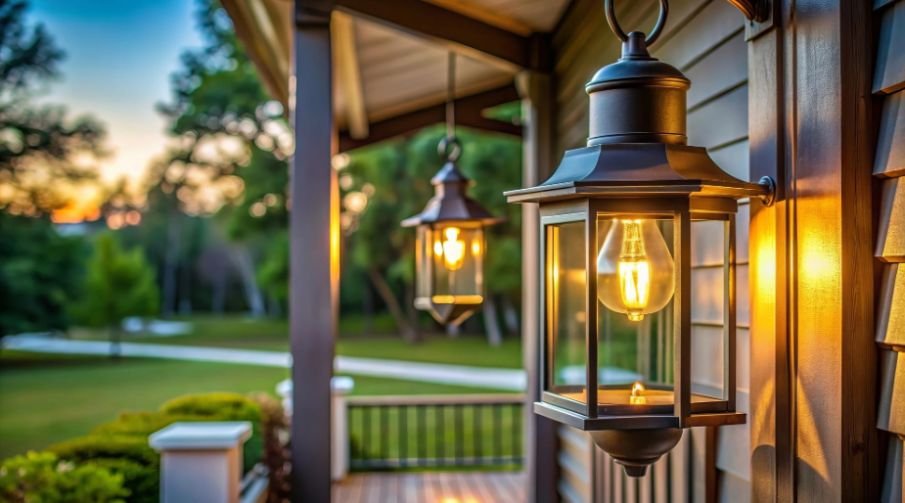
An unlit electric fence or hedge can make a garden feel enclosed and insecure. Wall washing uses a wide, even beam to illuminate a vertical surface. The reflected glow can improve general visibility without introducing a harsh overhead source.
Uplighting is useful for trees, columns, sculptures, and textured masonry. Place an adjustable fixture near the feature and direct the beam upward. A narrow beam creates drama, while a wider angle produces a softer wash.
Downlighting can be installed beneath eaves, pergolas, or suitable tree branches. When the beam passes through foliage, it creates dappled shadows resembling natural moonlight. High tree-mounted fixtures should be installed and maintained by an experienced professional.
Use Motion Lights for Security
Motion-activated fixtures are useful near gates, sheds, garages, side passages, and back entrances. They provide stronger illumination when movement is detected without operating continuously throughout the night.
More brightness is not always better. An excessively powerful floodlight can cause glare, disturb nearby properties, and make everything beyond its beam harder to see. Select an adjustable fixture, angle it downward, and limit its detection range to the intended area.
Timers, photocells, dimmers, and smart controls can reduce unnecessary operation. Low-level landscape lights may remain active during the evening, while brighter security fixtures respond only to movement.
Select the Right Power Source
Solar lights require no wiring and are easy to reposition. However, they need dependable direct sunlight to recharge properly. Fixtures placed beneath trees or beside tall walls may provide weak or short-lived illumination, especially after cloudy days.
Battery-powered and rechargeable lights are useful for flexible or temporary arrangements. Plug-in string lights work near a suitable outdoor outlet when the lights, plugs, and connections are rated for exterior conditions.
Low-voltage landscape systems offer more reliable coverage for paths, planting areas, and boundaries. Their design must account for transformer capacity, cable length, total load, and voltage drop. New permanent circuits and line-voltage installations should be completed by a qualified electrician.
Choose Brightness by Purpose
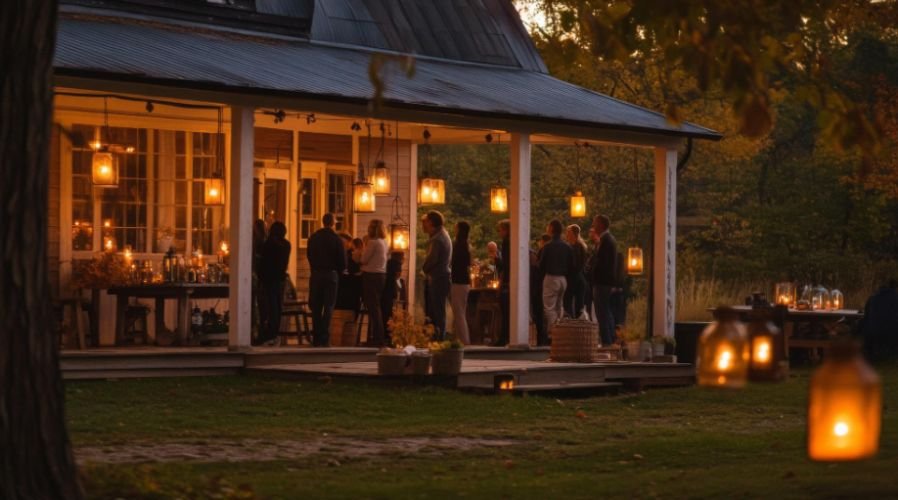
Brightness is measured in lumens, but lumen output alone does not determine performance. Beam angle, mounting height, shielding, surface color, and fixture direction influence how much useful light reaches the ground.
Paths and conversation spaces usually need gentle illumination, while gates and security-sensitive areas may require greater output. Spotlights concentrate light on narrow targets; floodlights distribute it across wider areas.
The objective is to use the lowest level that performs the intended task. Fully shielded fixtures direct illumination downward, reduce glare, and limit unnecessary light entering windows or the night sky.
Test Before Permanent Installation
Place movable fixtures or temporary markers in the proposed positions and inspect them after dark. View the arrangement from the patio, inside the house, along the boundary, and from nearby properties.
Look for exposed bulbs, intrusive glare, overlapping beams, unlit gaps, and shadows caused by plants. Repositioning a fixture may improve visibility more effectively than installing a brighter bulb.
After installation, clean lenses, trim obstructing vegetation, inspect exposed cables, and realign fixtures moved by weather or garden maintenance.
Avoid Common Lighting Mistakes
Trying to illuminate every square metre equally removes depth and wastes energy. Other common errors include positioning exposed bulbs at eye level, mixing several color temperatures, depending entirely on decorative string lights, and placing solar fixtures in deep shade.
Lights should have a defined purpose and operate only when useful. Illuminated and shadowed areas must work together so the garden remains comfortable, attractive, and easy to navigate.
Frequently Asked Questions
1. What is the best way to learn how to light a dark backyard?
Start with a nighttime inspection, illuminate paths and hazards, add comfortable light around activity zones, and then highlight selected landscape features. Several controlled sources normally perform better than one intense floodlight.
2. Are solar lights suitable for shaded gardens?
They can provide decorative light, but poor solar exposure may reduce their brightness and operating time. Wired low-voltage fixtures are usually more reliable in heavily shaded locations.
3. Should outdoor lights remain on all night?
Not necessarily. Timers, dimmers, motion detectors, and smart controls can provide illumination when required while lowering energy consumption and limiting disturbance.
4. Which light color works best outdoors?
Warm white light near 2700K creates a comfortable atmosphere around seating and planting. Consistent color across adjacent fixtures generally produces the most cohesive appearance.
The Last Glow
I now see backyard lighting as a process of shaping darkness rather than completely removing it. By prioritising hazards, combining three lighting layers, selecting the right power system, and testing every beam, I can create an outdoor space that feels safer without becoming overlit.
A thoughtful arrangement guides movement, supports evening activities, reveals the landscape, and protects the surrounding nighttime environment. That balance is what turns a gloomy backyard into a welcoming extension of the home.