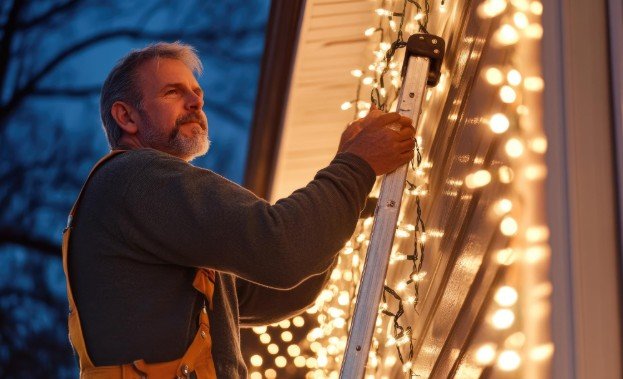
I have always thought that string lights can change an ordinary backyard faster than almost any other decorative feature. Once the bulbs glow above a patio, the space immediately feels warmer, more inviting, and ready for evening gatherings.
However, learning how to hang outdoor string lights involves more than stretching a cord between two convenient supports. The installation must account for the layout, strand weight, weather exposure, electrical supply, and strength of every anchor point.
A little planning prevents drooping strands, damaged cords, unstable posts, and awkward connections. Whether the lights will span a deck, fence, pergola, or open yard, the following process will help create a polished installation that remains dependable after the first windy evening.
Choose Lights Designed for Outdoor Conditions
Begin by confirming that the light set is specifically marked for outdoor use. Indoor decorative lights may not have insulation, sockets, or plugs designed to tolerate moisture and temperature changes. A certification mark from a recognized testing organization provides additional reassurance that the product has been evaluated for electrical safety.
LED bulbs are generally a practical choice because they consume less electricity, remain cooler, and last longer than traditional incandescent bulbs. Shatter-resistant plastic bulbs are especially useful above dining and seating areas because they are less likely to break during installation or rough weather.
Check the manufacturer’s instructions before connecting multiple strands. Every set has a maximum number of end-to-end connections. Exceeding that limit can overload the cord even when the bulbs are energy-efficient.
Measure the Space and Select a Layout
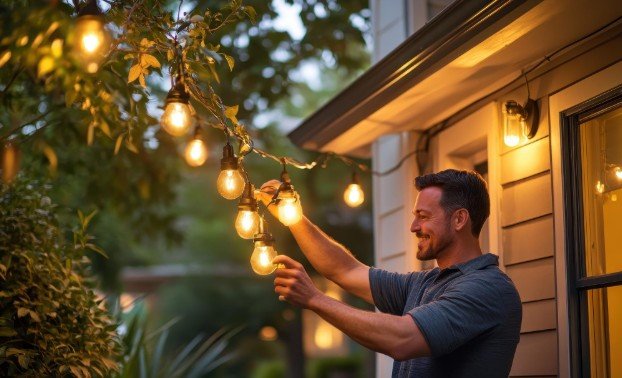
Measure every planned run instead of relying on the advertised length of the strand. The distance printed on the package may include the lead wire between the plug and first bulb, which does not contribute to the illuminated section.
Add extra length for the natural curve between mounting points. String lights stretched completely straight can look rigid and place excessive stress on their cords and anchors. A gentle sag normally produces a relaxed appearance while reducing unnecessary tension.
Choose the pattern before purchasing the lights. A perimeter arrangement neatly defines a small patio. A zigzag pattern distributes light across a larger dining or conversation area. V-shaped and X-shaped layouts create a visible center point, while parallel rows provide more even coverage over a rectangular deck. Mark doors, ceiling fans, tree branches, grills, and walkways on a simple sketch so the strands will not interfere with movement.
Gather Suitable Installation Hardware
The appropriate mounting hardware depends on the surface and the weight of the light set. Exterior screw hooks or eye bolts work well in solid wooden posts, pergola beams, and structurally sound fences. Masonry surfaces require correctly sized anchors and a compatible masonry bit. Stucco demands extra care because the visible coating may conceal foam, masonry, or wooden framing.
Long runs and heavy café-style lights often need a coated steel support cable. The cable carries the load, while small zip ties, clips, or carabiners hold the light cord against it. Cable clamps secure the ends, and turnbuckles allow the installer to adjust tension later.
Lightweight strands covering a short, protected span may be supported directly by hooks. However, the electrical cord should never be expected to act like a structural cable across a large or windy space.
Install the Lights Step by Step
Test the entire strand on the ground before installing it. Replace failed bulbs and inspect the sockets, plug, and insulation for cracks, exposed wires, or loose components. Unplug the lights before continuing and remove fragile glass bulbs when the manufacturer’s design permits it.
Mark the anchor locations based on the selected pattern. Make sure each hook enters solid material rather than weak trim or a thin decorative panel. Install the hooks or eye bolts and test them gently before placing the full load on them.
For a cable-supported system, connect the coated wire to the first anchor and run it through the remaining mounting points. Use a turnbuckle to remove excessive slack without overtightening the cable. Attach the light strand to the cable at regular intervals, preferably using the loops above the bulb sockets. Avoid squeezing, twisting, or puncturing the electrical insulation.
How to Mount Lights on Different Surfaces
Trees
Healthy, mature trees can provide strong natural supports, but attachments must allow for growth and movement. Use suitable hooks or adjustable straps rather than wrapping tight wire around a trunk or branch. Avoid weak, dead, or narrow branches and leave enough flexibility for movement during wind.
Pergolas and Covered Patios
Pergola beams make it easy to create parallel, zigzag, or perimeter arrangements. Screw hooks can be placed on top or along the sides of substantial wooden beams to keep hardware less visible. On a covered patio, maintain clearance from ceiling fans and avoid attaching heavy strands to thin panels that cannot support them.
Deck Railings and Fences
Lights can follow a railing for subtle accent illumination or rise above it on securely mounted posts. Attach tall poles to structural fence or deck posts rather than weak pickets. Use clips, hooks, or properly sized insulated fasteners that cannot pierce the cord.
Brick, Masonry, and Stucco
Brick clips can provide a removable solution when their size matches the exposed brick. Permanent masonry application installations require the correct bit, anchor, and hook. Before drilling into stucco, determine what lies behind the surface and avoid creating openings where water could enter.
Install String Lights Without Trees
An open yard can be illuminated with purpose-built light poles or sturdy wooden or metal posts. Permanent posts should have suitable foundations for their height, span, soil conditions, strand weight, and expected wind exposure.
Weighted planter posts can work for lightweight, temporary displays over small spaces. The planter must be wide and heavy enough to resist tipping, and the post should remain vertical under tension. Decorative soil or plants should not be treated as structural weight. Large installations need properly anchored supports rather than portable containers.
Use Electricity Safely Outdoors
Connect the installation to a ground-fault circuit interrupter-protected receptacle. Any extension cord must be rated for outdoor use and capable of handling the connected electrical load. Keep plug connections elevated, protected as directed by the manufacturer, and away from puddles, sprinklers, and areas where people might trip over them.
Never run extension cords through doors, windows, walls, or beneath rugs. Do not use nails, uninsulated staples, or fasteners that might damage the insulation. Keep ladders, strands, and metal support cables well away from overhead electrical lines. A licensed electrician should install a suitable receptacle when permanent outdoor power is unavailable.
Frequently Asked Questions
1. How to hang outdoor string lights without drilling holes?
Use removable brick clips, exterior-rated adhesive hooks on compatible protected surfaces, existing pergola openings, or freestanding light poles. Adhesive products are generally better for lightweight temporary displays than heavy strands exposed to wind.
2. Do string lights always need a guide wire?
No. Short, lightweight strands between nearby secure anchors may not require one. A support cable is advisable for long spans, heavy bulbs, exposed areas, and permanent installations because it prevents the electrical cord from carrying the entire load.
3. How can sagging lights be corrected?
Inspect the anchors first, then adjust the turnbuckle on the supporting cable. Do not pull the light cord tighter to compensate. Some gentle sag is intentional, but a strand hanging unusually low may indicate a loose anchor or overloaded support.
4. Can outdoor lights remain installed throughout the year?
They can remain outside if the manufacturer rates them for continuous outdoor exposure and local conditions. Inspect the strand regularly and remove it when severe weather exceeds the product’s intended use.
Final Thoughts
I find that the most attractive installations are usually the ones planned around the space rather than forced into a predetermined pattern. Strong anchors, a carefully chosen layout, proper cable support, and safe outdoor power make the finished display look intentional.
Learning how to hang outdoor string lights correctly also protects the investment after the first season. Once every support and connection has been checked, the result is a comfortable outdoor setting that can make dinners, celebrations, and quiet evenings feel a little more memorable.