I once chose an exterior light because it looked impressive in a showroom. After installation, however, it appeared far too small beside the entrance and produced an uncomfortable glare.
That experience taught me that how to choose outdoor wall lights involves much more than selecting an attractive design. Size, placement, brightness, weather resistance, materials, and beam direction all affect how well a fixture performs.
Identify the Main Lighting Purpose
Begin by deciding what the light needs to accomplish. An entrance fixture should help visitors see the door, lock, steps, and house number. Patio lighting usually needs to create a softer atmosphere, while garage and driveway lights may require wider coverage and motion detection.
Avoid relying on one extremely bright fixture to illuminate an entire exterior. Excessive brightness can create glare, harsh shadows, and unwanted light spill. Several lower-output fixtures placed in the right locations often provide more comfortable and consistent illumination.
For compact patios, balconies, and courtyards, outdoor lighting ideas for small spaces can help you make the most of limited space while keeping the lighting functional and visually balanced.
Choose the Appropriate Fixture Type
Wall lanterns are popular around traditional entrances because their glass panels distribute light in several directions. Modern sconces often have cleaner shapes and may cast light upward, downward, or both ways.
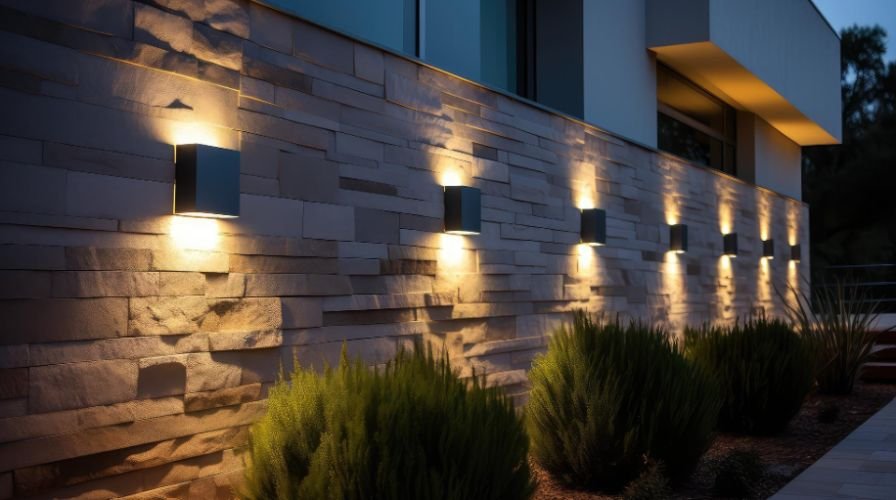
Wall washers spread light across brick, stone, and textured surfaces. Flush-mounted fixtures project less from the wall, making them suitable for narrow paths, balconies, and compact entrances. Motion-activated floodlights offer broader coverage around garages, side doors, and darker corners.
Consider the fixture’s depth as well as its height and width. A large projecting lantern can obstruct a narrow walkway or conflict with an opening door, shutter, gutter, or architectural feature.
Check Its Weather Protection
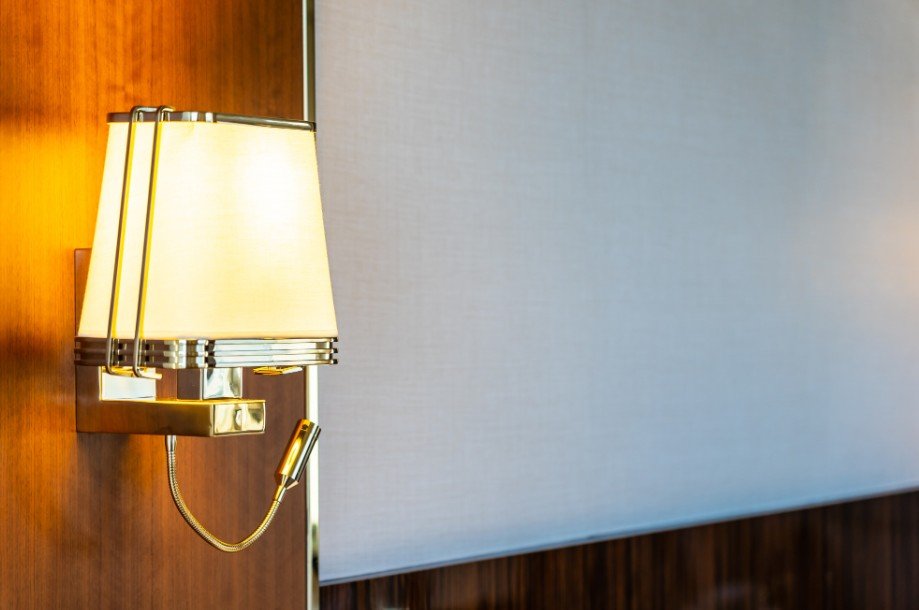
A fixture installed outdoors must be approved for its actual level of exposure. Damp-rated lights generally belong in covered areas protected from direct rain. Wet-rated light fixtures are designed for exposed walls where rain, snow, or splashing water may reach the fitting.
Some products also display an IP rating. Its first digit indicates protection from solid particles, while the second describes water resistance. Higher numbers usually indicate greater protection, but an IP number should not replace the manufacturer’s installation instructions.
Locations near sprinklers, pools, salty coastal air, or severe weather demand extra attention. Never rely solely on vague descriptions such as weatherproof or water-resistant. Confirm the stated location rating before purchasing.
Calculate the Correct Fixture Size
Fixtures commonly appear smaller after installation, particularly when viewed from the road or across a large yard. For one light beside a door, a useful starting point is approximately one-third of the door’s height. When two matching lights flank the entrance, each can be roughly one-quarter of the door’s height.
For example, an 80-inch-tall door could suit a single fixture around 26 inches high or two fixtures measuring approximately 20 inches each. These proportions are visual guidelines rather than strict rules. Oversized doors, wide façades, deep porches, and distant viewing positions may require larger fittings.
Measure the complete fixture, including decorative tops and lower finials. Check the backplate dimensions too, ensuring it can cover the electrical box and sit correctly against the mounting surface.
Find the Best Mounting Position
Entrance lights are commonly mounted with the center of the fixture approximately 66 to 72 inches above the finished floor. This places the light near eye level while helping illuminate the door hardware and surrounding landing.
A gap of around 6 to 12 inches between the fixture and door trim often creates visual balance. However, placement should respond to the fixture’s shape and light direction. An exposed bulb at eye level may cause glare, while a downlight might need to be mounted slightly higher so its beam reaches the intended surface.
For garages, fixtures can be positioned beside each door, between adjoining doors, or above the opening. Check that they will not interfere with the garage door, tracks, roofline, or nearby vehicles.
Select Brightness by Function
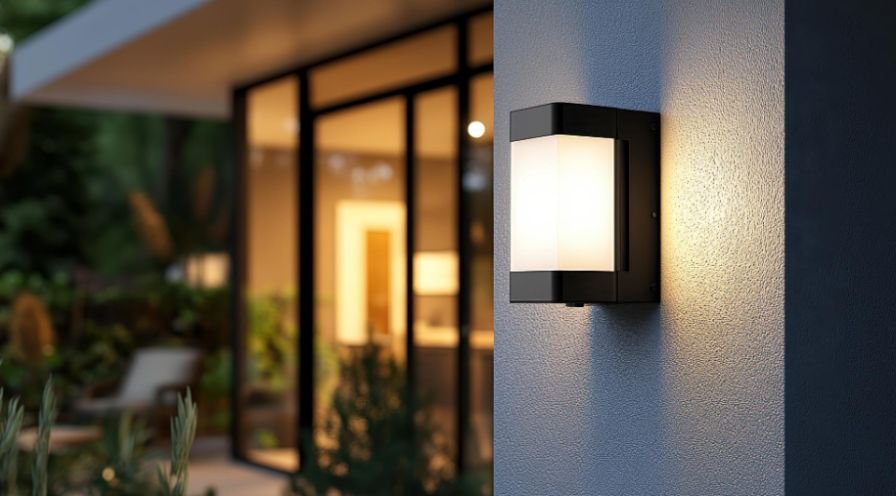
Lumens measure visible light output, but the stated number does not tell the complete story. Clear glass releases light differently from frosted glass, and a narrow downward beam can make a surface appear brighter than a decorative lantern producing the same lumen output.
Patios usually benefit from gentle ambient illumination. Entrances need moderate light so visitors can identify steps, locks, and obstacles. Driveways and security areas may require brighter fixtures, wider beams, or several lights working together.
Dimmable fixtures or models with selectable brightness provide valuable flexibility. They let you reduce harshness after installation without replacing the entire fitting.
Choose a Comfortable Color Temperature
Warm white light between 2700K and 3000K generally creates an inviting exterior. It complements brick, timber, stone, plants, and warmer paint colors. Cooler light can increase visual contrast but may feel severe around relaxed seating and entrance areas.
For compact patios, balconies, and courtyards, outdoor lighting ideas for small spaces can help you use warm, appropriately scaled fixtures without making the area feel crowded.
Beam control is equally important. Shielded fixtures direct light toward the ground or wall instead of the sky, neighboring properties, or nearby windows. Avoid placing bright, exposed LEDs directly within the sightline of people seated outdoors.
Coordinate Style, Finish, and Materials
The fixture should complement the building’s architecture without matching every detail. Rectangular sconces suit many contemporary exteriors, while lantern forms work naturally with traditional designs. Transitional fixtures combine simple proportions with subtle decorative elements and can fit several architectural styles.
Black and dark bronze finishes offer strong contrast against pale walls. Brass and copper develop character as they age, while powder-coated aluminum is lightweight and widely available. Stainless steel can suit modern properties, although the quality of the metal and finish affects its resistance to corrosion.
All exterior lights do not need to be identical. Wall lights, pendants, post lights, and landscape fixtures can look coordinated when they share a finish, shape, glass treatment, or design feature.
For a warm seasonal look, harvest theme outdoor string lights can add decorative character while complementing the existing fixtures and overall exterior style.
Consider Controls and Maintenance
Motion sensors can improve convenience and security, but adjustable range and sensitivity are important. Poorly configured sensors may activate whenever pedestrians, animals, or vehicles pass nearby. Photocells turn lights on automatically at dusk, while timers and smart controls allow more precise schedules.
For integrated LED fixtures, examine the expected lifespan, warranty, color temperature, and component-replacement policy. A replaceable bulb is easier to change, but an integrated design may offer a slimmer appearance.
Also consider maintenance. Open lanterns may collect insects and dirt, complicated glass panels take longer to clean, and inaccessible screws can make bulb replacement frustrating.
Frequently Asked Questions
1. What should I check before buying an exterior wall fixture?
When researching how to choose outdoor wall lights, examine the intended purpose, overall dimensions, weather rating, brightness, color temperature, beam direction, finish, mounting clearance, controls, warranty, and installation requirements.
2. Should exterior wall lights point up or down?
Downward light is useful for entrances, steps, and pathways. Up-and-down fixtures emphasize architecture, while fully shielded downlights usually create less glare and sky glow.
3. Should wall lights be bigger beside a garage?
Garage doors create a larger visual background than entrance doors, so small fixtures can appear undersized. Select lights in proportion to the garage opening and assess their appearance from the main viewing distance.
4. Can I install an exterior fixture myself?
Replacing an existing fixture may appear simple, but outdoor electrical connections require proper isolation, grounding, mounting, and protection from moisture. A qualified electrician should handle new wiring or any installation where the conditions are uncertain.
Final Thoughts
I now evaluate an outdoor fixture as part of the entire exterior rather than as an isolated decoration. The right light should complement the architecture, illuminate the intended area, withstand local weather, and remain comfortable to view after dark.
Before buying, I measure the door and available wall space, determine the lighting purpose, and verify the exposure rating. Those practical checks make it much easier to find a fixture that looks balanced during the day and performs beautifully at night.